Good morning and welcome back to FirstFT Asia. In today’s newsletter:
Takaichi’s dovish BoJ picks
India hedges its geopolitical bets
South Korea’s baby bump grows
We start in Japan, where Prime Minister Sanae Takaichi yesterday picked two dovish academics for roles at the country’s central bank. Here’s what you need to know.
The nominees: Ayano Sato, of Aoyama Gakuin University, and Toichiro Asada, of Chuo University, both favoured economic stimulus and lower interest rates and they could try to challenge Bank of Japan governor Kazuo Ueda’s efforts to “normalise” policy and keep raising rates, analysts said. Their appointments to the BoJ’s nine-member policy board follow the landslide election victory this month for Takaichi’s Liberal Democratic Party.
Market reaction: The yen slumped from ¥155.5 versus the dollar to about ¥156 after news of the nominations. The yen had fallen the previous day following a Japanese media report that Takaichi had held a brief meeting with Ueda in which she had expressed reservations about the need to continue raising interest rates.
Since the February 8 election, analysts had flagged the upcoming vacancies of two BoJ board seats as an early test of Takaichi’s stance on monetary policy and her determination to shape the central bank’s decision-making. Read what economists said about the prime minister’s picks.
Here’s what else we’re keeping tabs on today:
Economic data: Japan publishes trade statistics while Singapore reports January industrial production data.
Mark Carney in India: The Canadian prime minister visits Mumbai, where he will meet Indian counterpart Narendra Modi, before travelling to Australia and Japan.
Monetary policy: The Bank of Korea is expected to keep rates unchanged at today’s policy meeting.
Results: Qantas Airways and Hong Kong Exchanges and Clearing report results.
Five more top stories
1. Iranian officials are threatening to escalate any conflict with the US in the wake of an American attack, indicating they will reconsider the Islamic republic’s doctrine of limiting retaliation to contain confrontations with Washington. A regime insider in Tehran told the FT that Iran had shifted to a strategy designed to impose tangible costs on American forces and assets if conflict erupts.
2. German Chancellor Friedrich Merz has urged China’s President Xi Jinping to reset trading relations between the EU and Beijing amid growing tensions. In their meeting, Xi portrayed China as a champion of the multilateral world order and supporter of European efforts to become less dependent on the US. Read more about Merz’s visit to Beijing.
3. Nvidia beat Wall Street’s estimates yesterday as the continuing boom in AI infrastructure propelled the world’s most valuable company past $200bn in annual revenue and $100bn in net income for the first time. Shares of the chip giant rose 3 per cent in after-hours trading immediately after the announcement.
4. Democratic lawmakers in Congress have launched an investigation into allegations that the US Department of Justice withheld files from the Jeffrey Epstein investigation in which a minor accused Trump of sexual abuse. Here are more details.
5. South Korea has passed a crucial corporate reform bill aimed at improving shareholder returns, giving a further boost to the world’s best-performing stock market this year. The law ends a practice that investors say has helped owner families maintain control over their conglomerates at the expense of minority shareholders.
The Big Read
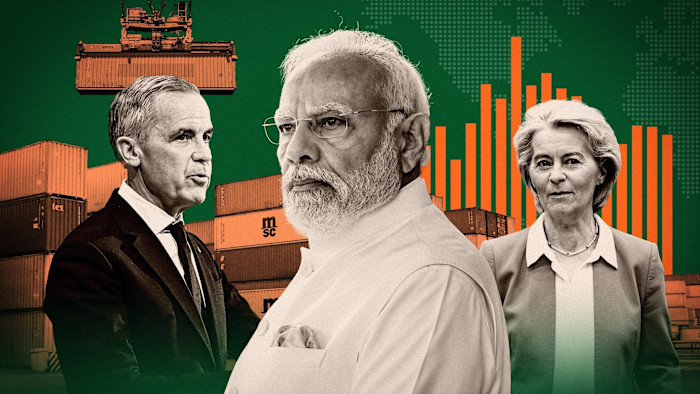
For more than two decades, India has been pivoting towards the US, building a partnership with Washington that has ranged from nuclear energy to technology and defence. But now, stung by Trump’s volatile foreign policies, New Delhi is seeking to hedge its bets.
We’re also reading . . .
Chart of the day
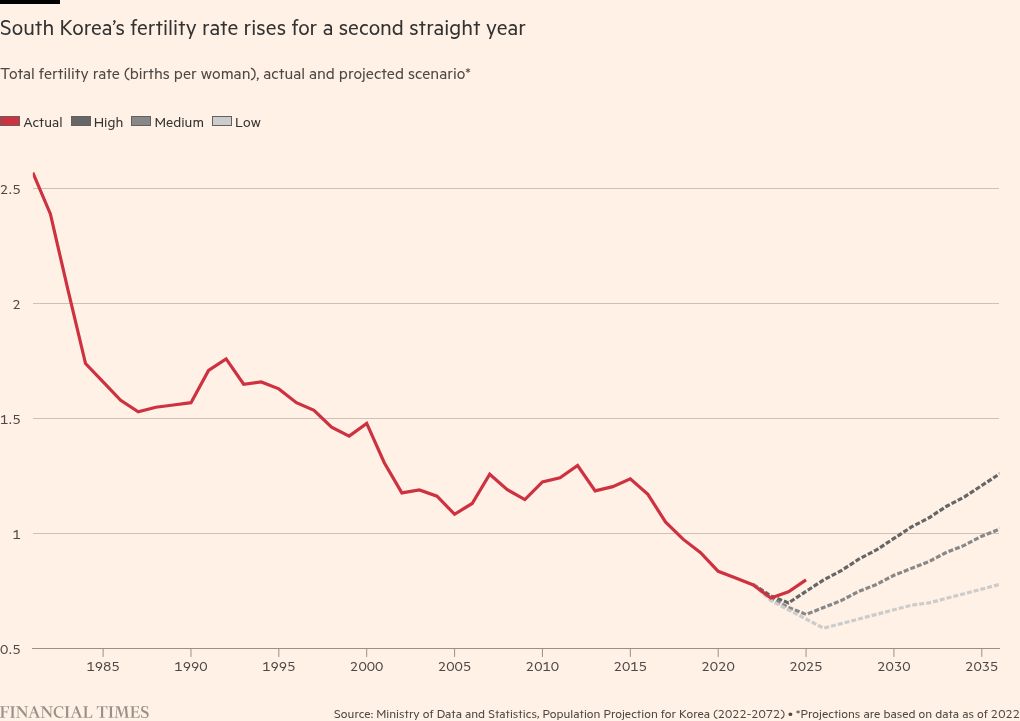
South Korea’s fertility rate has climbed for a second consecutive year, bucking a long-term trend of population decline that has plunged the country into one of the world’s worst demographic crises.
Take a break from the news . . .
Lloyd Blankfein is descended from Yiddish-speaking Jews and went to a rough school in Brooklyn, but made it to Harvard and on to lead Goldman Sachs through the financial crisis. Streetwise, his memoir, is an insider’s guide to when the financial industry spun out of control before nearly collapsing.