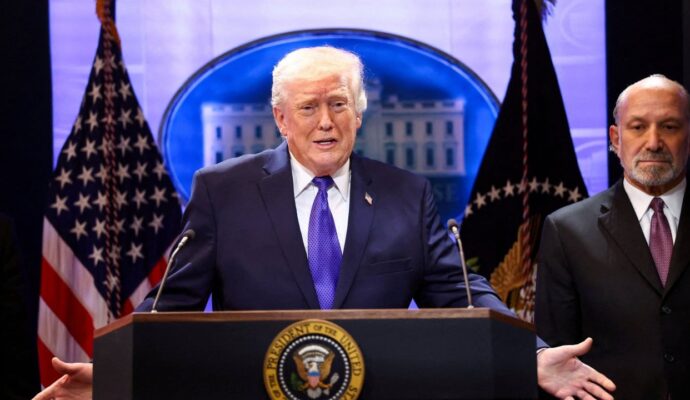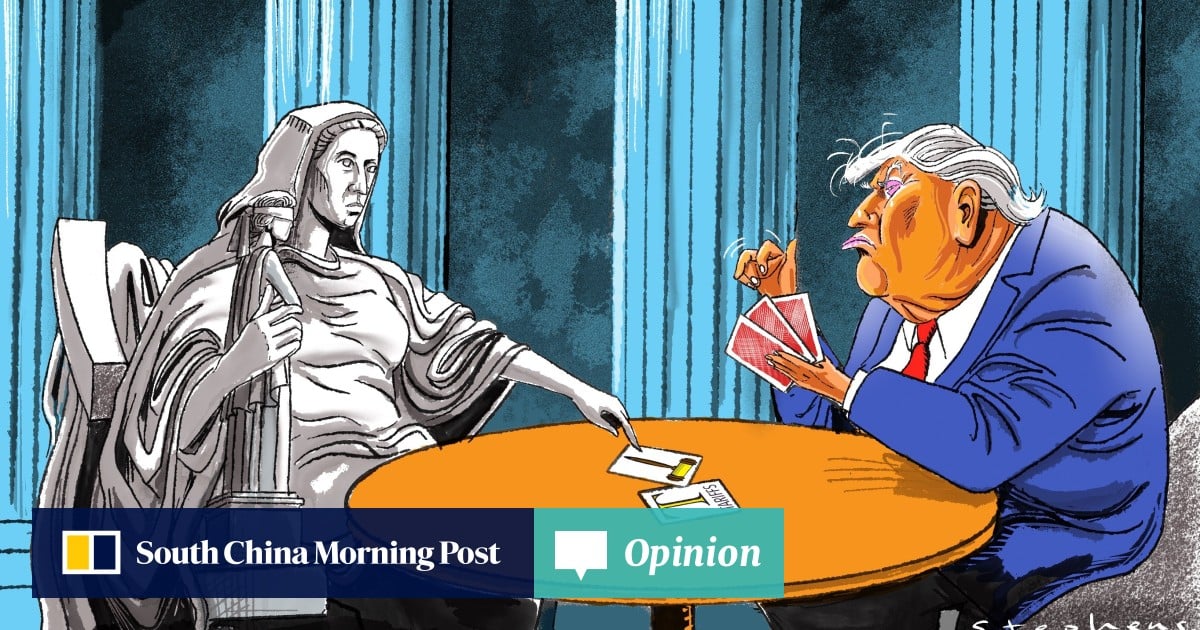
The International Emergency Economic Powers Act (IEEPA), enacted in 1977, allows the president to regulate economic transactions after declaring a national emergency in response to an “unusual and extraordinary threat”. But there’s “no reference to tariffs or duties” in that law and, moreover, “until now no President has read IEEPA to confer such power”, Chief Justice John Roberts wrote in a 6-3 decision against the Trump administration. The Constitution “very clearly” gives Congress the power to impose taxes, including tariffs, Roberts concluded.
Losing the tariffs under IEEPA does not eliminate other agreements that US trading partners have struck, including purchase commitments, investment pledges and regulatory coordination.
Advertisement
Officials and CEOs have voiced alarm and frustration behind the scenes. Gold rose while stocks and the dollar fell on Monday as uncertainty over global trade deepened. The main political groups in the European Parliament said they would suspend legislative work to approve the trade deal reached between the European Union and the US last summer.
Advertisement
Section 122 is an untested law that allows the president to levy a “temporary import surcharge” of up to 15 per cent if he finds there are “large and serious” balance-of-payments deficits and needs to prevent an “imminent” and “significant” depreciation of the US dollar. The statute only requires that the president determine whether such a deficit exists. Neither an inter-agency process nor a formal investigation is needed.