I am no Gulf expert. Having just returned from a side trip to the region, however, let me air my concerns. The growing hostility between Saudi Arabia and the United Arab Emirates — once brother kingdoms, now borderline fratricidal — could cause all sorts of problems far beyond the Gulf.
The recent flaring of bilateral tensions has obscure origins in Yemen, where, having started off on the same anti-Houthi footing, Riyadh and Abu Dhabi have become embroiled in a low-level proxy war. The situation has deteriorated so much that the once shunned state of Qatar, which recently endured a four-year embargo by the Saudis, the UAE and Egypt, is trying to broker a truce. Coming on the eve of what could be another US attack on Iran, and at a time when Israel has embraced regional chaos, the last thing the Middle East needs is a showdown between its two wealthiest countries. In Donald Trump, thankfully, we can rely on a judicious US hand to ensure that cooler heads prevail.
Alright, that was a dad joke. My apologies.
What makes this complicated is that it is so personal. Until recently, Abu Dhabi’s ruler, UAE president Sheikh Mohamed bin Zayed, 64, was viewed by some as a mentor to the Saudi crown prince, Mohammed bin Salman, 40. But MBS outgrew his junior status after taking de facto control of a kingdom whose population dwarfs the UAE’s. In other words, he discarded his mentor. Now they are at loggerheads.
Some believe the dispute is diplomatic since the Emiratis are close to Israel having been the crown jewel of the Abraham Accords when Trump brokered normalisation in his first term. The Saudis would exact a much higher — and, at this point, highly improbable — price for recognising Israel. Others say their falling out is structural. The UAE’s great wealth has enabled it to pursue “little Sparta” ambitions that bump up against Saudi Arabia’s historically broader national interests. Still others contend that there are cultural tensions. The freewheeling UAE, and especially Dubai, is a veritable fleshpot compared to the more religiously purist (though rapidly liberalising) Saudi Arabia.
At its heart, though, this is about the souring of a relationship between two powerful men. The cold war between the US and the USSR was ideological. This one is biological. Behind it lies clashing ambitions.
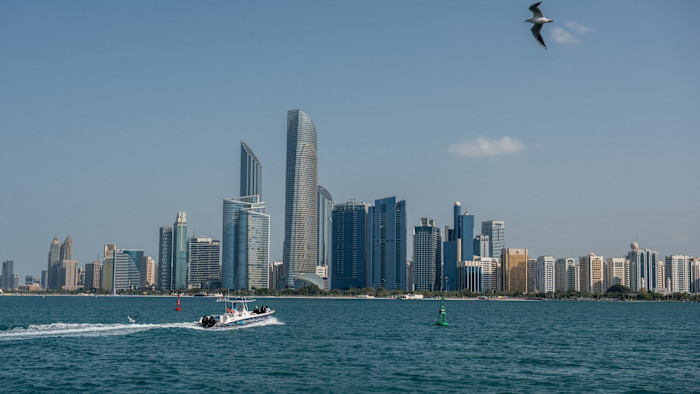
I first visited the Gulf states when I was a student in the early 1990s. I was accompanying my father, who got to know the Gulf in the 1950s when he was a student. He described to me the scale of change that had taken place in the preceding 30 years during which the once soporific British protectorates created Opec after having struck oil. Ongoing metamorphosis makes places like Dubai and Doha almost as unrecognisable to me from when I first saw them as it was to my dad then. The Emirs could have leaned back and enjoyed their role as prosperous compradors of the global economy. Instead, they are competing to see who can build the most futuristic skylines.
They are also on respective quests for geopolitical clout. The Gulf states, and especially the UAE, are buying up ports and other chokeholds across Africa and beyond and setting up quasi-military bases in countries like Libya and Somalia’s breakaway region of Somaliland. Abu Dhabi’s sponsorship of Sudan’s Rapid Support Force, a paramilitary group with a vile human rights record, has attracted particular concern. For a detailed account of the UAE’s “neo-Venetian empire” read this fascinating Substack essay by Brad Pearce. Here is one startling factoid. The UAE owns land the size of the UK in sub-Saharan Africa. We see the world through a prism of US-China rivalry. But the UAE is arguably winning the great game in Africa.
Of course, brotherly feuds can suddenly dissipate in the face of a common outsider threat. What concerns everyone in the region, barring Israel, is the prospect of an Iran that is falling apart. The Gulf states get along with Steve Witkoff and Jared Kushner, Trump’s envoys, because they are businessmen who like to cut deals. But nobody has much faith in Trump’s grasp of the Iran situation. A few years ago, the Saudis and Emiratis would have been egging on a US confrontation with Iran. Those instincts have since been inverted. An Iran in chaos threatens all its neighbours. The Gulf dreads what Benjamin Netanyahu craves. It is thus conceivable that MBS and MBZ will at least briefly bury the hatchet.
Either way, I am sure of two things. Living in Washington DC occludes one’s picture of what is happening most of the rest of the world. Every time I visit somewhere else, I also think of America differently. My recent visit to the Gulf reminded me that there are serious problems out there that Washington currently has little interest in addressing, as well as a declining ability to influence. My colleague Andrew England, the FT’s Middle East editor, is this week’s respondent. Andrew, on which side of the US-China divide are the UAE and Saudi Arabia? If the answer is both and neither, shouldn’t they settle their differences and revive the Gulf Cooperation Council?
Recommended reading
My column this week looks at the presidential ambitions of California’s governor, Gavin Newsom. “History might look back on the Trump years as the moment Silicon Valley’s broligarchs took control of our future,” I write. “Newsom is uncomfortably close to the tech billionaires. Middle America on the other hand seems to be ripe for AI populism.”
On that very subject, do read my colleague Joe Miller’s report on how Trump’s AI push is fuelling revolt in the Maga heartlands. Joe picked up strong opposition to local data centres and generalised fear of what AI will do to people’s livelihoods. I should add that this fear covers left and right.
Do also read my colleague Martin Wolf’s recent columns on global population decline. I share Martin’s complete lack of dread about declining population growth. It’s an opportunity, not a threat.
Finally listen to Peter Thiel’s conversation with the great Tyler Cowen in which the PayPal founder compares America today to Weimar Germany. “Liberalism is exhausted,” he says. “Democracy, whatever that is, is exhausted . . . We have to start talking far outside the Overton Window.” In plain English, Thiel is recommending autocracy. But what is most striking is the juvenility of his mind. He talks like a stoner.
Andrew England replies
To your first question, yes, both Saudi Arabia and the UAE have sought to resist “you are with me or against me” pressure to pick a side in the US-China divide — and for good reason. For decades, the Gulf states have looked to the US as their security guarantor. But at the same time they have over the years become increasingly frustrated by US policy swings and concerned about just how committed Washington would be to their defence should they come under fire. Israel’s September 9 air strikes on Doha, which targeted Hamas’s political office, only served to fuel that unease.
All in all, it’s caused them to hedge their relationships. The US remains their key foreign partner and the destination of choice for much of their overseas investments. Gulf states are also desperate to access American tech to pursue their AI ambitions. But China has become an increasingly important partner. While Beijing cannot, and does not — yet — seek to challenge the US’s dominant military and diplomatic heft in the Middle East, China long ago overtook America as the region’s main trading partner and the biggest buyer of its oil. Crucially, if you are sitting in Riyadh or Abu Dhabi, it is also likely to be among the last buyers of crude from the Gulf.
To your next point: would they be wise to heal their rift? Undoubtedly. But I don’t expect tensions to ease any time soon. The anger in both Riyadh and Abu Dhabi is palpable. Saudi Arabia is adamant that the UAE’s actions in Yemen, which shares a long border with the kingdom, threaten its national security interests. It takes a similar stance on Sudan, which lies just across the Red Sea from Saudi Arabia. The UAE has been shocked by Saudi Arabia’s muscular response to an offensive by an Abu Dhabi-backed Yemeni secessionist faction that ignited the crisis. In an extraordinary escalation, Saudi fighter jets bombed a UAE military shipment after it was offloaded at a southern Yemen port in late December.
MBS and MBZ are confident, assertive autocrats and neither is likely to swiftly cede ground to the other. It is unlikely to reach the depths of the last Gulf crisis — the regional embargo on Qatar that lasted more than three years — because of the importance of their economic ties. But with the two Arab heavyweights locked in a bitter dispute, the feud could have far wider repercussions. And it is the last thing the region or the US needs given the fragile and volatile state of the Middle East and the Horn of Africa.
Your feedback
We’d love to hear from you. You can email the team on swampnotes@ft.com, contact Ed on edward.luce@ft.com and Rana on rana.foroohar@ft.com, and follow them on X at @RanaForoohar and @EdwardGLuce. We may feature an excerpt of your response in the next newsletter