Unlock the Editor’s Digest for free
Roula Khalaf, Editor of the FT, selects her favourite stories in this weekly newsletter.
Bangladesh will be able to export garments made with US material to America tariff-free in a big win for the world’s second-biggest garment producer that offers it an advantage over competitors in India.
US President Donald Trump had initially given Bangladesh a 37 per cent blanket “reciprocal tariff” in April last year, before reducing it to 20 per cent in August.
Late on Monday, Muhammad Yunus, the country’s interim leader, said that the US and Bangladesh had signed an agreement providing for a 19 per cent tariff on all exports to the US and a zero rate for some garments.
Yunus’s office said in a statement that the US had committed to a zero tariff rate for certain textile and apparel goods made in Bangladesh using US cotton and man-made fibre. The agreement will “fit Bangladesh on US policy”, the 85-year-old Nobel laureate said.
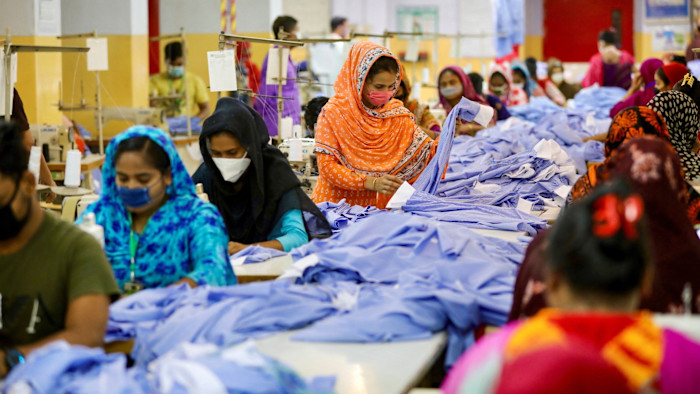
Much of Bangladesh’s clothing exports go to US “big box” mass-market retailers such as JCPenney, Target and Walmart. The country is the global industry’s second-largest exporter of ready-made garments after China, according to the World Trade Organization.
Bangladesh’s caretaker government has been in negotiations with Washington since April, when it first offered to buy more US cotton. This came amid concern in Dhaka that Trump’s tariffs could threaten an industry that is the backbone of the economy, generating about four-fifths of its export earnings.
“The reduction of reciprocal tariffs will grant further advantage to our exporters, while zero reciprocal tariffs on specific textile and apparel exports from Bangladesh using US inputs will give substantial added impetus to our garments sector,” said Khalilur Rahman, Dhaka’s chief negotiator in the trade talks.
The zero per cent concession will give Bangladesh an edge over its neighbour India, which is hoping to boost its exports of textiles and other labour-intensive goods under its own interim trade deal with Washington, which was announced last week.
“The competitiveness of our garments industry will be in a stronger position than India’s with this agreement,” said a senior Bangladeshi official in Dhaka, estimating that the south Asian country could increase its purchases of raw materials for the textiles sector from the US by $1bn, up from approximately $2bn at present.
The Trump administration set a tariff rate of 18 per cent on Indian imports, down from 50 per cent last year.
This came after Trump spoke to India’s leader Narendra Modi and Washington said it had secured a pledge from New Delhi to stop buying Russian oil, which Washington says is helping to fuel Vladimir Putin’s war in Ukraine.
There was no mention of India importing US cotton in the two countries’ declarations about their trade deal.
An analyst in New Delhi said that Bangladesh’s zero per cent loophole on textile and apparel exports made with US inputs would give it a significant advantage over India.
“Our officials were saying that in our agreement with the US, we would have an advantage in labour-intensive sectors, especially garments, because of the tariff differential,” said Biswajit Dhar, an Indian trade economist. “That is now gone.”