It is a steamy summer night in Shanghai, the kind when baked apartment water pipes cannot deliver cold showers and when, stepping outside, your eyes fog and sting with the heat.
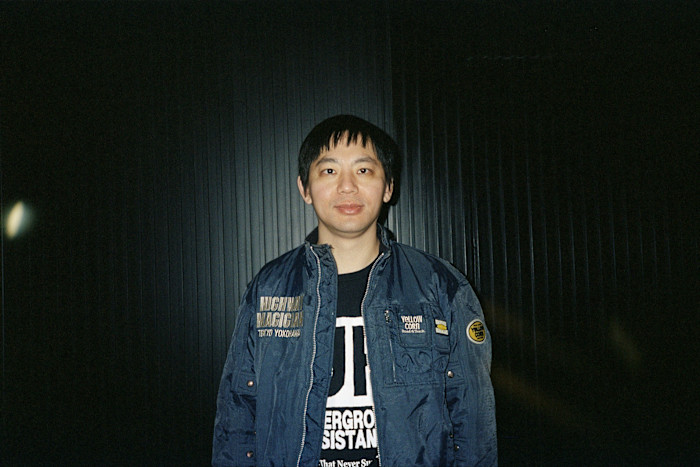
Ma Haiping, undisputed king of the Shanghai techno scene, has the right idea. He is perched outside a dive bar in the city’s tree-lined former French Concession, with a frosty bottle of Corona beer in front of him and luxurious cool air conditioning streaming from an open window behind. It’s about 11pm, an hour before he is due to play his set, and every few minutes Ma pats at his shorts pocket and turns to catch sight of his backpack, making sure his chunky USB drives, loaded with tunes for the night, have not somehow vanished.
The youthful-looking 44-year-old’s music has won awards and garnered international acclaim, yet, increasingly, he sees himself as belonging to a Shanghai that no longer exists. The city he started out in was synonymous with China’s rapid development and opening up to the world. It allowed Ma and others to become part of a thriving music scene that represented both resistance to the old China and the freedom of the new. Today, the great opening is a distant memory. Hit by years of economic malaise and the psychological scarring of the Covid-19 pandemic, Shanghai is a very different place. Among the collateral damage is the underground music scene Ma helped build.
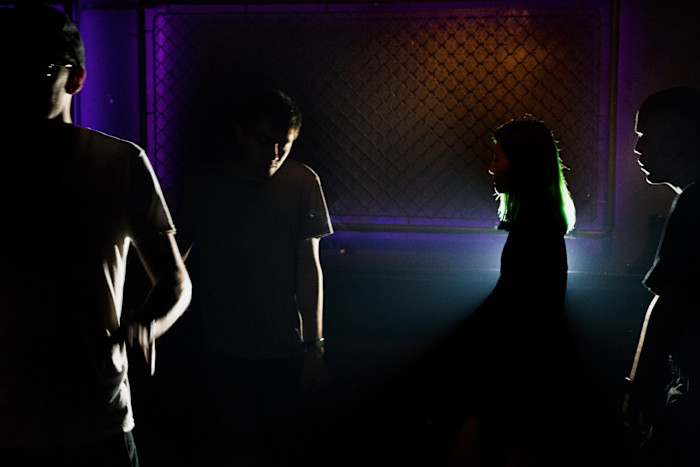
His desire to keep its culture alive burns as strongly as ever. And, as we talk, a trickle of young people, mostly Chinese, though there are a few foreigners, mooch around on the pavement before scanning their phones and heading into the club below. Their style is a collage of fishnet stockings, studded belts, Dr Martens platform boots and purple hoods with wolf ears. One figure stands out: a woman wearing a full-length black gown, thick-framed sunglasses wrapped around her closely shaved head.
Close to midnight, Ma follows them down a narrow corridor with concrete walls, corrugated metal and hanging chains. Beneath the red neon signage of the club’s name, Abyss, an industrial door opens to a staircase where a wall of bass booms and pulses, and a thick, almost dusty seam of cold air, mixed with plumes of smoke from cigarettes and vapes, billows up. In the cavernous room below, designed as a venue for live S&M-themed raves, Ma sets up on the mixing decks behind a sheet of mesh cage to play his trademark techno: pounding, hypnotic beats laced with futuristic and soulful soundscapes.
Dancers in Shanghai need to be taken for a ride, he tells me. They want ups and downs. And they like breaks — periods where the melody drops out and there is just the suspense of a clicking bass drum before different elements are brought in and finally the tune picks up again. It is different from playing techno in the underground clubs of Berlin and Amsterdam, he says, where dancers — “drug people” — crave constancy. They can’t handle things being too slow, or too drawn out. Here, Ma says, the dance floor is still a bit shy. “You need to tell them, ‘One, two, three, you need to dance’ . . . Chinese people like it, the da-da, da-da-da-da-da-boom.”
Few are better at this than Ma. Over the next hour and a half, he displays a frenetic energy behind the decks. He shifts and bounces from foot to foot, his hands constantly moving between dials and buttons on his mixing desk as he adjusts the myriad elements of songs while bringing in new beats and fading out old ones. Amid the flux, his head stays steady, his face a study in concentration. The set list has been meticulously planned, from an elemental opening track, “Aire Silencioso” by Madrid’s techno veteran Oscar Mulero, through to Ma’s own futuristic groove, “Artificial Ecstatic”. Throughout, his gaze shifts — from the equipment, to the crowd, and back — as he takes them on a journey.
Born in 1981, Ma grew up in a Shanghai that was in the vanguard of the changing times overseen by reformist leader Deng Xiaoping. His parents worked in the new wave of factories that were transforming China into a manufacturing powerhouse, but Ma found music early on. His father would sit outside their apartment playing an erhu, a two-string bow played vertically, or a bamboo flute, reciting tunes from popular Hong Kong-Chinese films like The Shaolin Temple for the neighbours.
By the 1990s, commercially importing foreign music into China was still banned but radio stations had started to rebroadcast American programmes. Ma and his friends listened attentively, tracking down songs they liked through the dakou trade, in which shiploads of cassettes and CDs sent from the US and Japan ended up as scrap on the Chinese black market. In just a few years, they traversed decades of previously unavailable western popular music, from Elvis and The Beatles to Michael Jackson and Metallica. They heard Nirvana before Kurt Cobain’s death in 1994. In high school, their tastes expanded further, as they listened to electronic icons including Kraftwerk and Aphex Twin, alongside alternative rock groups like Sonic Youth and The Jesus and Mary Chain.
Ma’s mother was unconvinced the pastime could lead anywhere. At home, he says, there were two recurring questions: “Have you eaten? Have you thought about how to make some money?”
At school there was little focus on music, art or culture. But when he arrived at university to study fine art, Ma encountered a generation of teachers who sensed a historic window for freedom of expression. Many were accomplished artists who bore the scars of Mao’s cultural revolution of the 1960s and 1970s. They imbued in their students a sense that there was a way, through the arts, to resist whatever pressures might come their way. They urged them to experiment.
For Ma, that something was techno, electronic music which originated in Detroit in the 1980s. His discovery of the genre coincided with the sudden availability of relatively cheap electronics. Ma and his friends were self-confessed nerds, and making music on a computer, rather than as part of a conventional band, was attractive. But there was no guidebook, no teacher. Nor did they know much about synthesisers, an instrument which, along with a drum machine, is fundamental to most electronic music. The first songs they created were painstakingly stitched together: a patchwork of second-long samples of a drum, guitar or other instrument captured from a dakou CD. They called the process tu fa lian gang — a phrase derived from Mao-era steelmaking in backyard furnaces.
Ma was fastidious in his study of techno. When a DJ came from out of town he made sure he could perch somewhere behind the booth, noting down the track titles and artist names of each song played. He systematically devoured records, listening to releases from prominent labels by catalogue number. He began to understand techno not as a narrow branch of electronic music but as a culture in itself. Fascinated by its deep roots in industrial Detroit and the club scene of East Berlin, he was drawn to how it offered endless ways to portray emotion and access to the future.
As his teachers had suggested, music was an avenue for resistance. When Ma felt something around him was not right, this feeling could be expressed through his production. But it was also capable of delivering a deeper exorcism. As he listened, Ma felt the existence of another world beyond the socialist ideology that had been ingrained from his schooling. It took years for him even to understand the significant hold this had on his psyche — and years more to peel it all back. “I felt I could clean Mao out of my body,” he said. “It’s a little bit painful . . . the old ideas collapse.”
In his twenties and thirties, an underground music scene in Shanghai began to take flight. Techno was among a panoply of subcultures drawing in more and more people. Ma and his friends raged against what they saw as mainstream electronic dance music. The parties they organised were named “Antidote”.
In 2014, Ma quit his day job at a museum to focus solely on music. An increasing number of his tracks were released by American and European labels. Years earlier, when he had started to bring cash home from gigs and side hustles in commercial music production, his mother immediately stopped complaining about the noise coming out of the speakers in his bedroom.
For many of Ma’s generation, it was difficult to see their lives in Shanghai as anything other than a linear progression of expanding cultural horizons and greater connectivity to the outside world. And yet, if they had considered the city’s past dramatic swings in fortune, they might have guessed the good times would never last.
Shanghai’s foreign concessions were established in the 1840s, the spoils of opium wars that protected westerners’ trade and kept them above local laws and local society. Their special status disappeared with the Japanese occupation in the early 1940s, followed by the Chinese Communist Party victory in the country’s civil war. Today, the wrecking balls and bulldozers of development have destroyed swaths of old Shanghai, but large tracts of the city’s inner west are still lined with the ubiquitous colonial-era plane trees. The area remains peppered with mansions, apartments and lane houses, many in the Art Deco-style popular during the golden era of the 1920s and 1930s.
At the start of Shanghai’s Yongfu Lu — formerly Route Pere Huc after a French pastor — stands a grand brick building, built as a garden residence in the 1930s with an Art Nouveau-influenced interior staircase. Today, it is occupied by a local unit of China’s commerce ministry, but for nearly 10 years a bomb shelter beneath the building was the beating heart of Shanghai’s underground music scene.
By the early 2000s, the Blue Ice bar was struggling to make money. A couple of music enthusiasts, Gary Wang and a British friend of his from Manchester, Gaz Williams, took over operations in late 2007. They simplified the interior, renamed the venue The Shelter, and started to fulfil their ambition of bringing their favourite artists from overseas to Shanghai. There was no master plan or lofty vision. The acts that came reflected their personal tastes and included prominent American hip-hop producers DJ Premier and Cut Chemist. But The Shelter also served as a home base for locals to play. Ma’s collective, Void, were among the resident DJs.
These were years when Shanghai’s image as an international city seemed to ring true again. The number of foreign residents roughly tripled from the turn of the century to nearly 180,000 by 2015. In earlier times, the city’s foreign aristocrats would be chauffeured from their segregated homes in the French, British and American Concessions to the 24-storey Park Hotel, where a retractable roof on the top floor would open and they danced beneath the stars. Now the visitors preferred to dance underground. But the city’s label as the Paris of the East was making a comeback.
When Vice profiled The Shelter in 2013, Wang joked that so many people were opening underground clubs that some had closed before he knew their name. The magazine described Yongfu Lu as “lined with rooftop beer gardens, coke-dusted hookah lounges . . . and hustlers aggressively pushing their shitty hashish”.
Longtime residents struggle to put their finger on exactly when Shanghai hit its peak. In 2009, the Void crew had organised what would be their biggest party, about 2,000 people packing out an industrial warehouse. But through the 2010s the pace of GDP growth had already started to slow down before the collapse of the debt-fuelled property boom in the early 2020s.
For many underground venues, astronomical rent increases over the years made business no longer viable. Savage competition between venues, including club owners bribing police to raid their rivals, didn’t help. Even when club owners kept their venues free of drugs and fights, puritanical cultural ministry cadres could shut things down. Authorities concerned about the creep of loose morals and foreign influence were an acute problem for venues seen as friendly to the LGBT community, and locals’ tolerance of drunk foreigners had run its course.
Socially, things had been tightening for a while. Xi Jinping came to power in late 2012 vowing to clean up the party’s excesses. Campaigns emerged in waves, tackling graft and corruption at both the grassroots and senior levels and, increasingly, cracking down on perceived dissent in creative industries. Meanwhile, the state’s surveillance apparatus was expanded across the city. The result for Shanghai was, over time, a clean-up of the city’s grey economy, with many of the more colourful corners being eradicated, liberal voices slowly silenced. The Shelter held its last night on December 31 2016. Local officials had declined a request to renew the bar’s licence and returned the space to its original purpose as a public emergency bunker.
The city’s brutal Covid lockdown was the final straw for many. In what was still by far China’s most liberal and international city, the sudden loss of all personal freedoms was compounded by horror stories; residents being forcibly taken to quarantine camps, mothers separated from their children and people attempting to take their own lives after months of isolation. The Shanghai government stopped reporting official data on the number of foreign residents after the pandemic. One local think-tank estimated an exodus of more than 125,000, leaving about 73,000 by 2023. Among them were Wang and Williams of The Shelter. No one knows how many Chinese left the city but the number included scores of creatives — writers, musicians, photographers, artists central to the underground scene’s vibrancy — who decamped either to other Chinese cities or left the country.
After the pandemic’s dark days, almost every venue that had once played underground music closed for good. The years of work by Ma and his friends to build a techno scene in Shanghai appeared, ultimately, to have been in vain.
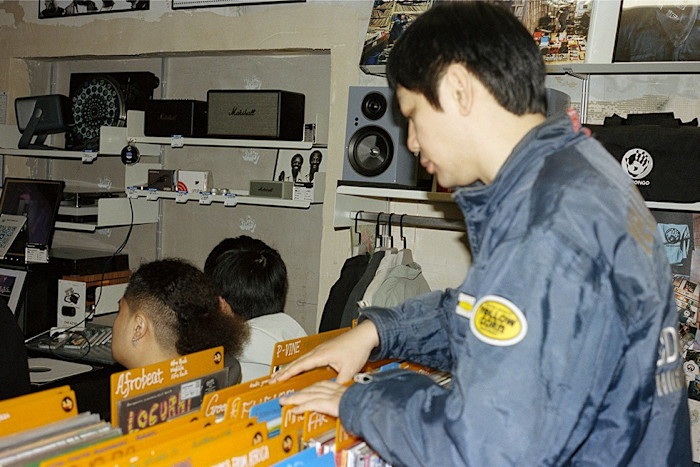
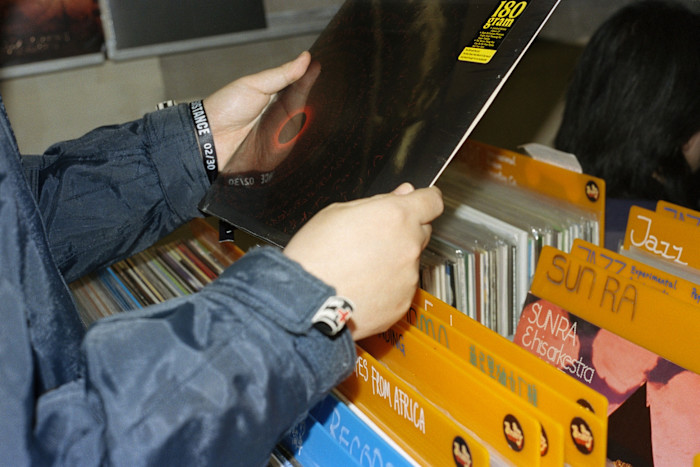
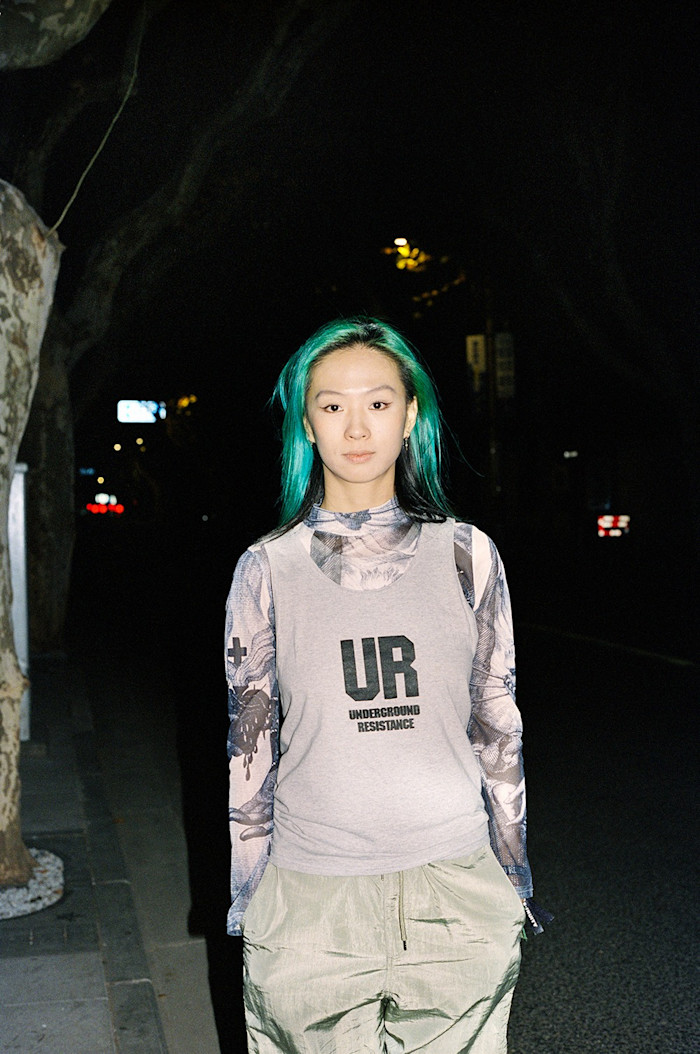
A 10-minute walk from Yongfu is Fruityshop Records, a small record store on Changle Road. Inside, it is tidily packed with crates of vinyl popular among collectors, including records by the late American producer-composer J-Dilla and Japanese city-pop icon Tatsuro Yamashita. Above the shelves of records, speakers or record players, the shop’s walls are lined with posters including vintage ads for 1970s Blaxploitation films such as Foxy Brown, Coffy and Cotton Comes to Harlem. Behind a set of turntables, with streaks of metallic green through her jet-black hair, is a woman in her early thirties named Liu Naxin.
Before the pandemic, Liu was content with her lot. Having grown up in Inner Mongolia, she had landed a job as a financial adviser in Beijing. In her late twenties, she had free time and money to spare. She travelled, went hiking and surfing and learnt to play tennis. Though she listened to pop songs, she felt no particular connection to music. But in lockdown, social activities and travel ground to a halt. Months later, in the final months before Beijing finally gave up on its pandemic controls, Liu found herself on the dance floor at a series of underground techno parties, struck by what seemed to be a sense of utopia. There were no divisions among the people. Everything felt essential. She felt free. Liu tumbled into the culture, following many parallel threads, not just European techno but also rock, jazz, film and literature. She started to learn how to produce techno herself via online tutorials.
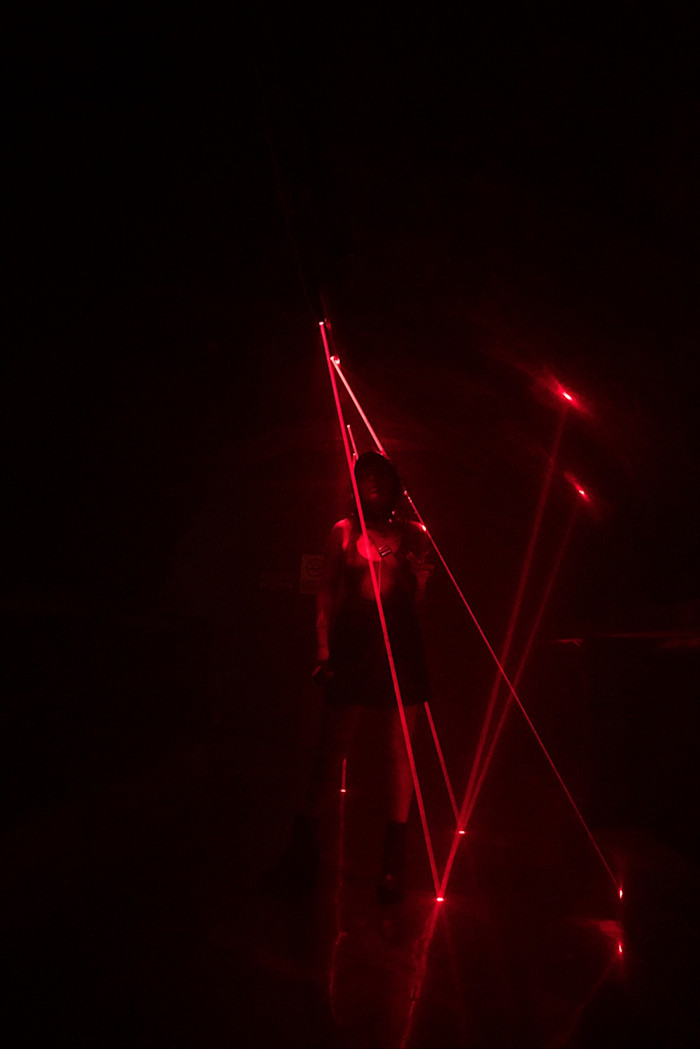
For a few months, the idea took hold that she should go to Berlin, one of the spiritual homes of electronic music. She started studying German but soon realised that travelling to another country wasn’t necessary. The life she was chasing was already there; it was just a matter of living with the culture and the music. Then she met Ma Haiping.
Ma conveyed to Liu his understanding of the core, almost spiritual ideas of techno culture: futurism, philosophy, science fiction, ways of seeing the world from a multidimensional perspective. The music, she discovered, was a projection of the future, allowing for deep mental exploration.
In 2023, she moved to Shanghai and found a job two days a week at the record store. Now she’s organising her own parties, following the lead of Ma and the Void crew, inviting DJs from around China and overseas with their own original music to share. At her core, Liu says she is a producer. Most days, she wakes in her home studio and immediately works on new music.
Last September, two years after seeing techno played live for the first time, Liu, whose stage name is Naxin, played her first live gig. Stepping behind the decks at a small Shanghai club she tried not to show her nerves and concentrated on the response she was getting from the dance floor. This year she played to about 300 people. She has found a connection, between herself, the culture and the dance floor, no matter how many or few are in the crowd. “It’s a really beautiful experience,” she says.
Liu is now an important driver of a resurgence in the underground scene. Gigs are happening again most weeks. A couple of small clubs have opened their doors. The crowds are smaller than a decade ago — in their hundreds, not thousands — and distinctly more local than they once were. Liu, living a new life, hardly sees her old friends. But her mum, a government official, and her dad, a banker, come to her parties to scan tickets on the door and to hand out drinks vouchers.
Ma lives on Shanghai’s outskirts, in a bright one-bedroom studio apartment on the eighth floor of a nondescript cluster of apartment blocks.
At the entrance of his flat is a collection of labelled photos. It’s something of a shrine to the golden years: performances at festivals in Shanghai and Melbourne; Ma with Chinese artist Cao Fei at the Guggenheim in New York, where her video was being exhibited (he created the soundtrack); Ma standing alongside his Void comrades and Robert Hood, one of the architects of modern techno, at a 2010 gig at The Shelter.
On the opposite wall is a photo of Ma with Jeff Mills. The 62-year-old godfather of techno is a figure of immense influence in the music industry. Encouraged by a DJ friend, in 2020 Ma emailed a few songs to Mills. To his astonishment, Mills replied swiftly, asking for more tracks. The result was the 2021 release by Mills’ Axis Records of Chang’e No. 4 — named after a Chinese moon landing a few years earlier. All of this, says Ma, was not even a dream, just a wish which came true.
Last October, he and his Void co-founder Cameron Wilson launched a new label. They hope to release music that captures the spirit of all the parties they have organised and tells the stories of their lives over the past 18 years, tales of how native and non-native cultures have blended together. The label’s first release is Wilson’s latest album, a journey through the boom years to the lockdown nightmare. When he plays live, he includes a sample of an infamous government spokesperson during the lockdown: “Control your soul’s desire for freedom.”
Outside Ma’s window, Shanghai is finding its feet. Each weekend, domestic tourists in their thousands descend on the French Concession, taking selfies next to the remaining heritage buildings. Local government officials claim that Shanghai is greener, cleaner and, thanks to the overlay of surveillance, safer than it has ever been. They also tout investments and support for the so-called night economy. In 2023, a new $100mn, eight-storey restaurant and nightclub complex opened at Fuxing Park, in the former French Concession, which brings in as many as 10,000 people, mostly aged 18-35, on weekdays, and double that on Friday and Saturday nights.
Ma still has little time for the kind of mainstream electronic dance culture promoted by image-conscious DJs at the city’s new superclubs. But he empathises with the younger generation in China who, he believes, are in a difficult position. He can see that many are trying to resist something, can feel something is not right in the world around them. But he is worried that the moment to change, to experiment, will pass them by.
“If we want to be free, don’t be a normal person,” he says. “The young kids want to be themselves, but they don’t know how.”
He hopes to at least be a positive influence, encouraging younger DJs like Naxin to see the creation of original music, not money, as the most important element of what they do. But there is so much at stake. Alongside abstract art, architecture and science fiction, music can be an important release valve in China, a society where political dissent is frequently met with harsh punishment.
The main room in his apartment is dominated by a huge leather chair in front of a wide desk with a large screen and a collection of instruments. Growing up, when Ma read about Beethoven and the thousands of hours he spent toiling away playing the piano and composing music, such dedication seemed shocking, beyond real. Now, as he sits each day for at least four or five hours trying to make new music, Ma feels he finally understands Beethoven’s commitment.
Each year, he composes about 20 new tracks, and every time he performs he always has a new original song to try out on the dance floor. It seems unlikely that Shanghai will, in the foreseeable future, feel quite so open and free as it once did. Still, Ma is confident that China will always need the city to be a window to the world, which means there will be space for the underground for as long as there are people willing to head down that road. “It’s a living culture,” he says. “I’m proud that we are still going.”
Edward White is the FT’s China correspondent
Find out about our latest stories first — follow FT Weekend Magazine on X and FT Weekend on Instagram