Unlock the White House Watch newsletter for free
Your guide to what Trump’s second term means for Washington, business and the world
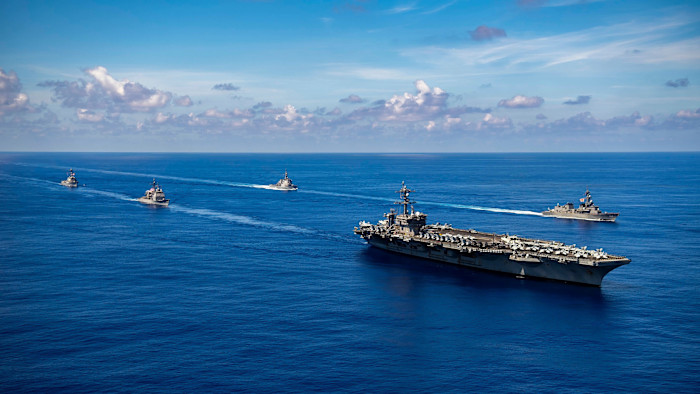
The US will boost its military capabilities in the Indo-Pacific as part of a new defence strategy designed to ensure China cannot block American access to a region that is becoming the global centre of economic power.
In a new national defence strategy released on Friday evening, the Pentagon said it would focus on defending the homeland — with a concentration on the western hemisphere — and on deterring China in the Indo-Pacific.
The NDS said the security and prosperity of the US were linked to America’s “ability to trade and engage from a position of strength in the Indo-Pacific”.
But the document also took a softer approach on China than President Donald Trump’s first NDS in 2018, which said Beijing wanted to shape the world in the image of its “authoritarian model”. It did not mention Taiwan, which is the most likely place where a conflict could break out between the US and China.
The document comes one month after Trump released his national security strategy, which prioritised the western hemisphere, which the NDS said would help counter narco-terrorism, in addition to securing access to Greenland, the Gulf of Mexico and the Panama Canal.
The NDS said that if China dominated the Indo-Pacific, it would be able “to effectively veto Americans’ access to the world’s economic centre of gravity”. The strategy document also urged allies to do more to boost collective defence in the region.
It said the US would “erect a strong denial defence along the first island chain”, referring to an area of the Indo-Pacific that stretches from Japan, past Taiwan and the Philippines, to Borneo and the Malay Peninsula.
The strategy said Trump sought “a stable peace, fair trade and respectful relations with China” but from a “position of strength”. It added the Pentagon would widen the range of communications with the Chinese military to support “strategic stability” with Beijing.
The NDS said the US was not trying to dominate, strangle or humiliate China. “Our goal is simple: To prevent anyone, including China, from being able to dominate us or our allies.”
It added Washington wanted to set the military conditions for “a balance of power in the Indo-Pacific that allows all of us to enjoy a decent peace”.
The NDS claimed the US would no longer be distracted by “interventionalism, endless wars, regime change and nation building”. But it comes after the Trump administration has bombed nuclear facilities in Iran, captured Venezuelan president Nicolás Maduro and sparked a crisis with Europe over Greenland.
The document said Russia would remain a “persistent but manageable threat to Nato’s eastern members for the foreseeable future”. On the Middle East, it said Iran remained the biggest threat and appeared “intent on reconstituting its conventional military forces” and could try again to build nuclear weapons.
Calling Israel a “model ally”, the Pentagon said the US’s Middle Eastern allies and partners should shoulder most of the burden of combating Iran, but that Washington could take “focused, decisive action” in the region.
Trump on Thursday said Washington was building up military assets in the Middle East “just in case”. The region had been braced for US intervention as the Iranian government carried out a brutal crackdown on protesters this month, but the president softened his rhetoric after lobbying from Israeli and Arab officials.
According to the strategy, the Pentagon will create “credible options” to guarantee military and commercial access to Greenland, the Gulf of Mexico and the Panama Canal. It claimed the influence of adversaries had grown in those areas.
After repeatedly threatening to use military action to take Greenland, Trump on Wednesday backed down and ruled out the “use of force” to bring the Arctic island under US control, agreeing instead to pursue negotiations with Denmark and Nuuk.
The strategy noted the US would work in “good faith” with Canada and Latin American countries, but warned the Pentagon was “ready to take focused, decisive action” unilaterally if those countries did not “do their part to defend our shared interests” in the western hemisphere.