Unlock the Editor’s Digest for free
Roula Khalaf, Editor of the FT, selects her favourite stories in this weekly newsletter.
The writer, a former British diplomat specialising in China, is a fellow of the Council on Geostrategy and the Royal United Services Institute
Plans for a new Chinese embassy in London have gained government approval and public disapproval. Neither is surprising.
Opposition centres on a handful of worries. The embassy’s size is unnecessarily large. Sensitive communication cables abut the site, which is on the edge of the City of London. It could become a big spy base, with “secret underground rooms” holding dissidents abducted by Chinese diplomats. Visitor access to the ruins of a 14th-century abbey under the embassy will now require Chinese permission. People say it should not be situated at the heart of the capital.
These concerns are overwrought. The agreement with the Chinese specifies that they will give up their current seven diplomatic sites across London. What matters is the number of personnel rather than the footprint of buildings. And the UK government, like all governments, can control the number of visas it issues. China does not employ locals in its embassies, unlike the UK in China. It also likes to keep a close eye on its staff by having them live on site. It is therefore unsurprising that they have sought to consolidate in one big headquarters.
Data cables from the financial district run a metre from the perimeter wall. This is not ideal. However, strong encryption makes modern fibre very hard to exploit. The central hubs of communication companies look out for unusual behaviour and are themselves well protected. No infrastructure will be shared with the embassy except for those serving the embassy itself. The cables themselves are far from the only ones responsible for communications to and from the City. Data is diced into packets and sent via many different routes before being reassembled at the destination. If a cable is sabotaged, data is rerouted. And the cables themselves could be relocated.
The idea that the new embassy will become a massive spy base belongs to the John le Carré era. Modern technology makes keeping tabs on diplomats easy. The Chinese intelligence services also tend to recruit and run agents in third countries. Recent operations against UK parliamentarians have not been run from embassies.
There will be Chinese intelligence officers in the new embassy, as no doubt there are in the current one. From a UK security point of view, it is likely to be an advantage that in future they will be in one location. Their work probably centres on looking for interesting contacts and reporting on possible vulnerabilities. People spy, not buildings.
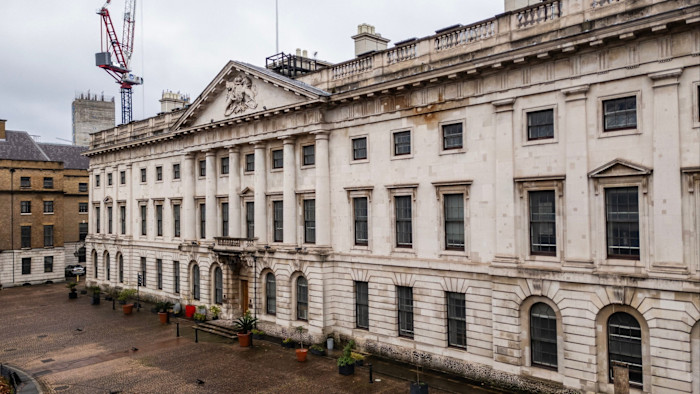
The much touted “secret rooms” — in normal parlance, cellars, which have been at the site since 1810 — will not become torture dungeons for targets of transnational repression. If the Chinese were to kidnap a dissident on UK soil, something that last happened in 1898 with Sun Yat-sen, a suburban safe house rather than an embassy in central London would be a more likely option.
And while some may not welcome the lowering symbol of the Chinese Communist Party opposite the Tower of London or restrictions on visiting a historic — although not famous — abbey, the pass was sold when Boris Johnson agreed to the site as foreign secretary in 2018. Distaste for the CCP does not seem an adequate reason for withholding permission.
Opponents have raised funds to finance a judicial review. This may delay the building of the embassy — possibly for some years — but is unlikely to prevent it. Judicial reviews look at process, not outcome. Was the decision made in accordance with the law? If not, the minister will have to go through the approval process again, this time observing proper procedure. But the same decision may well be reached.
The Chinese are unlikely to understand or sympathise with the principle that the government must be accountable to the courts. The CCP states clearly and often that the party is in charge of the law. They may even suspect that Perfidious Albion planned matters this way. This irritant to relations will continue.
We should take at face value the recent letter of the heads of MI5 and GCHQ, in which they declare that the risks around the embassy are manageable. But there are other more serious concerns. What should worry the public is that all this furore is ultimately a distraction from the more important business of recognising the genuine threats that the CCP poses to the UK and implementing measures to rein them in.
The prime minister is set to visit China next week. So he should. No country can ignore the world’s second-largest economy. A better understanding of China through direct experience and engagement should contribute to better foreign policy. Approval of the new embassy does not contradict Sir Keir Starmer’s declaration that national security is his top priority.