On a bitterly cold evening in Beijing, many of the western luxury boutiques at the high-end WF Central mall are almost empty. But at Chinese jeweller Laopu Gold, half a dozen customers try on necklaces and rings as keen sales associates hover.
“Some brands are very special, like Louis Vuitton and Chanel,” said Linda, a 41-year-old Beijinger browsing in the store. However, she added, China now had some “very good” local brands that were catching her attention. “They fit my taste, and they are a bit less expensive.”
Since listing in Hong Kong in 2024, the jeweller’s shares are up more than 800 per cent, giving it a market capitalisation of HK$120bn (US$15bn). Investors are betting that a Chinese company focused on the domestic market, at a time when most western luxury brands’ sales are falling in China, has plenty of room to grow.
There is a growing amount of evidence that shoppers in the luxury industry’s two biggest markets — the US and China — are turning to local alternatives to the European brands that have long dominated the market.
Linda, who was wearing a Tiffany HardWear bracelet and carrying a Chanel handbag, said she had been moderating her purchases from international luxury groups over the past year, and instead turning to Chinese brands.
Homegrown brands such as Laopu Gold, cashmere specialist Icicle and bag maker Songmont are redefining what a modern Chinese luxury brand can be.
Meanwhile, in the US, sales of American heritage brands Ralph Lauren and a revitalised Coach have been growing by double digit percentages in recent quarters — a stark turnaround after years of both brands being regularly discounted.
“The key to the luxury industry’s longevity is convincing Gen Z that investing in these products is worthwhile, but . . . many of them are choosing local brands — in China but also in the US,” said Claudia D’Arpizio, head of luxury at consultancy Bain.
She added that a vanguard of “insurgent” brands were producing original, on trend designs to shoppers at more affordable prices than top European labels, which have raised their prices significantly over the past few years.
“We can call it local pride but I would say really these brands are better at interpreting heritage and local taste,” said D’Arpizio.
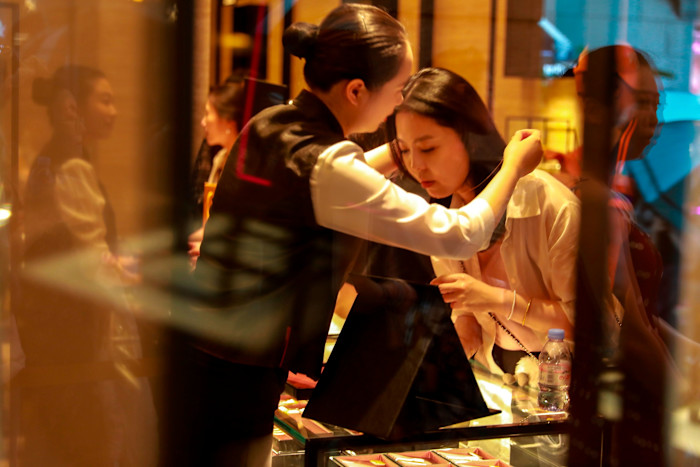
At Laopu, designs include pendants and earrings in the shape of abacuses and Hulu gourds — an important Chinese symbol of good fortune and prosperity.
A gold and pavé diamond “Hulu” pendant, one of the brand’s most popular designs according to a sales assistant, retails for about Rmb20,000 ($2,800), whereas a gold and pavé diamond Cartier Love necklace costs €6,500.
“We’re watching Chinese brands gain the kind of negotiating leverage in top malls that used to be reserved for global luxury brands,” said Alexis Bonhomme, chief executive of brand consultancy Trinity Asia.
The price point is paying off at a time when the Chinese government is nudging consumers towards buying from domestic brands and consumer spending is subdued.
Laopu’s sales were up by 233 per cent in mainland China in the first half of its current financial year compared with a year ago, according to HSBC, with sales per boutique in the country much higher than at western peers and traditional Chinese jewellers.
“We think that Laopu’s success has stemmed from unlocking demand from a new segment in the high-end jewellery market and by not trying to be the next Cartier,” said Erwan Rambourg, head of luxury at HSBC.
Bonhomme said Laopu was also attracting young buyers among a mix of customers who would also buy from global and traditional Chinese jewellers.
“Laopu is one of the first Chinese jewellery brands to build a luxury-like feeling not just selling gold, but turning heritage craft into repeatable retail,” he added.
While the new entrants are intensifying competition in China’s subdued luxury market, US shoppers are buying more at home — instead of on jaunts to Europe — as the dollar weakens and aspirational middle-class consumers look for value.
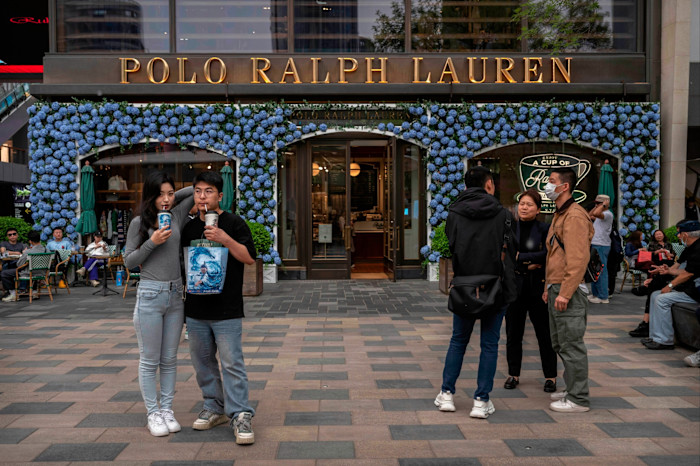
Ralph Lauren, which sponsors the US Olympic team and the US Open tennis tournament, has run splashy ad campaigns designed to elevate the brand by evoking a nostalgic, cinematic vision of Americana.
One industry executive said many consumers were connecting with the brand’s vision as the US entered a more conservative, inward-looking cultural phase.
The company’s latest holiday ad campaign could be a list of greatest hits of an idealised America: a twin prop plane dips across a mountainous Utah skyline; dirt bikes, horses, and pick-up trucks kick up dust; a bevy of multi-ethnic, pouty models wander fields dressed as gentleman cowboys in tuxedos, shearling coats and wide-brimmed hats.
Executives have spent almost a decade working to elevate the Ralph Lauren brand and take greater control of its distribution, but the goal is still to cater to a wide range of customers and price points.
“Our storytelling is really designed to appeal broadly, including to the more value-sensitive consumers,” chief executive Patrice Louvet said on a November earnings call.
Bag maker Coach has recently resurrected itself from the mall discount bin, winning over Gen Z shoppers — particularly in the US — with popular bags such as the Tabby, which has been a hit since it launched in 2019 and has a starting price of about $350. Chief executive Todd Kahn said in September his goal was to build Coach, owned by US apparel group Tapestry, into a $10bn brand.
Coach’s “point of market entry is the 18-to-27-year-old”, Tapestry’s chief growth officer Sandeep Seth told investors in November, adding that in the US alone over the next decade, “25mn women are going to turn 18, and they are all going to make their first major handbag purchase . . . this provides a huge opportunity to grow by expanding that market.”
Beijing-based Songmont, which was founded in 2013, has a similar price point and draws on “the rich cultural heritage of the Orient” for the shapes of its handbags and high-concept retail spaces in a handful of Chinese cities.
Minimalist ready-to-wear label Icicle, which is based in Shanghai and has design studios in both China and France, has 240 stores across China. It is now looking to increase its presence in France since opening a flagship in Paris in 2019, and showed its first collection at Paris Fashion Week in 2025.
“I think this is very healthy from a competitive standpoint,” said D’Arpizio. “We always say this is a cultural and creative industry. It is strange then to say that there is only one culture in the world, which is the European culture that is conquering everyone.”