Stay informed with free updates
Simply sign up to the Chinese politics & policy myFT Digest — delivered directly to your inbox.
China has intensified its economic pressure on Japan, with state-owned enterprises banning employees from travelling to its Asian neighbour, tour groups and a flagship forum being cancelled and Japanese film releases suspended.
The moves are part of a broadening response by Beijing to Japanese Prime Minister Sanae Takaichi’s suggestion that a Chinese attack on Taiwan might prompt military intervention by Tokyo.
It is one of the worst flare-ups in relations between the two countries since former Japanese leader Shinzo Abe made similar remarks on Taiwan five years ago.
Staff at four separate Chinese state-owned enterprises in Shanghai and Zhejiang and Hunan provinces said managers had told them to cancel all trips to Japan over the dispute, following a government travel warning last week.
An employee at a Zhejiang-based state-owned group received an official notification that “due to the tense relationship between China and Japan”, the company would suspend processing of all personal travel applications to Japan.
The passports of higher-ranking staff at the company are typically withheld by management to prevent them from travelling overseas without explicit official approval — normal practice in China’s state enterprises.
An investment officer at a Shanghai-based subsidiary of a central government-owned asset manager also said she had received verbal guidance from management not to visit Japan.
A staff member at a government publisher in Shanghai said “even if your passport is not withheld, the warning is clear: Even if you go discreetly, you shall bear the consequences”.
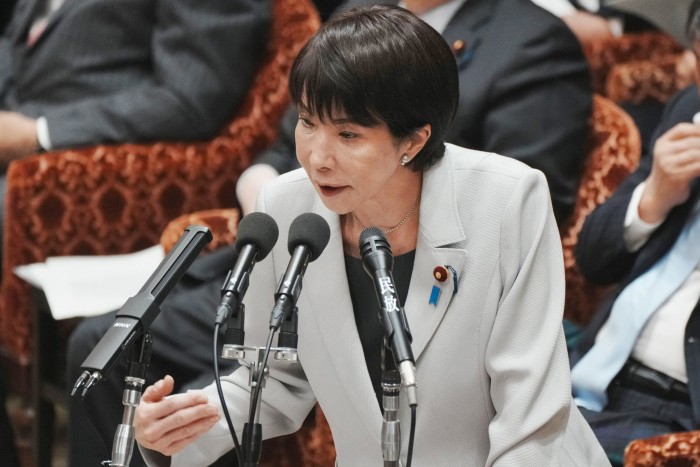
Beijing has reacted angrily to Takaichi’s comments in parliament this month that Tokyo could consider a Chinese attack on Taiwan as an “existential threat” and might therefore order the Japanese military to intervene.
Beijing claims sovereignty over Taiwan and has threatened to annex it by force if Taipei resists unification indefinitely, a prospect many Japanese fear would be a devastating blow to democracy in the region and which would give China effective control of sea lanes vital to Japan.
Chinese state media have described Takaichi’s comments as a military threat and Beijing on Sunday conducted coastguard patrols near a group of disputed islands administered by Tokyo.
Talks in Beijing on Tuesday between Masaaki Kanai, head of the Japan foreign ministry’s bureau covering Asian affairs, and Chinese counterpart Liu Jinsong made no obvious progress in easing tensions.
The Chinese ministry said Liu told Kanai that Takaichi’s remarks had “caused fundamental damage to the political foundation” of ties between the two countries. Tokyo said Kanai had rebutted Liu’s statement of China’s position and explained that Japan’s policy had not changed.
The fallout from the dispute has been growing, with travel-related stocks in both countries affected. Japan’s stock market continued to fall on Tuesday.
In a measure of the severity of the plunge in relations, the Beijing-Tokyo Forum, a flagship annual meeting of scholars from both countries, will be postponed this year for the first time since it was launched in 2005.
China’s foreign minister Wang Yi had been expected to address the forum, which was due to start in Beijing on Saturday.
China has cancelled tour groups to Japan and travel agencies have stopped promoting it as a destination. Chinese media have alleged that there have been scores of violent attacks on visitors to Japan from China but have provided little evidence.
According to one Japanese official, scheduled tours for prospective Chinese students to a number of major Japanese universities have also been suspended.
According to 2024 statistics published by the Japan Student Services Organization, 123,485 Chinese people were studying at Japanese universities and other institutions, accounting for nearly 37 per cent of all foreign students.
Dozens of planned study tours to Japan by groups representing Chinese industry that were supposed to have happened over the next five weeks have been called off, the same person said.
A staff member at one tour operator in China, who asked to be identified only by the surname Chen, said all group trips to Japan in December had been cancelled due to “national policies”.
Chen said the company would need further notice from the local government’s Bureau of Culture and Tourism to resume the trips.
In China’s movie industry, an internet platform tracking new releases said two Japanese films, Crayon Shin-chan the Movie: Super Hot! The Spicy Kasukabe Dancers and Cells at work!, which were scheduled for release in the next three weeks, had been postponed, while other productions were also being affected.
A senior official at Chinese film importer Road Pictures said at least two to three films would be delayed and some projects would be stalled. The suspensions would last for three to six months, he predicted.