Taiwan is hailing a foreign policy breakthrough after a flurry of overseas visits by senior figures, saying the ties show welcome support in the face of China’s persistent threat and uncertainty over US President Donald Trump’s commitment.
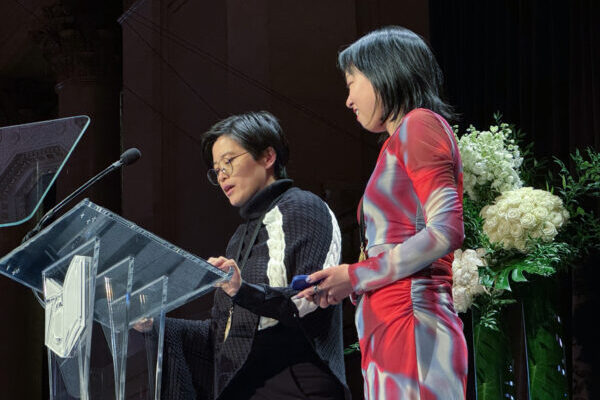
Former president Tsai Ing-wen capped the outreach with a speech in Berlin on Monday, her first visit in 15 years to a country that has been cautious in engaging Taipei to avoid damaging its relationship with China.
“Much of the destabilising tactics Taiwan has faced in recent years tend to find their way to Europe eventually. It is crucial that we deepen security co-operation between democracies,” Tsai told delegates at the World Freedom Conference, an event backed by anti-authoritarian groups.
Days earlier, Taiwan’s vice-president Hsiao Bi-khim addressed the Inter-Parliamentary Alliance on China at the European parliament in Brussels — the first speech by a senior member of the Taiwanese government in a European legislature.
The engagements follow pro-Taiwan moves from Japan’s Prime Minister Sanae Takaichi and whirlwind travel by Taiwan’s foreign minister Lin Chia-lung to countries that do not have diplomatic relations with Taipei.
Taiwan needs to lobby constantly to secure contacts that would be normal for other nations. Even governments that share its democratic ideals and economic and security interests have shied away from public official exchanges after switching diplomatic recognition to Beijing in the 1970s.
China claims the island as part of its territory and threatens to annex it militarily if Taipei refuses to submit under its control indefinitely.
When Hsiao returned from Brussels on Saturday, she suggested Taiwan’s isolation was receding. Quoting the Chinese philosopher Mencius that “those who take the right way get a lot of help”, she said that since Taiwan was on the right path, it would “gain more international recognition and help”.
Foreign minister Lin has travelled extensively in Europe since September, including trips to France, the Netherlands, Austria, the Czech Republic, Poland and Belgium.
Separately, a member of the Taiwan president’s National Security Council led a delegation to Nato headquarters in Brussels in September.
Lin also visited New York while the UN General Assembly was in session — widely perceived as a political message. Taiwan is excluded from the UN on China’s insistence that it be denied recognition of its statehood.
China has fiercely protested against all of the contacts.
Most European governments insist their policies towards China and Taiwan remain unchanged. Unofficially, however, they are handling contacts with Taiwan more flexibly as control of supply chains for semiconductors — where Taiwan plays a vital role — becomes an increasingly urgent common interest.
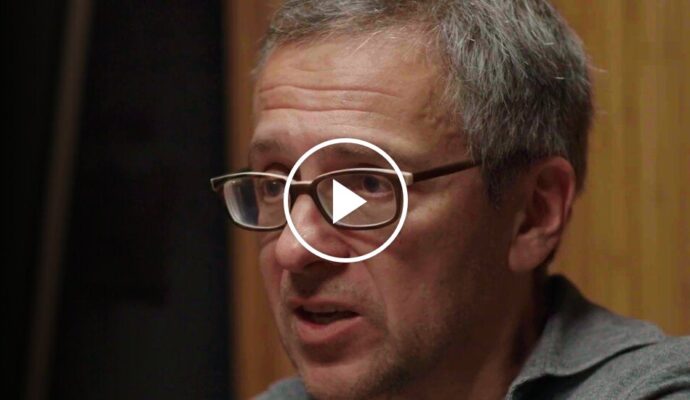
“For the Taiwanese, there is a desire to seize the opportunities offered by the easing of European restrictions. There’s a snowball effect . . . a ripple effect through practice,” said Mathieu Duchâtel, head of the Asia programme at think-tank Institut Montaigne.
The German government insisted Tsai’s visit was private and that no meeting with ministers or officials had been arranged, but her trip nonetheless highlighted Berlin’s greater willingness to stand up to Beijing.
The shift has been driven by deteriorating relations with China and a recognition that a stable and open Taiwan Strait is vital to Europe’s trade interests and deepening technological ties with Taiwan.
“For many years, the German government was incredibly skittish when it came to Taiwan,” said Noah Barkin, senior adviser at Rhodium Group. “When Tsai won re-election in 2020, Berlin refused to congratulate her. But Germany’s position has evolved in recent years as China has ramped up pressure on Taiwan and tried to force its own definition of the one China policy on other countries.”
A similar dynamic is under way among some US allies in Asia. In September Lin visited the Philippines, which in the past limited government-level exchanges with Taiwan to ministers with economic portfolios. On a trip to Japan in July, which was made public by Japanese lawmakers, Lin met Takaichi, at the time a former minister.
Last week Takaichi told lawmakers that an “emergency” involving the use of military force against Taiwan could amount to a situation threatening Japan’s survival, suggesting a Chinese attack on Taiwan could meet Japan’s constitutional requirements for allowing its Self Defence Forces to get involved. She was the first Japanese prime minister to go that far while in office.
Taipei is encouraged by the broad change in tone. The senior Taiwanese official said the biggest significance was the reassurance it offered to a public shaken by President Trump’s erratic policies.
“The US is our only real ally, and people worry that might be changing,” the official said. “It helps when they see we are gaining more broad-based support.”
Observers caution that the friendlier reception for Taiwan does not mean the country can count on hard security support in case of a Chinese attack, however.
Two people within Japan’s ruling Liberal Democratic party said Takaichi’s remarks in parliament were reflective of her personal thinking but lacked a broad base of support within the LDP. One said Takaichi’s view was closer to that of the late prime minister Shinzo Abe, who had a much broader hold on the LDP.
“Takaichi’s personal stance has led to excessive expectations in Taipei,” said one Japanese official. “We are negotiating some new formats of co-operation, but we will be very careful to manage this to not harm our relations with China.”
Reporting by Kathrin Hille in Taipei, Anne-Sylvaine Chassany in Berlin, Adrienne Klasa in Paris, Leo Lewis in Tokyo and Laura Dubois and Andy Bounds in Brussels