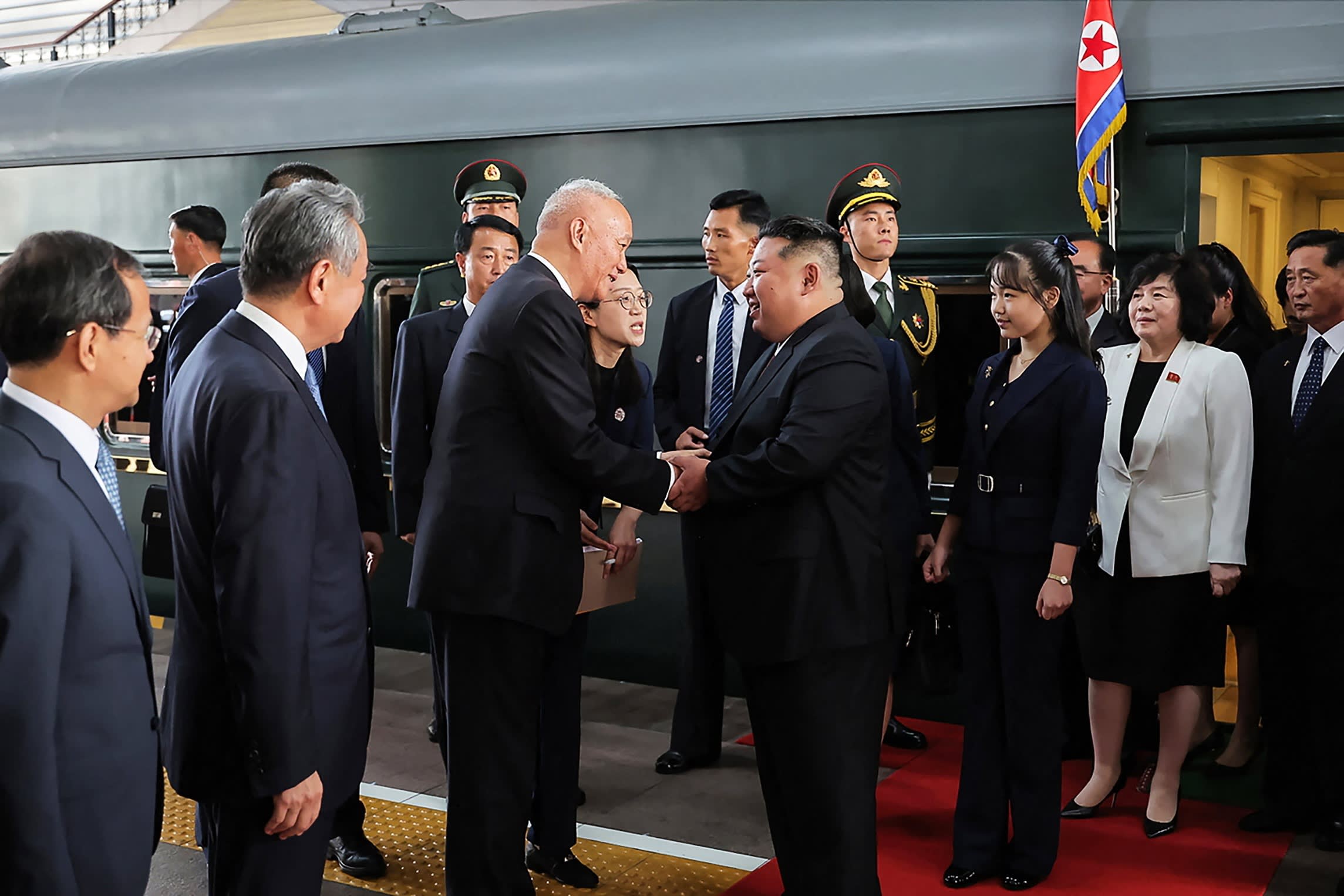
Kim Jong Un cut a contented figure as he and his young daughter Ju Ae stepped off an armoured train at Beijing railway station on Tuesday afternoon to be welcomed by a coterie of senior Chinese officials.
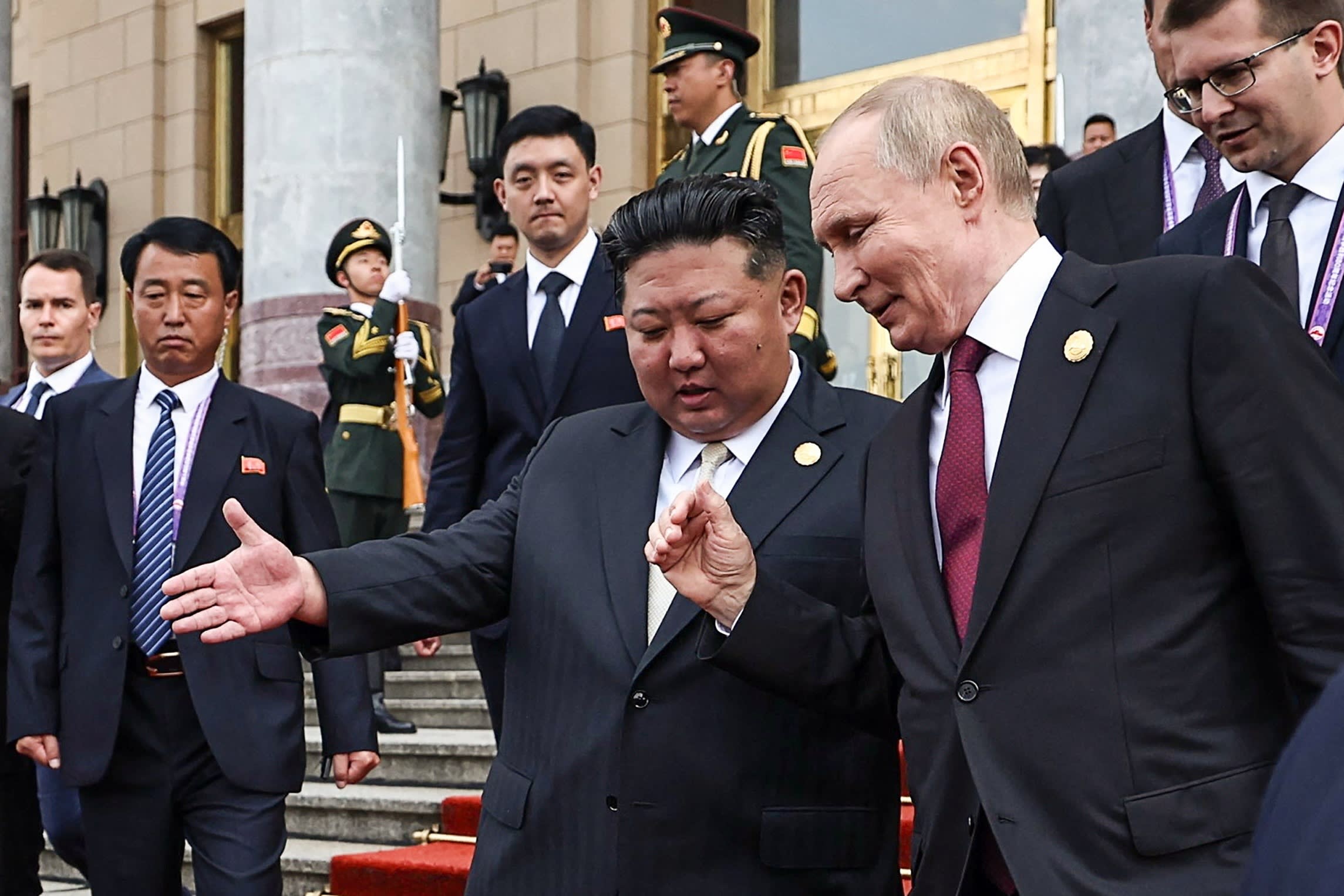
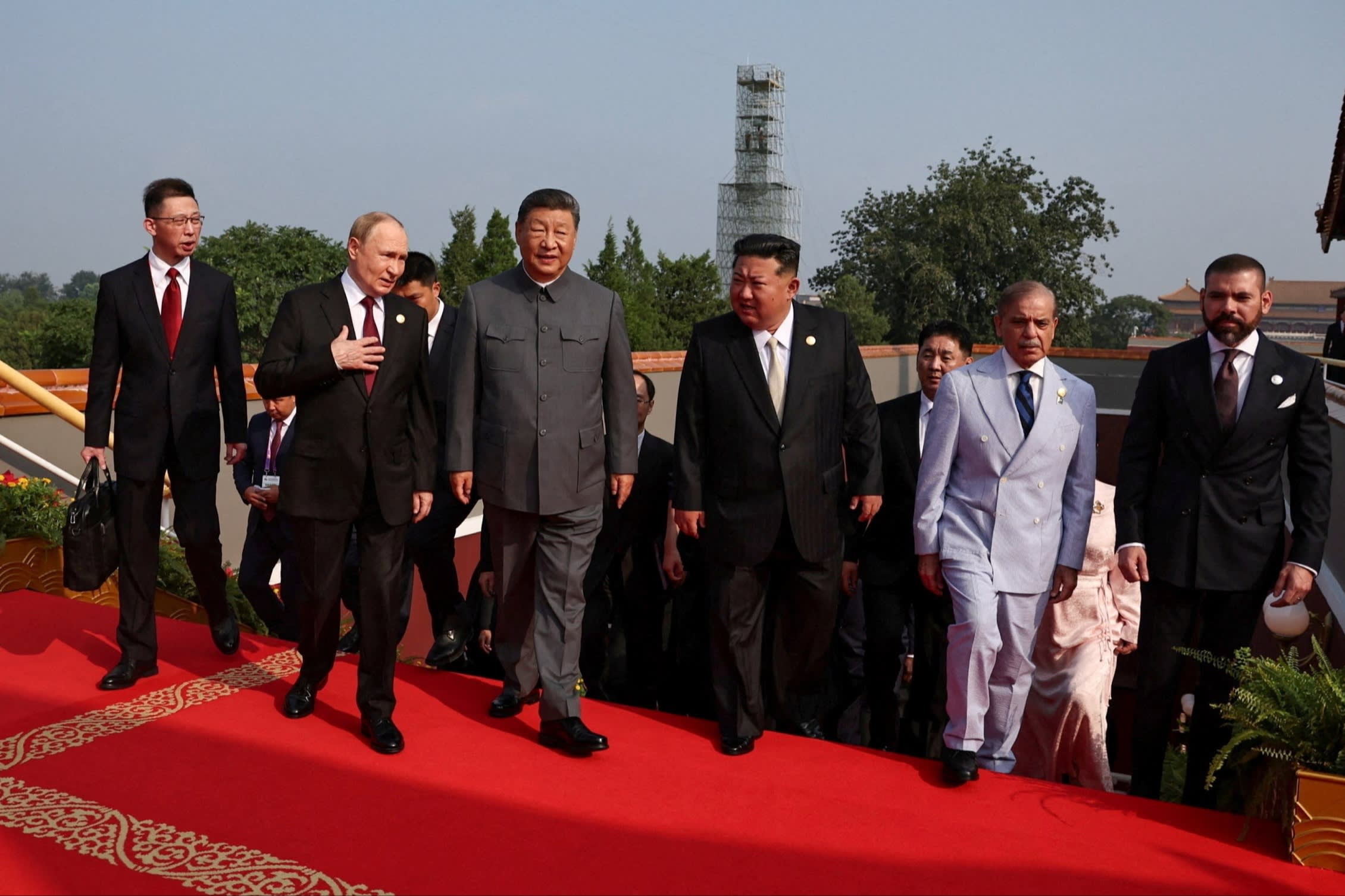
The following day, North Korea’s leader stood shoulder-to-shoulder with China’s leader Xi Jinping and Russian President Vladimir Putin, a triumvirate of strongmen presiding over a landmark military parade.
Kim’s elevation was a moment of triumph for a man written off by many western experts as weak, callow and unlikely to survive for long after he assumed power following the death of his father Kim Jong Il in 2011.
But having cemented his grip on power, while continuing his unrelenting illicit nuclear weapons programme, the millennial dictator now finds himself feted by the very leaders who once supported US-led efforts to impose sanctions on, and isolate, his country.
“Kim Jong Un has every reason to be happy,” said Andrei Lankov, a North Korea expert at Kookmin University in Seoul. “As recently as six or seven years ago, it looked as if he was trapped with little chance of survival because Russia and China were supporting the US-initiated sanctions.”
“But now he is being flooded with Russian gold, he is talking to some of the world’s most powerful men, and in Ju Ae he has a successor whom he is promoting on the global stage,” said Lankov.
Wednesday’s parade marked Kim’s first visit to neighbouring China since 2019, his first-ever multilateral event, and the first gathering between leaders from Beijing, Moscow and Pyongyang since Mao Zedong, Nikita Khrushchev and Kim’s grandfather Kim Il Sung met in 1959.
It “was a historic moment not only for Kim’s rule, but also for the region”, said John Delury, a senior fellow at the Asia Society, describing it as “an amazing achievement that speaks to the perpetual underestimation of both him and his regime by outside observers”.
<div data-o-component="o-expander" class="o-expander o-expander__info-box" data-o-expander-shrink-to="hidden" data-trackable="clip-info-box" data-o-expander-collapsed-toggle-text="Show video info” data-o-expander-expanded-toggle-text=”Hide video info“>
In 2017, Xi and Putin both signed up to severe UN sanctions on Pyongyang following its sixth nuclear test. But as US-China relations deteriorated rapidly during Donald Trump’s first term, by 2019 Beijing had concluded that it needed to support Pyongyang at all costs, Lankov said.
“Trump initiated a confrontation with China just at the moment when Kim was completely cornered,” said Lankov. “North Korea’s strategic value to Beijing increased — it was no longer seen as a noisy and problematic neighbour, but as a vital buffer zone against American encroachment.”
Kim’s second stroke of luck, Lankov added, came in the form of Russia’s full-scale invasion of Ukraine in 2022, which created “sudden demand for the exact kind of outdated munitions that North Korea happened to have in abundance”.
Since then, Pyongyang has supplied a grateful Kremlin with millions of shells and thousands of troops, generating billions of dollars for the North Korean regime.
“In 2020, Russia did less trade with North Korea than it did with Jamaica,” said Lankov. “Kim has been very lucky.”
Delury argued, however, that Kim’s diplomatic skill should not be underestimated. “He didn’t blink even when the US and China were both pressuring him, building up his nuclear arsenal and wearing the Chinese down until they and many other countries lost faith in the idea that sanctions pressure could convince Pyongyang to change course.”
Kim was now reaping the benefits, he said. “North Koreans are likely to be bombarded by state media with images of Kim standing in pride of place alongside Xi and Putin, sending a message that their leader is a great world statesman.”
The advantages for China of elevating the North Korean leader to near-equal status with Xi appear less clear-cut.
Go Myong-hyun, a senior fellow at South Korea’s state-affiliated Institute for National Security Strategy, said Beijing appeared to be exploiting western fears over North Korea’s blossoming military relationship with Russia to “exert psychological pressure” on the US and Europe.
But Wednesday’s choreography “looked like more of a threat from China to align with Russia and North Korea, rather than a decision actually to do so”, he said, noting that the trio did not go so far as to hold a trilateral leaders’ summit.
In practice, North Korea would “try to maintain good but not excessively close relations with Russia and China, occasionally playing them off against each other as Kim Il Sung did with the Soviet Union and China in the 1950s”, said Lankov.
Greater leverage with Moscow and Beijing could, in turn, also give Pyongyang more sway with Washington, analysts noted.
Trump last month expressed his desire to meet the North Korean leader again this year, following a series of high-profile but largely inconclusive meetings during his first term.
“Kim’s message to Trump is if you’re going to try to talk to us about denuclearisation, then don’t even bother,” Go said, noting that just before his departure, North Korean state media released an image of Kim inspecting a solid-fuel intercontinental ballistic missile that many defence experts consider capable of striking the US mainland.
“The North Koreans are saying they have everything they need — the partners, the money and the missiles,” he added.
For Lankov, however, the most significant feature of Kim’s visit was that his apparent successor Ju Ae, who is believed to be 12 or 13 years old, accompanied him for her first official overseas trip. The appearance echoed Kim’s father Kim Jong Il being anointed as Kim Il Sung’s heir during a trip to China in the early 1980s.
“This was a political gesture in order to demonstrate to their own domestic audience, to China and to the entire world that Kim Ju Ae has made another step towards her eventual promotion as the next leader.”