Unlock the Editor’s Digest for free
Roula Khalaf, Editor of the FT, selects her favourite stories in this weekly newsletter.
Plumes of smoke wafted from the eaves and windows of ancestral homes and temples in Tengchong this week as a team of fumigators hunted for mosquitoes in the southern Chinese village.
Since early last month, authorities have launched a war on mosquitoes in an effort to eradicate a growing outbreak in Guangdong province of Chikungunya virus, a disease carried by the insects.
The campaign, using drones and even other predatory creatures, has mobilised China’s health apparatus in a way not seen since the mass lockdowns of the Covid-19 pandemic.
Wu, a pest control worker in his 60s, was helping a colleague pump fumes into an abandoned dwelling in Tengchong. He said his team passed through the village twice daily. “It would be best to eliminate them all,” Wu, who asked to only be identified by his surname, said of his insect foe.
The government was taking the outbreak “extremely seriously”, said Liu, a Tengchong resident, who believes he was among the first Chikungunya cases registered by health authorities.
“Before this virus, I was so worried about mosquito bites every day,” said Liu. “Now . . . there’s not a single mosquito.”
Officials in Guangdong have reported more than 7,000 cases of the virus since last month. The outbreak is centred on Foshan, a manufacturing hub with 9mn residents, but authorities have detected cases as far away as Hong Kong and Macau. State media also reported an unspecified number of cases in neighbouring Hunan province.
While Chikungunya can cause painful symptoms, it is rarely fatal and authorities have not reported any deaths from the current outbreak. Nonetheless, they have sprung into action to contain the disease.
As well as conducting regular fumigation and entering homes to check for stagnant water in which insects can breed, officials in Guangdong have begun tracking breeding sites with drones and, in some areas, introducing carp species and the larvae of giant mosquitoes that eat carrier mosquitoes, according to local media.
Some elements of the campaign have awakened unwelcome memories of efforts to control the Covid-19 pandemic. Officials in Foshan have instructed pharmacies to record the names of customers buying medicines to treat Chikungunya symptoms such as rashes, joint pain and fevers.
Two cities in neighbouring Fujian province, meanwhile, have issued reminders to visitors from Foshan to undergo 14 days of self-monitoring, according to state media, although the original notices appear to have since been deleted.
In at least one affected area, medics register the details of infected individuals with the local Communist party committee, which then conveys them to special “quarantine” hospital wards in which patients are separated by gauze netting, according to a health worker who asked to remain anonymous.
Residents can leave the hospital once they are confirmed to no longer be infectious via nucleic acid testing, they added.
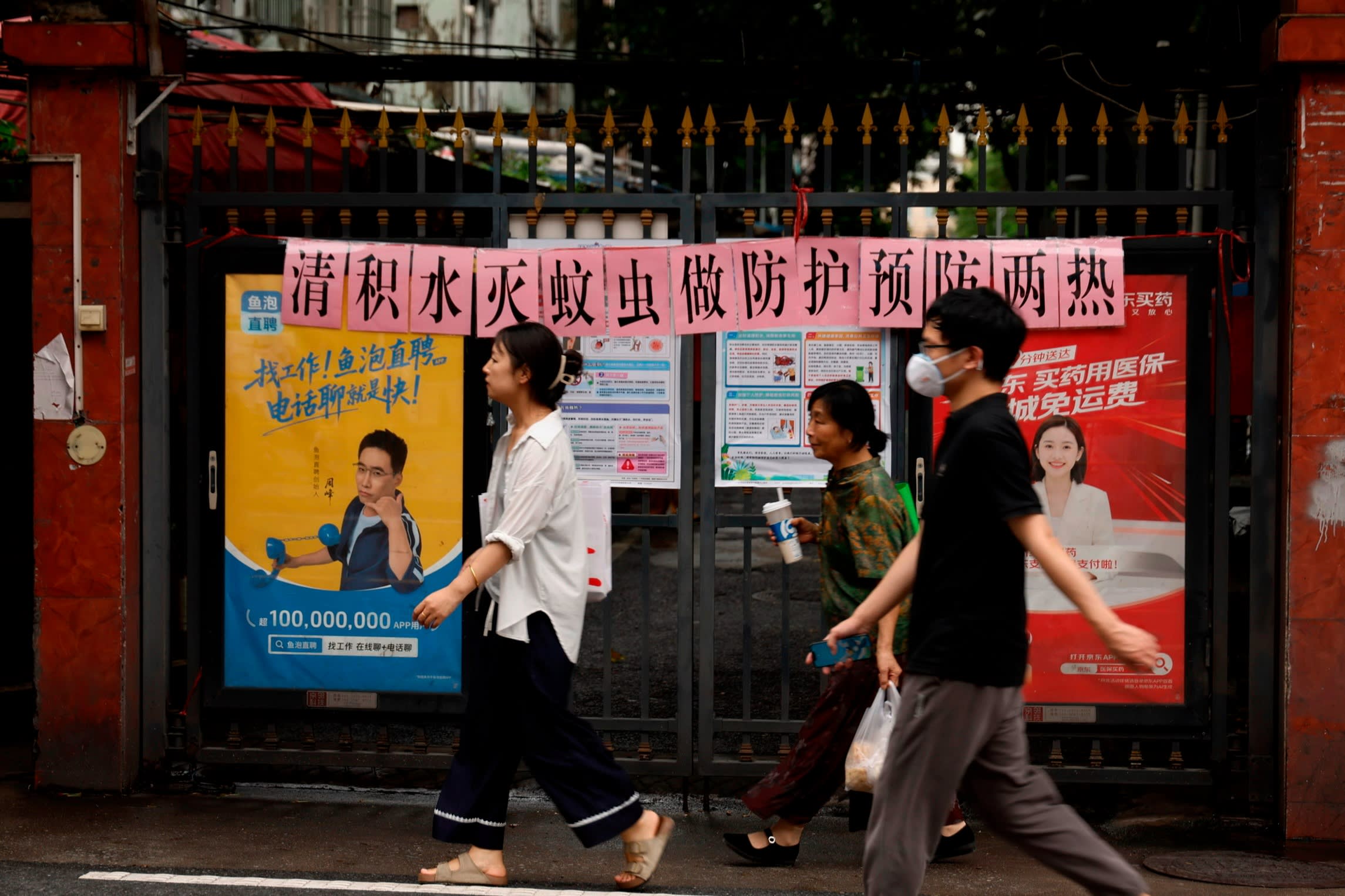
While Chikungunya does not transmit directly from human to human, the disease can be spread when a mosquito that has bitten an infected person bites another.
Local authorities have also offered free nucleic acid testing in areas of Foshan, sometimes conducted by health workers under temporary outdoor shelters reminiscent of Covid mass swabbing sites.
In a meeting last week, provincial governor Wang Weizhong called on officials to encourage residents to light mosquito coils, install gauze netting and apply bug spray as part of a “patriotic health campaign” to prevent the spread of the virus.
“All places and departments in the province must . . . forcefully win the battle of preventing and controlling the pandemic, the battle of blocking it and the battle of annihilating it,” he said.
China’s diligence comes as climate change has heightened the risks of mosquito-born diseases such as Chikungunya and dengue by increasing the incidence of heavy rainfall and typhoons, said Joseph Tsang, an infectious disease expert in Hong Kong.
“They have to cover a large-scale area, so it takes time . . . to limit the mosquito breedings,” he said of the campaign in Foshan. “The central government . . . really don’t want to have this problem happen another time this year.”
In Tengchong, red-and-yellow banners bearing rhyming slogans remind residents of the dangers of stagnant water and mosquitoes. Liu, who has made a full recovery, said awareness of the disease was growing.
“Before this year, we used to call it dengue fever, but only this year did they realise it wasn’t dengue but something similar,” he said.
“I hope the government can continue to implement all of these measures and keep exterminating mosquitoes frequently, so that we don’t have to deal with the trouble that they bring.”

