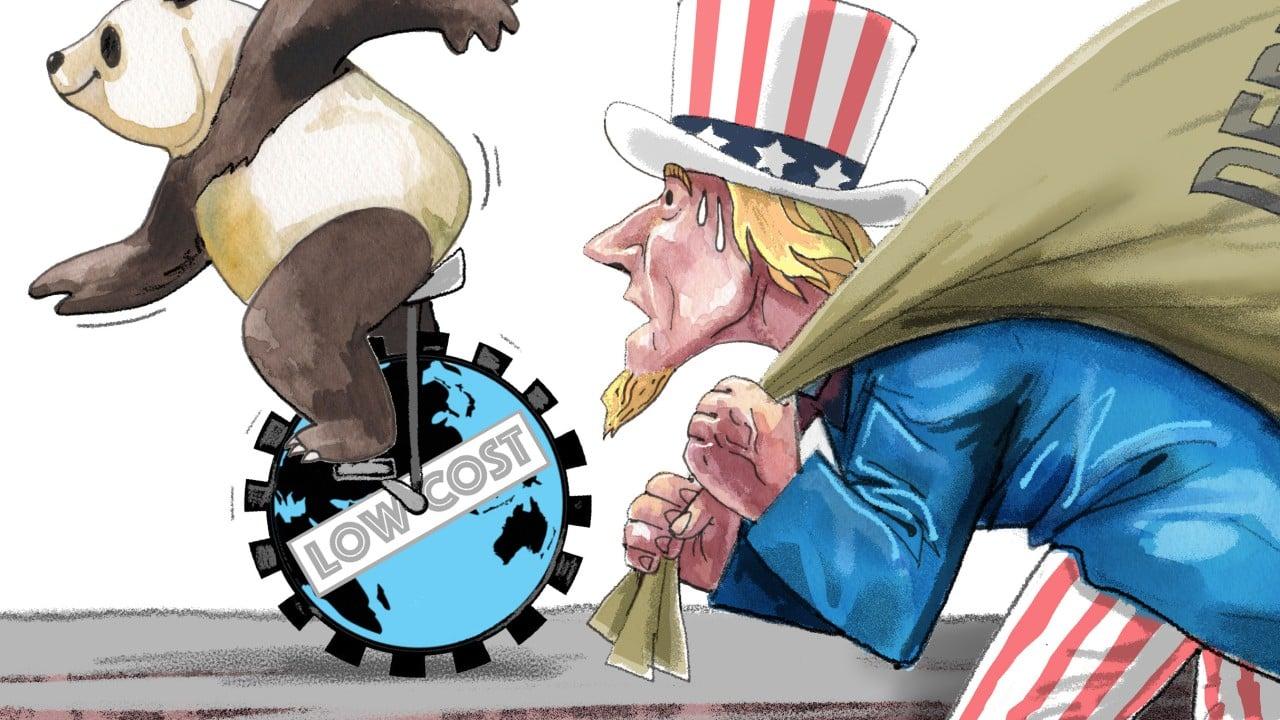
As China is like a bazaar for components and intermediate materials, a country can focus on what it is good at, import everything else from China at low prices and compete in the global market. China’s per capita income is about US$12,000, and buying from China doesn’t cut into a country’s competitiveness.
FA pharmacist checks weight of paracetamol, a common pain reliever, inside a lab of a pharmaceutical company on the outskirts of Ahmedabad, India. The country is a major exporter of generic drugs. Photo: Reuters
Two decades ago, big cities in developing countries had a distinct emerging-market look – congested roads with plenty of potholes, people hanging on the side of a speeding bus and decrepit buildings dotting the roadside. Nowadays, when one travels through many big cities in the emerging world, it is easy to see modern trappings such as subways and skyscrapers popping up everywhere.
The visible differences between big cities in the emerging world and developed countries are becoming less clear. Chinese equipment and construction materials as well as implementation capacity are driving this transformation.
Thailand has a per capita GDP of more than US$7,000 and Indonesia more than US$4,000. They can afford China’s prices, which means they go for the most modern assets in development. If you can look like Manhattan at an emerging-market price, why not?
Appearances do matter. Talent around the world could live in a country such as Indonesia or Thailand without sacrificing quality of life compared to Europe or North America.
The quality of life in emerging economies is becoming better than in some developed economies because of their lower living costs. This development will drive global talent to choose to live in emerging economies, narrowing the gap in human resources between the Global South and Global North.
Commuters walk past murals at the Metro Art exhibition inside the Phahon Yothin subway station in Bangkok, Thailand, on January 28. The exhibition is Thailand’s first subway art project. The improving quality of life in major cities in the developing economies will help to draw talent. Photo: EPA-EFE
The world is paying attention to China’s Belt and Road Initiative, a government-led capital export programme. It does contribute to China’s export success in the developing economies, but that is only one factor and might not be the crucial one. India’s dependence on Chinese imports, for example, is clearly market-driven.
China’s success in emerging economies is because of its breadth and depth in industrial output and low prices. China is covering similar ground to countries that have far greater per capita GDP.
Its low prices also lead to more demand from the emerging world. This virtuous cycle is putting the emerging world on a higher growth path, thanks to more capital formation.
When Japan, South Korea and Taiwan industrialised, their costs rose. That is not happening in China, mostly because of its size – China’s manufacturing sector outstrips that of developed economies. As costs rise, established industrial economies must take a cut in living standards.
Workers work at an intelligent plant for manufacturing trucks in Changchun, northeast China’s Jilin province. China’s manufacturing size outstrips that of developed economies. Photo: Xinhua
The economic struggles faced by those in developed economies in the past decade are largely because of this. They have been trying to defend their living standards by stimulating consumption, not addressing competitiveness challenges. That has led to unprecedented debt build-up in the household and government sectors. Unless they change their ways soon, which is unlikely, debt crises are inevitable.
The global recession risk in 2023 is largely because of the inflation-induced landing that is inevitable following the excessive stimulus rolled out during the pandemic and before. As the developing world is benefiting from growing trade with China, it will be more resilient during the coming global downturn.
Their financial markets might not be so lucky, though. The US dollar’s dominance means that, as the Federal Reserve tightens its monetary policy, liquidity will tighten for capital markets everywhere. A major financial crisis could come out of the Wall Street derivatives world or household debt. No market could be a safe haven then.
China’s success in the emerging world supports the viability of its peaceful rise. As the relationship with the West becomes more confrontational, Beijing could be tempted to go for military victories to strengthen and extend its economic successes, as other great powers have done before.
But the emerging world makes up most of the global population. As the trade among developing countries becomes a low-priced virtuous cycle, its tailwind can propel China to high-income levels within two decades.
A peaceful rise remains a viable strategy for China. It is a low-risk and low-cost path for China to become the dominant economy in the world.
Andy Xie is an independent economist