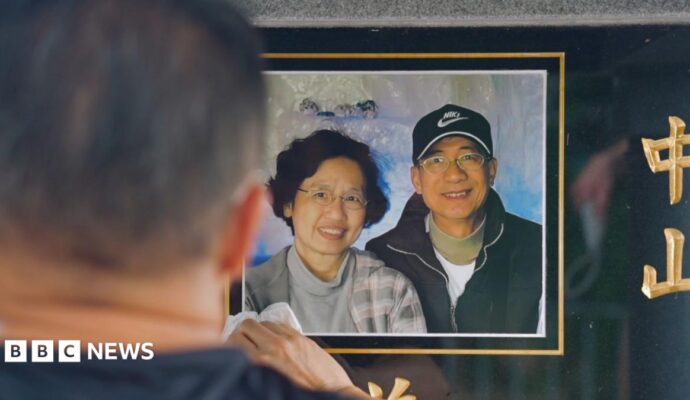
On the final Sunday before Taiwan’s Nov. 28 local elections, Hong Kong exile Tong Wai-hung and his wife, To Yee-lan, took to the streets of Taipei, listening to campaign speeches, watching performances and exchanging election souvenirs with Taiwanese voters.
For the couple, who fled Hong Kong after taking part in its pro-democracy movement, what might seem like an ordinary day of campaigning in Taiwan was a reminder of what they had lost back home.
“Isn’t this what elections are supposed to be like?” Tong wrote on social media.
As Taiwanese voters head to the polls to elect local leaders in a vote widely seen as a bellwether for the 2028 presidential election, immigrants from Hong Kong and mainland China are embracing an opportunity to experience competitive democratic elections – a political freedom denied to them in their homelands.
Some are eligible to cast their first ballots as Taiwanese citizens, while others have taken part in campaign rallies, signed up as election monitors and encouraged Taiwanese friends to exercise a right many have come to take for granted.
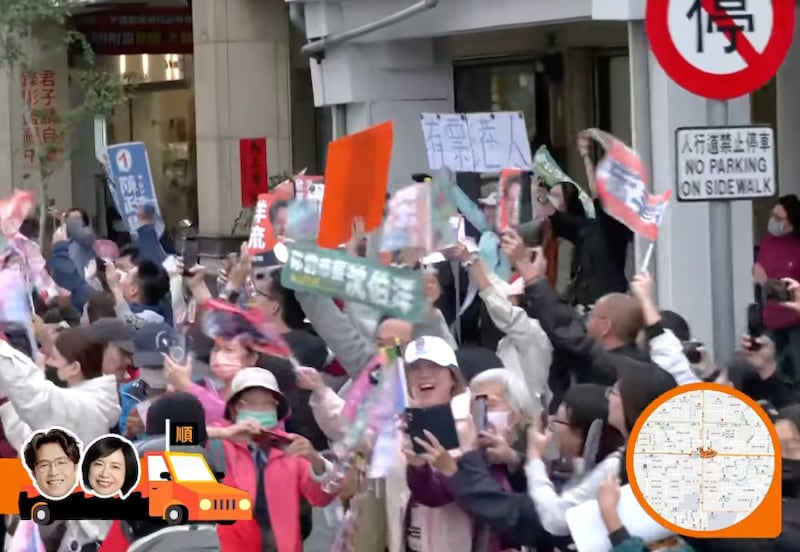
The day before the Taipei campaign events, Tong watched a livestream of a mayoral candidate’s motorcade in Taichung, where a group of people held up signs identifying themselves as “Hongkongers with voting rights.”
“Hongkongers now speak up more for Taiwan’s democracy and freedom than for Hong Kong’s democracy and freedom, because fighting for democracy and freedom in Hong Kong can get you arrested,” he said.
A vote for the first time
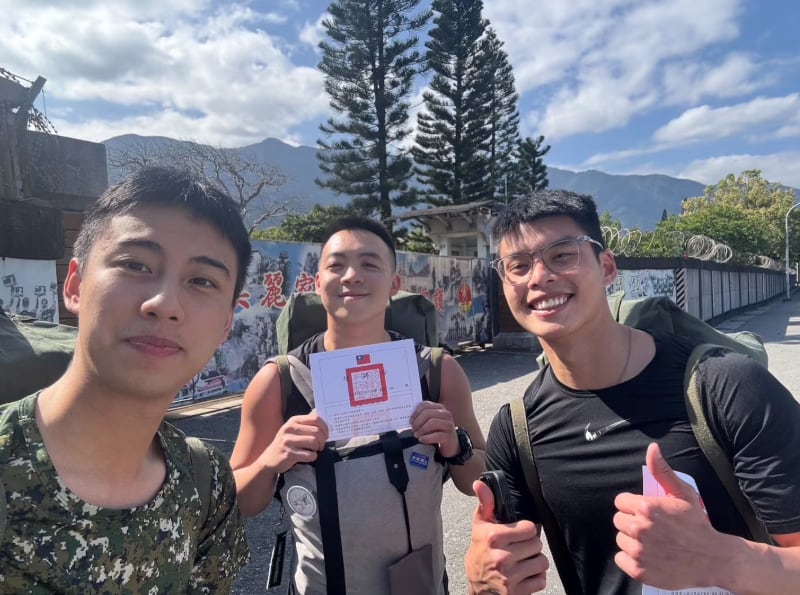
Among those eligible to vote for the first time is Choi Chi-ho, a former Hong Kong protester who arrived in Taiwan bearing scars from beanbag rounds used by police to suppress street demonstrations during the 2019 protests against a proposed extradition bill.
“It has now been seven years and four months since I came to Taiwan in exile. I received my identity card on June 16 last year,” Choi said, recalling the dates precisely.
Six months ago, he completed his military service, becoming the first Hong Kong protester to serve in Taiwan’s armed forces.
A political science student, Choi said he had previously felt somewhat like an outsider without the right to vote. Being able to defend Taiwan’s democracy through the ballot box has given him a greater sense of belonging.
Several campaign ribbons hang from his backpack, including a rainbow-colored one given to him by a Hong Kong friend who visited Taiwan for its LGBTQ pride parade.
“He felt it might be dangerous to take it back,” Choi said. “For Hongkongers living in Hong Kong now, even expressing where they stand involves considerable risk.”
For Choi, relations with Beijing remain an important consideration at the ballot box, even though cross-strait issues have not featured prominently in the local election campaigns.
“As a Hong Kong protester, when we consider whom to vote for, we will absolutely not vote for anyone who is pro-Communist,” he said.
Fan Gong, a native of Wenzhou in China’s eastern Zhejiang province, is also experiencing democratic election campaigning for the first time.
Married to a Taiwanese woman for four years, Fan moved to her hometown in Miaoli two years ago amid concerns about their children’s education and food safety. The couple now runs a small noodle restaurant, decorated inside and out with campaign posters and ribbons from various candidates.
Fan said he supported all political parties opposed to the Chinese Communist Party and had signed up to volunteer as an election observer outside a polling station.
“Taiwan represents the pinnacle of the Chinese-speaking world,” Fan said.
“I’m very excited, because in China there is no such process in which the entire population participates in elections.”
From ‘Be Water’ to a wave of democracy
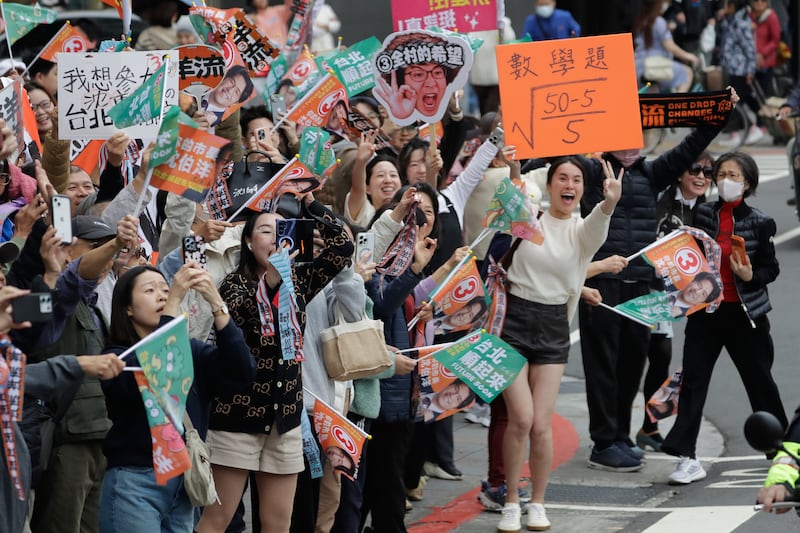
One distinctive feature of this year’s election has been the proliferation of colorful campaign ribbons, part of a grassroots phenomenon known as “ocean currents.”
The trend began with supporters of Democratic Progressive Party Taipei mayoral candidate Puma Shen, who independently designed ribbons and campaign souvenirs. The campaign of his Kuomintang rival, Chiang Wan-an, and candidates elsewhere subsequently introduced their own versions.
Tied around wrists, backpacks and motorcycles, the ribbons have become a means of expressing political preferences and connecting with like-minded voters.
For former Hong Kong protesters, the spontaneous mobilization is reminiscent of the “Be Water” philosophy of the 2019 pro-democracy movement.
“The spontaneous mobilization of citizens is very similar,” Tong said. “People come out naturally, and those who share common values gather together and gradually form a force.”
Choi acknowledged that a protest movement and an election were fundamentally different, but said both demonstrated how individual actions could collectively shape society.
Tong’s Muay Thai studio in Taipei has effectively become an informal election gathering point. What began with a single origami boat placed in a locker has grown into a collection of campaign ribbons, stickers and badges brought in by students to exchange.
“There are more and more campaign souvenirs here, just like cells gradually dividing on their own,” he said.
Tong, who expects to obtain his Taiwanese identity card and voting rights next year, has attended campaign events across party lines to learn about the island’s electoral system.
“I wonder, if one day we really can return to Hong Kong, can we bring Taiwan’s system back to Hong Kong? What can we take back?” he said.
“I want to study Taiwan’s democratic system and electoral system properly while I’m here.”
Democracy under pressure
The election comes amid concerns about Chinese interference, including online influence operations and financial assistance for Taiwanese businesspeople and their families to return home to vote.
Taiwan’s government has reported nearly 2,700 social media accounts suspected of involvement in Chinese information operations to social media giant Meta.
Fan said his wife had previously received money to cover travel expenses to Taiwan to vote.
“Whatever amount you say the round-trip airfare costs, they will give you more, including accommodation,” he said, adding that efforts were made beforehand to influence voters to support particular political camps and candidates.
For some Hong Kong exiles, pressure from Beijing has followed them to Taiwan.
Tong and his wife, both arrested during the 2019 Hong Kong protests, have continued advocating for democracy in their former home. Their Muay Thai studio was splashed with red paint in separate incidents late last year and early this year.
“The more they suppress us, the more we have to stand up and speak out,” To said. “What they do will not make us increasingly afraid. Instead, it will further strengthen our voices in opposing them.”
The couple purchased the vandalized door from their landlord and put it on display at a human rights exhibition.
The power of a ballot
For these immigrants, participating in Taiwan’s democracy also means persuading others not to underestimate the value of their political freedoms.
“Seeing the freedom and democracy Taiwan enjoys today, I’m actually very envious, and I’m also very worried for you,” Fan said. “Once some things are lost, they can never be recovered.”
“I hope that through my own efforts I can influence others to exercise their civic rights and vote for the kind of life they want.”
At Tong’s boxing studio, a young student once told him that he had never voted and had no intention of doing so in this election.
Tong told him about Hong Kong.
When he asked the student again a few days ago whether he planned to vote, the answer had changed: he would.
“I don’t know whom he will vote for, because I believe he has the right to choose freely. He can vote for anyone, but he must cast his ballot,” Tong said with a smile.
“Your votes really are your power. You really do have the power to change this society.”
Edited by Taejun Kang.