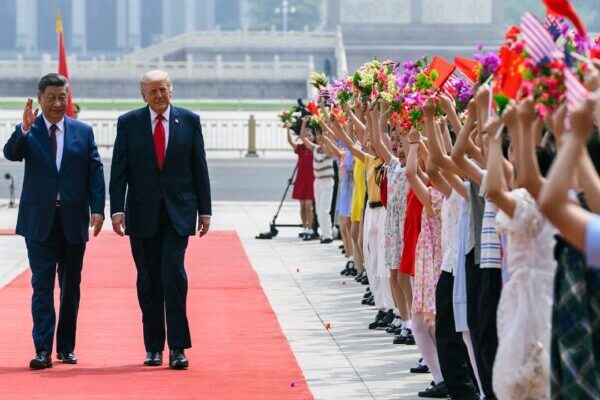
Chinese President Xi Jinping will land in Washington next week pursuing deals on trade, AI governance, and security, but analysts say his true objective lies in projecting strength to a domestic audience ahead of an upcoming political shakeup.
Xi is scheduled to arrive Wednesday, Sept. 23, at a time when personnel changes are starting to take shape in the runup to next year’s national congress of the Chinese Communist Party, or CCP.
The international community is paying attention to the possibility that Xi will continue as the party’s leader for an unprecedented fourth term. Most analysts expect that to be the most probable outcome, but Xi still needs to ensure a smooth transition between his current term and his next, a Chinese political scientist, who identifies by the pseudonym Ding Wang for personal safety reasons, told RFA.
“Personnel selection and appointment are often accompanied by power struggles among different factions within the party,” said Ding. “If Xi Jinping receives a high-level reception in Washington, it can demonstrate his dominance in personnel arrangements and the diplomatic arena.”
Images of Xi meeting and negotiating with U.S. President Donald Trump will serve to boost the perception that Xi is still a capable leader, Ding said.
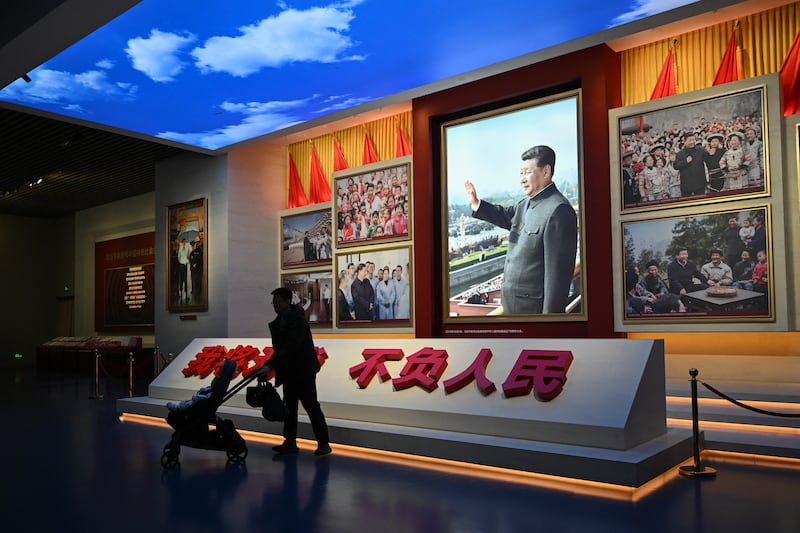
“The related footage, after being broadcast by state media, will help strengthen his image as the leader of a major power’s diplomacy, which is also in line with the outside world’s perception that he is in control of the overall situation,” Ding said.
Key to insulating Xi from internal dissent will be how well he can decrease bilateral friction through economic overtures.
Business delegation
Xi plans to lead a delegation of business leaders during his visit with an aim to address several bilateral trade issues that analysts have said are likely to include easing of trade barriers to increase U.S. agricultural sales to China.
The plan has not been finalized, but it would be a rare instance of such a large group of business executives accompanying a national leader on a state trip since Beijing’s crackdown on the increasingly unregulated domestic technology, education, and real estate sectors in 2020 as a means to reassert state control.
The crackdown resulted in the imprisonment of many prominent Chinese businessmen including real estate tycoon Ren Zhiqiang and agriculture magnate Sun Dawu, and others.
Adding business leaders on a foreign trip is not consistent with the CCP’s policies over the last decade, a Chinese independent scholar, using the pseudonym Xu Peng for security reasons, told RFA.
“Many policies, from politics, economics, and culture to domestic affairs, diplomacy, and national defense, have run counter to the general direction of reform and opening up,” said Xu.
The ‘Eastward rise, Westward decline’ approach – an ideological concept embraced by Chinese leadership that suggests power is shifting away from the West and toward China – “is no longer viable, so they’ve temporarily decided to bring a group of business leaders along,” he said.
Beijing may hope Chinese companies will invest in the U.S. and purchase American agricultural products and energy to ease economic friction, said Xu.
“However, with entrepreneurs like Ren Zhiqiang and Sun Dawu still imprisoned, Beijing’s decision to send a business delegation abroad at this time is unlikely to dispel concerns about the situation of Chinese private enterprises.”
Beijing hopes to stabilize relations with Washington through expanding economic and trade cooperation, and this in turn would give China the leg up in its negotiations with the European Union, an economic advisor close to the Chinese Ministry of Commerce, identified by her surname Peng, told RFA.
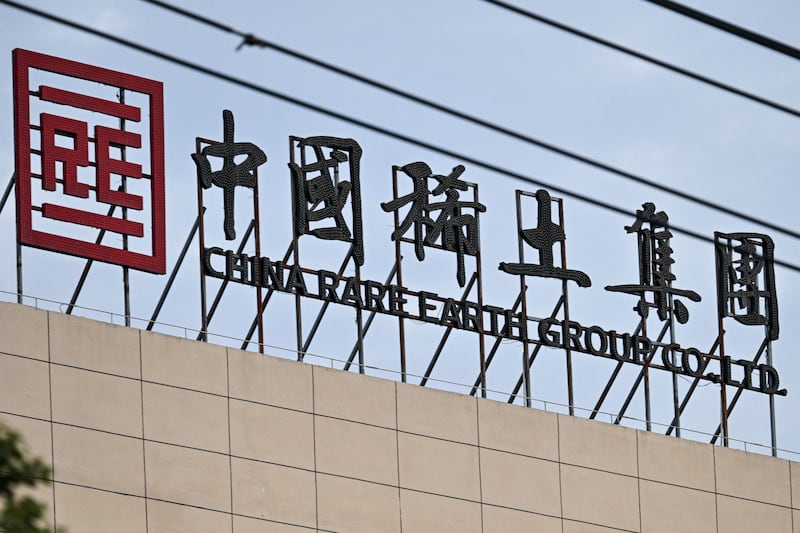
“Both sides are currently using their respective bargaining chips,” said Peng. “As far as I know, some companies in Inner Mongolia are delaying the delivery of rare earth products to the U.S., and the delivery time has also become part of the bargaining between the two sides.”
Should the Chinese delegation bring along business leaders it would be an echo of Trump’s visit to Beijing in May, when he was accompanied by 18 executives, including tech moguls like Nvidia CEO Jensen Huang and Tesla CEO Elon Musk.
As part of the current round of negotiations, analysts believe that artificial intelligence and the semiconductor supply chain will be a major topic of discussion.
AI governance
Competition between the US and China continues over chips, AI models, and technology standards, and both sides are also discussing risk notification and communication mechanisms. Experts expect that AI security will be a major topic of discussion at the summit.
Given the different strategic goals and development paths of China and the U.S., the two sides have not yet entered the stage of jointly establishing a safety barrier for artificial intelligence, an independent scholar from Beijing identified by his surname Xin, told RFA.
“China and the United States are still in a stage of competition for dominance in the development of artificial intelligence,” said Xin. “Both sides hope to gain the initiative in technology, rules and industrial development.”
He said that security barriers are less of a focus as Xi and Trump are more concerned with gaining an advantage in the AI race.
Earlier this week, Trump downplayed the risk of artificial intelligence running out of control, opposed slowing down technological development on the grounds of security, and said that excessive regulation could weaken the United States’ competitive advantage over China.
The Chinese government has proposed that AI governance “should involve the joint participation of all countries” and opposes “restricting Chinese companies from acquiring technology and computing power under the pretext of security.”
Xin believes that there are differences between China and the United States in their definitions of AI security. The United States mainly focuses on model runaway, cyberattacks, human safety, military applications, and corporate responsibility.
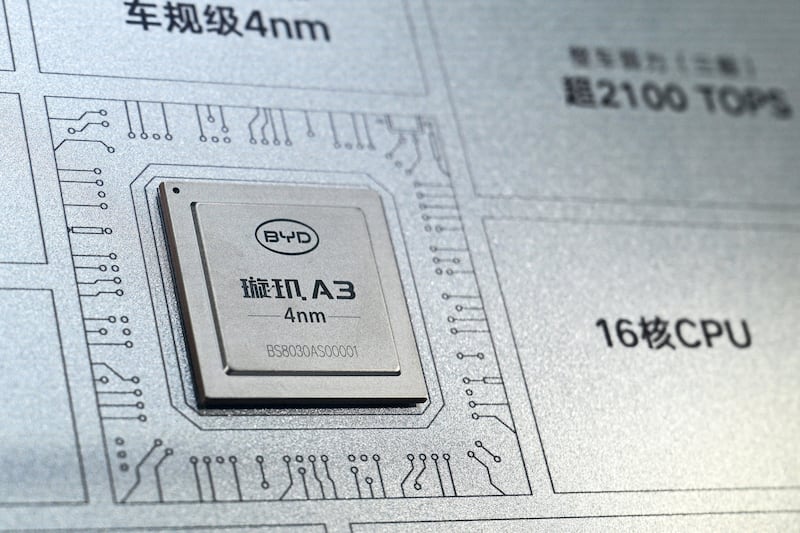
Beijing, in addition to focusing on technological risks, also incorporates information dissemination, ideology, and the security of the CCP’s rule into its AI governance. China emphasizes national regulation and “autonomous control,” while paying less attention to independent assessments, cross-border verification, and corporate information disclosure.
The United States currently holds a dominant position in the AI field compared to China, an AI researcher identified by his surname Ma, told RFA.
Right now, high-end chips and computing equipment remain the focus of competition, Ma said.
On the issue of Chinese AI models training themselves with the help of U.S. AI models – a process called distillation – Washington requires Chinese companies to comply with the rules for using models by American companies, while Beijing opposes the United States requiring Chinese companies to comply with US standards while restricting chip and model services, Ma said. The two sides are finding it difficult to reach an agreement on this issue.
Any agreement that is made at the level of statement of principle on the matter would be meaningless, an international relations scholar from Beijing identified by his surname Su, told reporters.
“At present, the United States prefers to establish an artificial intelligence barrier with China, but in Beijing’s view, the more the United States wants to promote an issue, the more likely it is to become a bargaining chip for Beijing to use against the United States,” Su said.
Taiwan issue
Whether Taiwan will be included in the negotiation framework between Trump and Xi Jinping has drawn attention in Taiwanese public opinion. Trump has repeatedly included tariffs, investment, and goods purchases in his negotiations, but some in Taiwan worry that the U.S. government might place arms sales to Taiwan, official exchanges between Taiwan and the US, or Taiwan’s security issues within the same negotiation framework as China’s procurement commitments, tariff concessions, and artificial intelligence cooperation.
Solving the Taiwan issue with force is becoming an increasingly appealing option to Xi, a source within the Chinese government, who requested anonymity for personal safety reasons, told RFA.
“From my observation … the conditions for attacking Taiwan are not yet in place,” he said. “Xi Jinping now needs to maintain the stability of the existing political structure.”
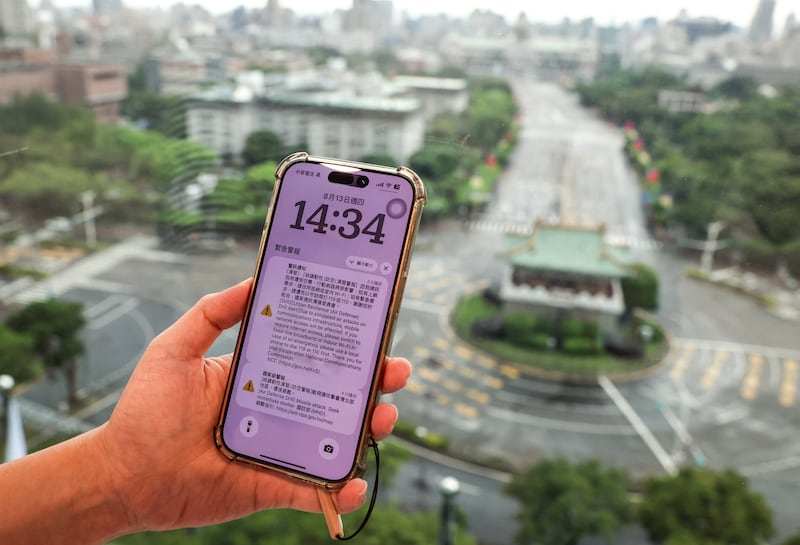
Japan’s Kyodo News reported on September 12, citing sources, that Beijing has indicated to Washington that it might cancel the summit if the United States approves new arms sales to Taiwan before the leaders’ meeting, and reiterate that the Taiwan issue is a “red line” in Sino-US relations. Neither China nor the U.S. has confirmed these claims.
Arms sales to Taiwan are a key focus for Beijing, perhaps even more than trade or artificial intelligence, an insider in the Chinese system, using the pseudonym Wu Yilong, told RFA.
“Beijing is more concerned about whether the US will touch political red lines such as Taiwan’s sovereignty, especially whether it will push forward sensitive arms sales to Taiwan before the meeting,” said Wu. “At present, China’s relations with Japan and European countries lack stability, and potential risks are still rising. Maintaining the stability of China-US relations is a real need for Beijing.”
That stability could go a long way as the People’s Liberation Army (PLA) has seen continuous personnel changes at the top during Xi’s third term.
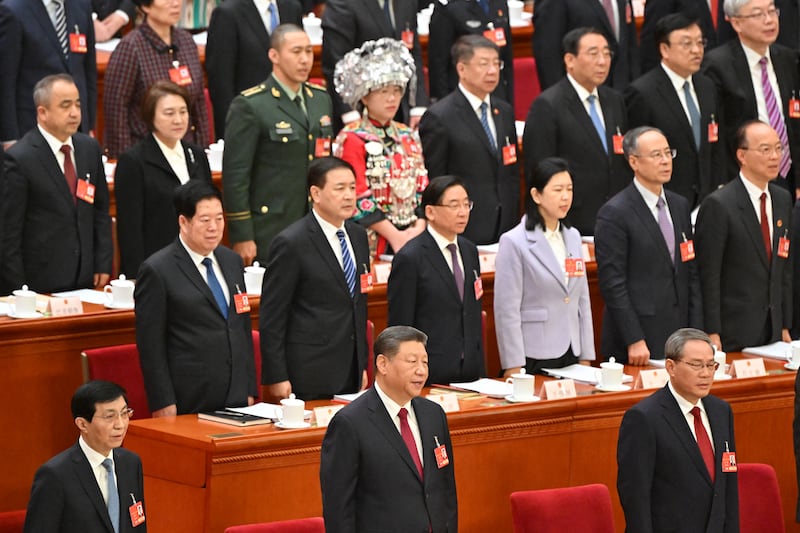
Should Xi return to China having achieved his objectives in Washington, it would serve to underscore his political influence on the CCP and Chinese military elites, a military scholar identified by his surname Li, told RFA.
“If there are doubts about the stability of the military command system, then the top leader’s departure from Beijing to visit the United States at this time can also be interpreted as him still having control over the military command system,” he said. This demonstration also helps him create conditions for personnel arrangements at the 21st National Congress of the Communist Party of China.”
Edited by Eugene Whong.