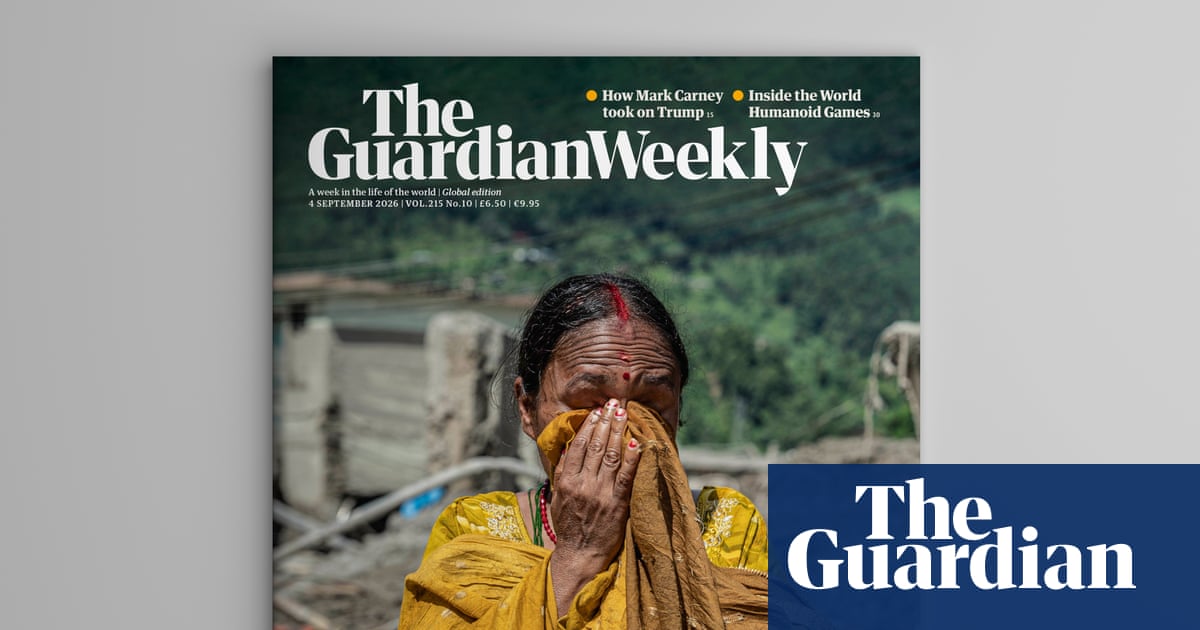
Over the last week, the world has watched with horror the scenes from the Tibet-Nepal border where a devastating torrent of mud, water and ice tore along the Bhotekoshi River, destroying entire communities and leaving more than 1,000 people dead and several thousand more missing.
From the Nepali town of Devighat, our south Asia correspondent Hannah Ellis-Petersen describes a nightmarish scene of overflowing mortuaries and unidentifiable bodies, as shellshocked survivors of the flood slowly return to the ruins of their homes.
The disaster happened after the collapse of a glacier – and while global heating has not been definitively attributed as the cause, it is undeniable that steep mountain slopes and valleys are especially vulnerable to flooding and landslides, while extreme weather events such as monsoons and melting glaciers have become more common because of warming due to human-caused climate breakdown, as our global environment writer Jonathan Watts explains.
Then columnist Nesrine Malik paints a wider picture and argues that while for many people these floods may feel as though they have happened a world away, the climate crisis is coming for us all, one way or another.
Get the Guardian Weekly delivered to your home address
Five essential reads in this week’s edition
Spotlight | Mark Carney shows combative nature in face-off with Trump
The Canadian PM is one of the few world leaders to stand up to the US president. Former colleagues say they are not surprised. Leyland Cecco, Heather Stewart and Kalyeena Makortoff report
Science | The robots are coming!
… Or are they? As entrants at the World Humanoid Games lurched from triumph to farce, Robert Booth finds that a robotics revolution may not be as close as it first appears
Interview | Gordon Brown on Burnham, billionaires – and a better Britain
The former UK prime minister is still shaping politics (even if he doesn’t want to interfere). He tells Charlotte Edwardes about keeping his temper, staying fit – and why he won’t splash out for a Scotland football shirt
Opinion | The tech titans must be stripped of their power, and soon
Those who said Meta harms children struck a blow, but the ability of big tech to gouge profits and cause harm is barely diminished. That’s the battle to come, argues Jonathan Freedland
Culture | Dolly Parton’s peerless career turned country music cliches inside out
Beneath the wig and rhinestones, the late US country singer was the genius behind strings of classic songs that continue to inspire new artists, says Alexis Petridis
What else we’ve been reading
Stick with this fascinating and lengthy interview and you’ll want to read it again. In his interview with Mary Austen, Freddie Mercury’s former girlfriend, Simon Hattenstone meticulously documents the story his subject wants to tell but brilliantly uncovers its contradictions. One of his very best pieces. Isobel Montgomery, deputy editor
While other culinary cultures have meze or tapas or l’apéro, (some) Britons are fans of “picky bits” – a toe-curling phrase used to describe an informal meal rustled together from a fridge raid or grabbed from a supermarket chiller. I could not agree more with Laura Snapes who says the phrase should be shunned by self-respecting adults. Clare Horton, deputy editor
Other highlights from the Guardian website
Audio | The American painting that sparked an Australian culture war
Video | Everyone hates datacentres. Do we really need them?
Gallery | Stetsons and waterproofs at a very English country music festival
Get in touch
We’d love to hear your thoughts on the magazine: for submissions to our letters page, please email weekly.letters@theguardian.com. For anything else, it’s editorial.feedback@theguardian.com
Follow us
Get the Guardian Weekly magazine delivered to your home address