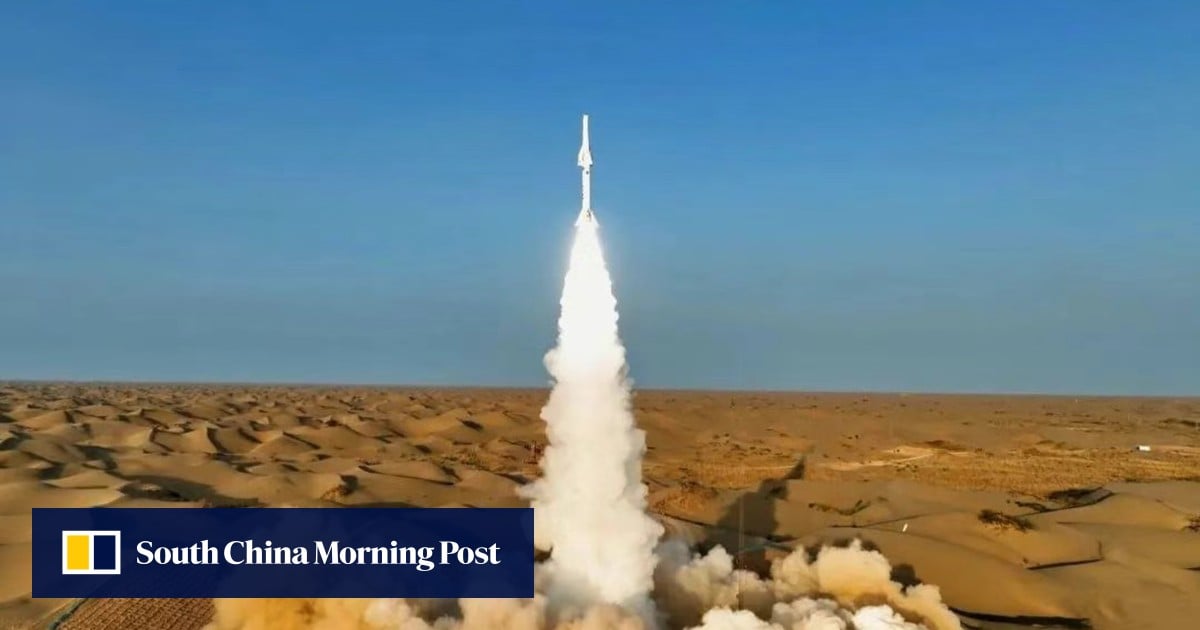
At a test facility in China, a hypersonic engine that reshapes its internal airflow channel – much like a throat tightening and relaxing – has operated continuously from a relatively modest Mach 1.8 (nearly twice the speed of sound) all the way to Mach 6 without failing.
And the material that kept superheated gases from escaping? Essentially the same black mineral found inside a pencil: graphite.
For years, engines of this type could not ignite until the aircraft had already reached Mach 4 – meaning a separate rocket booster was needed to get up to speed first, adding cost and complexity.
Now, researchers from Northwestern Polytechnical University and the Beijing Power Machinery Institute say they have solved a problem that has stumped engineers for decades.
They ran the variable-geometry ramjet – a type of air-breathing jet engine with no moving compressor – at a ground-based facility that simulates high-speed flight conditions.
The engine’s combustion chamber throat – a moving metal component that tightens and relaxes to manage airflow at different speeds – adjusted itself in one third of a second while inhaling gases at 1,650 degrees Celsius, according to a paper published in the Journal of Propulsion Technology on May 28.