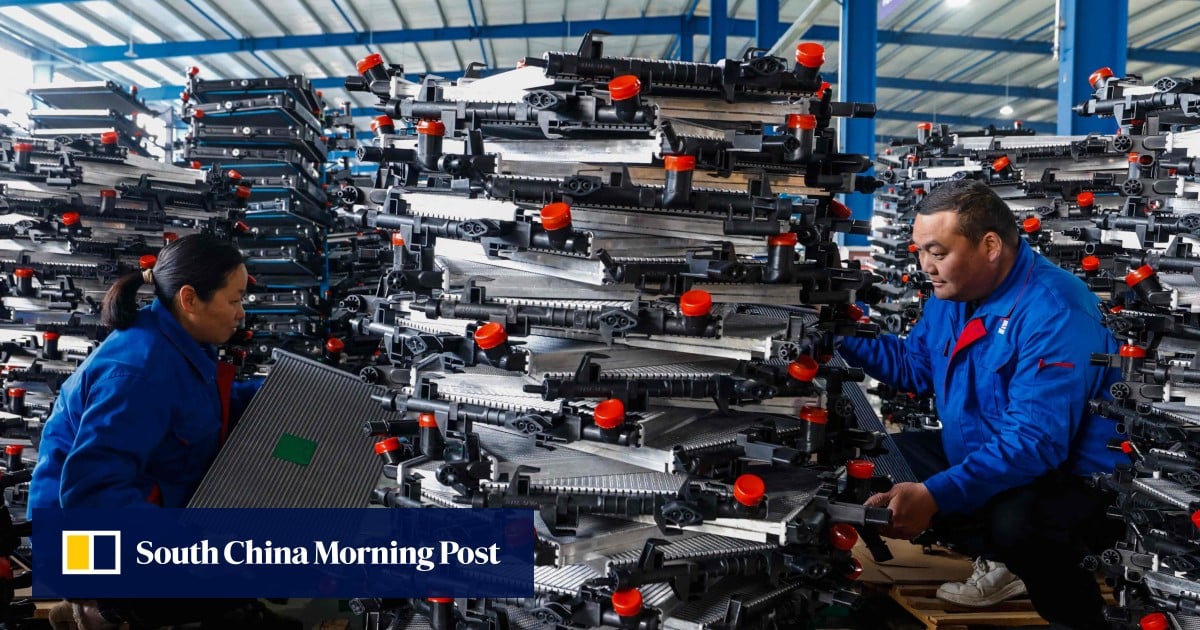
Some exporters at the Canton Fair in Guangzhou report a modest return of orders to China from Southeast Asia, as energy-market volatility linked to the
US-Israeli war in Iran prompts some Western buyers to prioritise supply chain stability.
The shift is visible in buyer patterns on the exhibition floor, where the number from Europe and the United States appears to have recovered from last year’s levels, according to Chinese exporters, with more inquiries for home appliances, new energy products and consumer electronics.
The
Canton Fair, formally known as the China Import and Export Fair, is widely seen as a bellwether for China’s vast export machine. The current edition spans a record 1.55 million square metres (16.7 million square feet) and hosts over 32,000 companies, according to organisers. More than 210,000 overseas buyers preregistered by April 2, up 20 per cent year on year.
Liang Qiuyan, overseas market director at Zhixin Electronics, a massage chair exporter, said the shift in buyers was palpable. “From the clients visiting the Canton Fair, we can clearly feel the return of European and US customers”, she said, adding that some were reinforcing their reliance on Chinese supply chains, with “potentially more orders this year”.
The company expects revenue to grow 30 to 40 per cent in 2026, driven mainly by Europe and the United States. Washington’s current tariffs on China have had only a limited impact, she said.
The outlook comes as companies weigh risks in Southeast Asia, a region that has gained manufacturing capacity in recent years as firms
pushed to diversify supply chains away from China. But the region now faces energy supply uncertainty and production risks, prompting some Western buyers to reassess their sourcing strategies and move some orders back to the world’s second-largest economy.
South China Morning Post