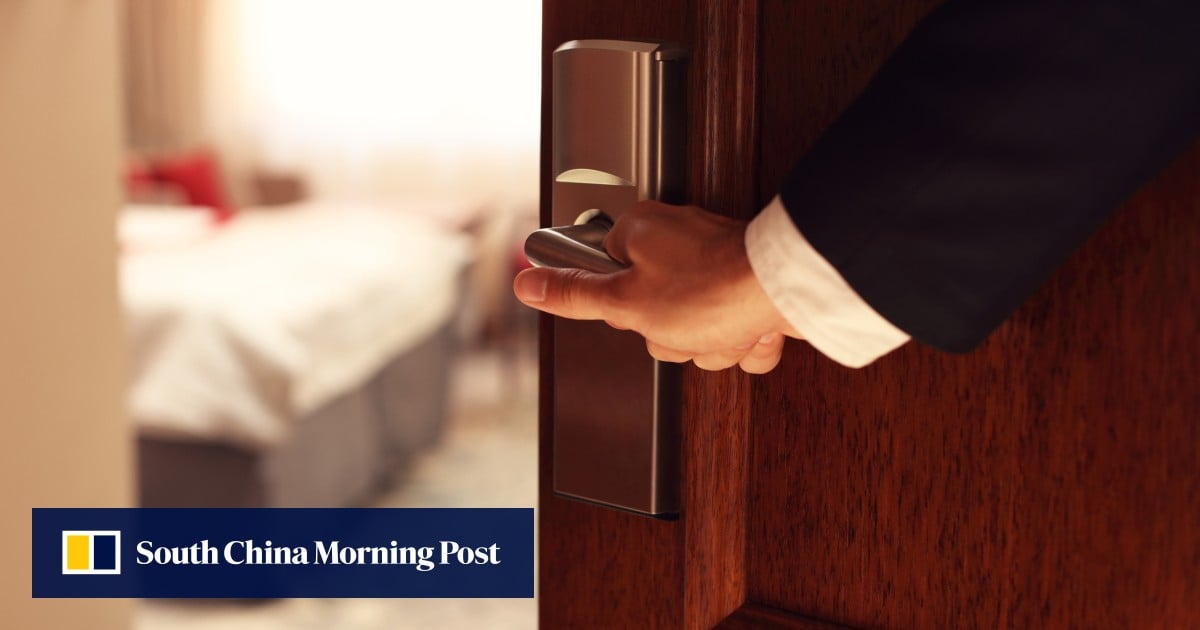
When it comes to hotel rooms, “luxury” does not necessarily mean clean and hygienic. A number of studies have shown that light switches and television remote controls are among the objects with the highest levels of bacterial contamination, while toilets and bathroom sinks also contain high levels of microbial organisms.
A 2012 survey in the United States – which is still cited by the travel industry 14 years later – found that 81 per cent of US hotel samples tested positive for surface faecal bacteria. The data was presented to a conference of the American Society of Microbiology, according to a Time magazine report in 2018.
Advertisement
In the video, cleaning staff were seen using the same sponge to clean drinking cups, toilet seats and shower stalls as well as to wipe drinking cups, bathroom sinks and mirrors with towels or washcloths that guests had previously used.
However, the situation in China has changed since, with a study by the Shanghai Municipal Centre for Disease Control and Prevention finding just how clean the city’s hotels have become.
Advertisement
The study, published in March in the Chinese-language Journal of Environmental and Occupational Medicine, examined the safety of disinfection for public items and utensils in 13,807 public places including hotels, gyms, barbershops, beauty salons, shopping malls, cinemas and hospitals in Shanghai between 2010 and 2024.