Taiwan’s political pendulum is reversing. The government led by Democratic Progressive Party’s (DPP) William Lai Ching-te is increasingly discredited, not least for selling out the jewel of its semiconductor industry to the United States under pressure from President Donald Trump.
The Legislative Yuan is controlled by the opposition led by the Kuomintang (KMT). Party politics is now institutionalised into a sustained confrontation between the island’s presidency and its legislature. Now, budgets can’t pass, including funds for arms purchases from Washington. The constitutional court can’t intervene to resolve the budget dispute because it has been paralysed by the lack of a quorum.
Lai tried to follow Trump and his Republicans’ playbook by nominating ideologically aligned justices to the court, but he was thwarted by the KMT and its junior opposition partner, the Taiwan People’s Party (TPP).
Advertisement
Lai’s Western backers are bemoaning the state of the island, but they shouldn’t complain when that’s how democratic opposition politics works. The political paralysis is threatening the island’s value as a strategic asset to the West. But by the same token, it may help ease cross-strait tensions. The mainland visit by KMT leader Cheng Li-wun could not have come at a more opportune time.
The visit, the first by a current KMT leader in nine years, should be understood in the context of this year’s budget fight. Despite the boring arguments over numbers, a major consequence – undoubtedly intended by the opposition – is holding up a NT1.25 trillion (US$40 billion) special defence package. The opposition has tried to scale down the package to NT380 billion; hence the impasse. Beijing certainly appreciates the opposition’s efforts.
Advertisement
Lai’s government has effectively argued that the regular defence budget is insufficient by framing the cross-strait situation as an emergency. Of course, a more balanced diplomatic approach towards Washington and Beijing could ease tensions and spare the island’s taxpayers tons of money. Such balancing and hedging between the two superpowers is now de rigueur for governments around the world as Washington turns increasingly imperialistic against allies and foes alike. Not Taiwan under Lai.
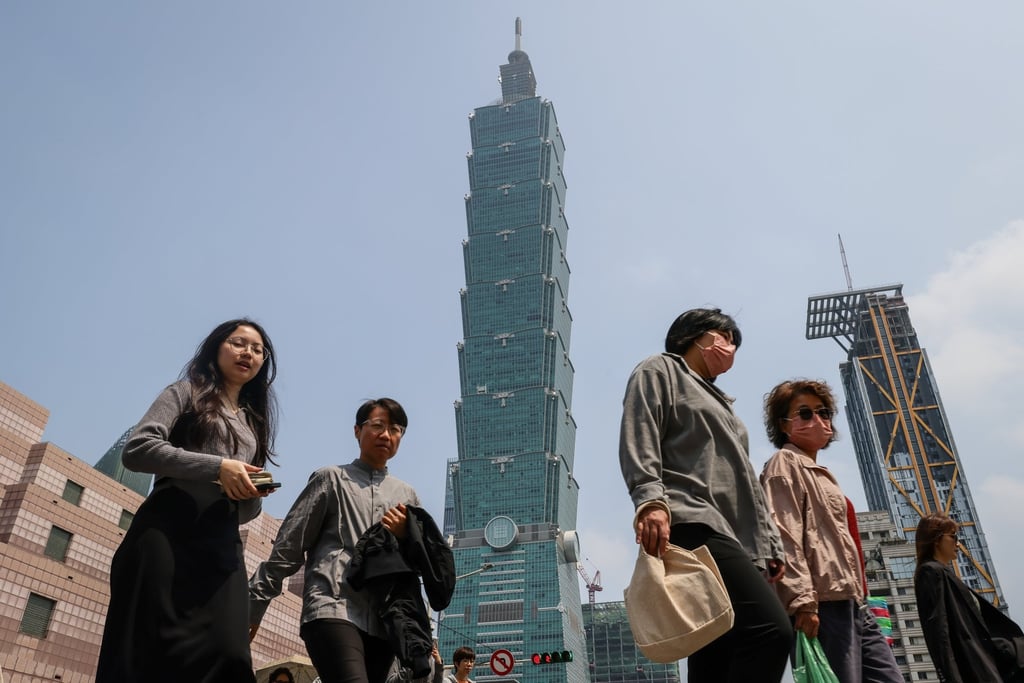
People cross a street under the Taipei 101 skyscraper building in Taiwan, on March 24. Photo: EPA