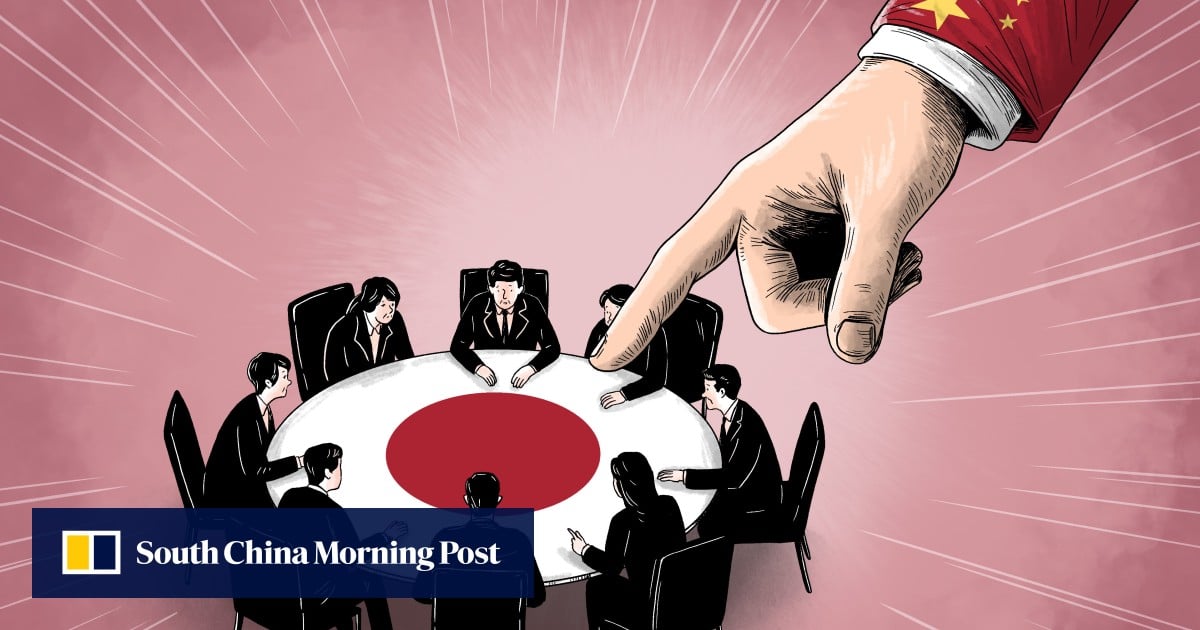
China and Japan’s long-standing rivalry has deep historic roots, and relations between the two have taken a significant turn for the worse in recent months. This, the second in a three-part series, looks at whether Beijing overplayed its hand on the Taiwan issue in the face of what is a ‘strategic reality’ for Japan and how it may leverage its history of Japanese aggression. Find the first part here.
More than four months into the bitter chill that has settled over China-Japan relations, the rift between the two major Asian powers is playing out beyond their own fraught ties.
In addition to rolling out more trade restrictions and travel advisories targeting Tokyo, Beijing has sought to rally support from the international community, particularly Asia-Pacific neighbours, in its criticism of Japanese Prime Minister Sanae Takaichi’s remarks in early November regarding a Taiwan contingency.
Advertisement
As for Japan, it has doubled down on bolstering its alignment with “like-minded” countries amid an absence of significant diplomatic backing from the United States, its most important ally.
Notably, Beijing has struggled to galvanise opposition to Tokyo.
Many countries in the region have been reluctant to side with Beijing, partly because they harbour security concerns similar to Japan’s and prefer to stay neutral, making it difficult for China to pressure Takaichi into fully retracting her remarks, according to analysts.
Advertisement