In India, crematoriums have stopped using gas to burn their dead and restaurants have stopped deep frying food. In Pakistan, civil servants are working a four-day week and, in Bangladesh, universities have shut and exams have been cancelled.
The US-Israeli war on Iran has disrupted energy supplies across the globe but south Asia, which depends heavily on Gulf nations for its gas, has been among the worst affected regions.
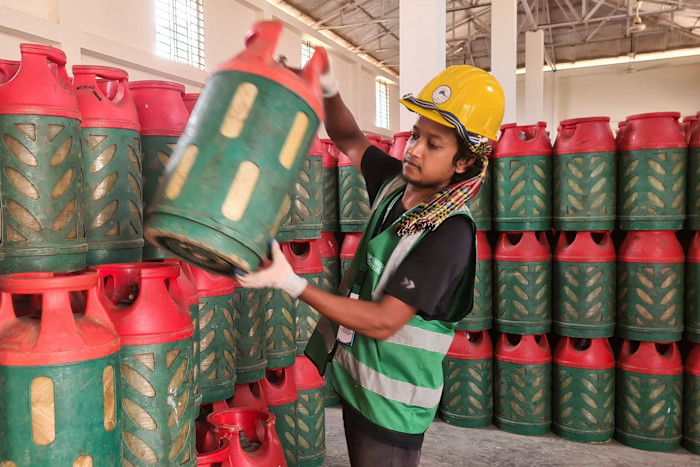
Indian Prime Minister Narendra Modi has told Indians “there is no need to panic” but the world’s most populous nation is awash with reports of hoarding, theft and price gouging as citizens rush to secure supplies of increasingly scarce cylinders of liquefied petroleum gas (LPG) used mainly for cooking.
In Pakistan, Prime Minister Shehbaz Sharif has sought to conserve the country’s dwindling supplies of gas from Gulf nations. “If the situation continues to deteriorate like this, God forbid, these prices will get out of control,” Sharif said in an address to the nation.
In Bangladesh, “the prime minister has already started using half of the lights at his office. He does not turn on air conditioning unless it’s urgent. This austerity is being practised at all offices across the country,” said Saleh Shibly, press secretary to recently elected Tarique Rahman.
<div data-o-component="o-expander" class="o-expander o-expander__info-box" data-o-expander-shrink-to="hidden" data-trackable="clip-info-box" data-o-expander-collapsed-toggle-text="Show video info” data-o-expander-expanded-toggle-text=”Hide video info“>
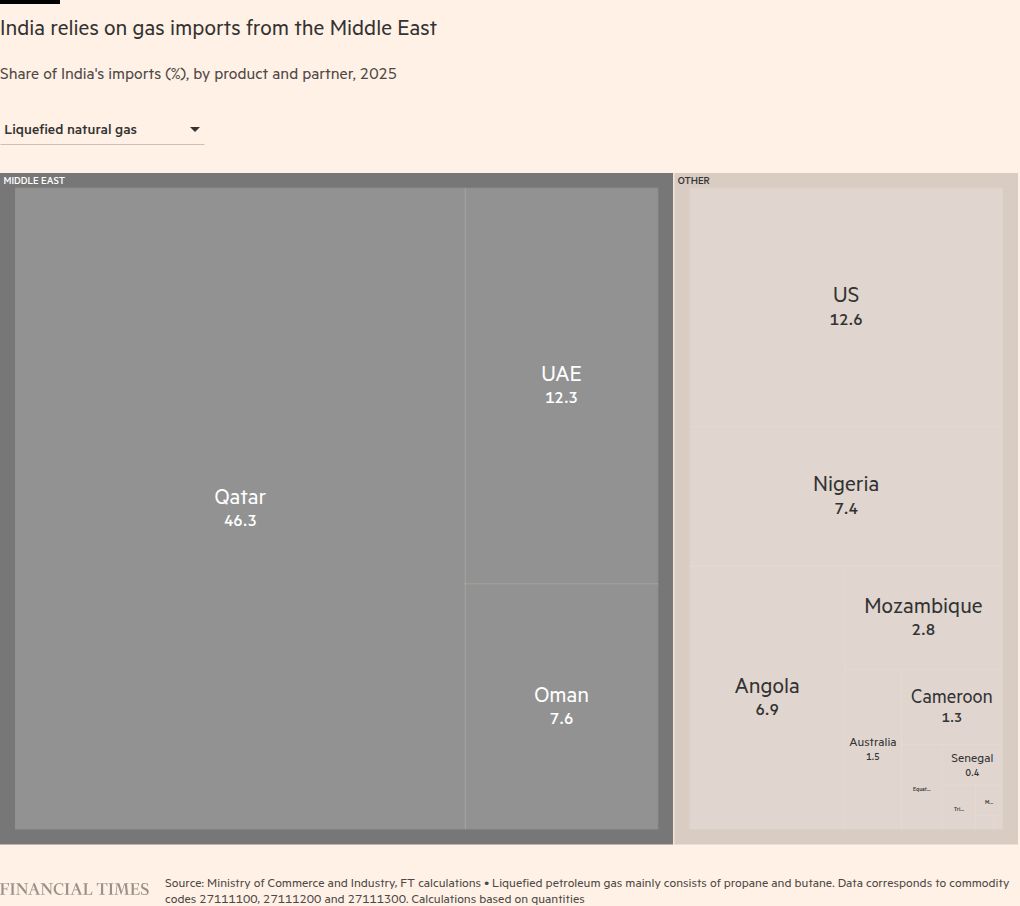
India, the world’s second-largest importer of LPG, gets 60 per cent of supplies from the United Arab Emirates, Kuwait, Qatar and Saudi Arabia but faces a crunch due to the effective closure of the Strait of Hormuz. Supplies are dwindling and New Delhi does not have big stockpiles.
The government has allowed the use of more polluting fuels including coal, wood and kerosene for cooking after restaurants warned they would close within days without fresh supplies.
“The shortage of gas has really hit us,” said Manisha Shekatkar, who as chief engineer at the municipal corporation of Pune is in charge of the city’s crematoriums. She said shortages had forced them to switch from gas-based crematoriums to electric furnaces before bodies start piling up.
As many as half the hotels in Mumbai, India’s commercial capital, may be forced to shut if the situation does not improve, warned the Indian Hotel and Restaurant Association. One-fifth had already done so, said association president Vijay Shetty.
The National Restaurant Association of India has already advised its 500,000 members to consider shorter operating hours, stop offering items requiring long simmering and deep frying, and use lids while cooking to save energy.
At Amrut Sagar, a local fast-food restaurant in Mumbai, manager Vijender Naik said gas cylinders were available in the black market for double the roughly Rs1,800 ($19.50) they usually cost.
Trinath Mahto, who sells tea for as little as Rs15 on the street in New Delhi’s Connaught Place, has seen the price of cooking gas cylinders more than double in three days. “I am now paying almost Rs250 per kilo of gas instead of Rs100 before the gas crisis. I haven’t raised the price of tea out of concern for customers, but I’ve reduced the quantity to manage the pain,” he said.
India Business Briefing
The Indian professional’s must-read on business and policy in the world’s fastest-growing big economy. Sign up for the newsletter here
Supplies of imported liquefied natural gas (LNG), which is used to produce fertilisers, generate power and feed refineries, have also been disrupted.
Pakistan sourced almost all of its imports from Qatar last year and India also relies on Doha for more than half of its LNG imports. Bangladesh depends heavily on Gulf suppliers, with Qatar and the UAE accounting for nearly three-quarters of its LNG imports last year, according to a report by Wood Mackenzie.
In Bangladesh, which relies on imports for 95 per cent of its energy needs, “the supply shock has triggered widespread gas rationing across the economy”, said Akshay Gupta, research analyst for gas at Wood Mackenzie.
State-owned Petrobangla has imposed daily gas supply cuts, while the education ministry closed all public and private universities nationwide, bringing forward the Eid al-Fitr holidays as an emergency measure to “reduce” consumption. “A lot of the exams got cancelled,” said Umama Fatema, a student leader at Dhaka University.
The government has instructed state-run fertiliser sites to suspend production for 15 days and redirect available gas to power plants to avoid widespread outages.
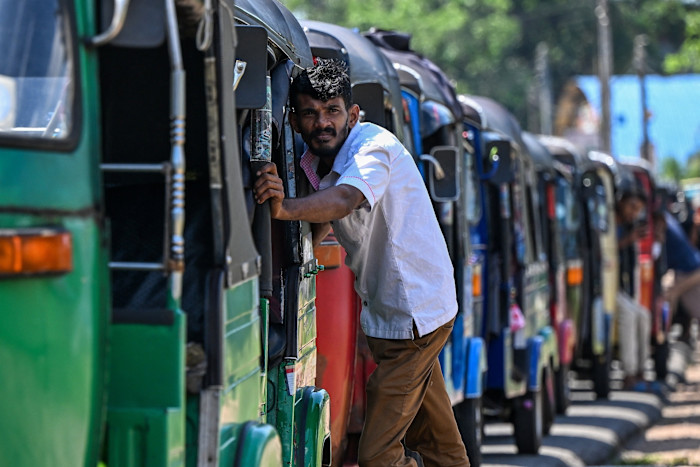
The gas scarcity has also hit Sri Lanka, affecting households and small-scale businesses, with long queues at fuel stations. The island “can only store about a week’s supply” of LPG, President Anura Kumara Dissanayake said last week.
In Pakistan, the government has shut schools until the end of the month, moved all university classes online and mandated a four-day week for most government offices. It has also raised petrol prices by 20 per cent.
Pakistan has its own gas supplies but still relies on Gulf producers for a fifth of its gas consumption. Because of the conflict it may not receive any of the six LNG cargoes it was scheduled to receive from QatarEnergy, which supplies 90 per cent of its LNG imports, next month.
Most poor and rural households in Pakistan rely on LPG for cooking and heating. Nasir Mehmood, who drives a motorcycle for a ride-hailing app in Islamabad, said rising petrol and LPG prices had already squeezed his family’s finances. In his home village near the city of Jhelum, he relies on LPG for cooking and heating.
“Dealers are increasing the price for a cylinder because they expect a shortage soon,” he said. “If this war goes on, it’ll be too much. I’ll have to take out loans to keep the house running.”
Additional reporting by Jyotsna Singh in New Delhi, Veena Venugopal in Amritsar and Susannah Savage in London