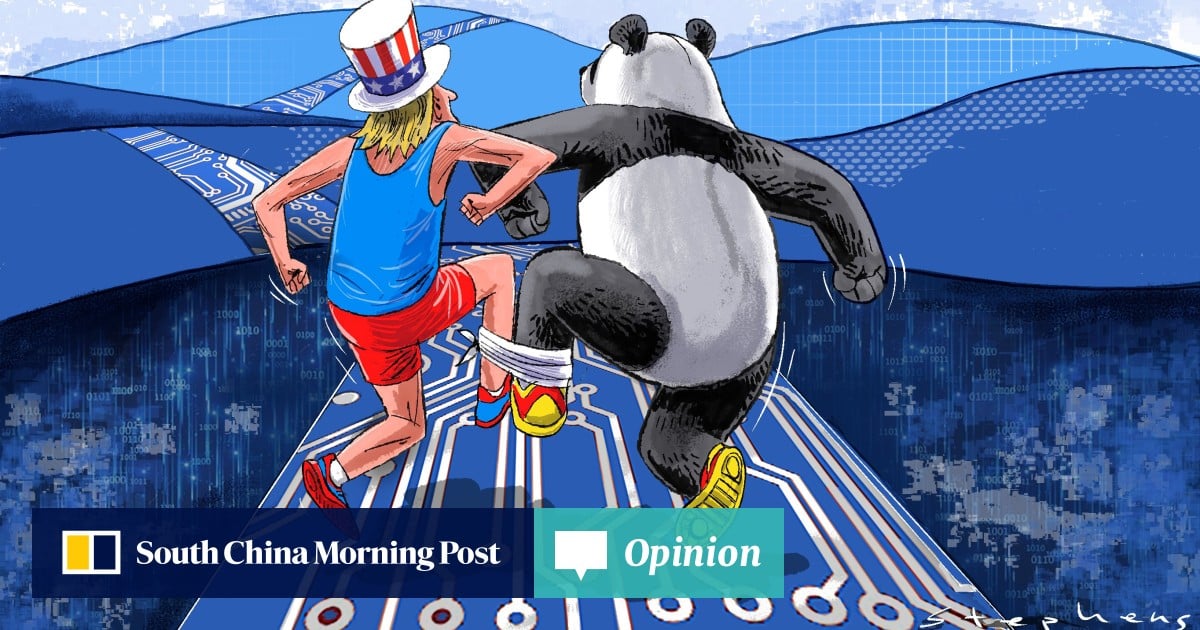
With the conclusion of China’s annual parliamentary “two sessions” meetings, emerging policy priorities suggest its relationship with the United States is entering a new technological era.
This year’s government work report set an economic growth target of 4.5 to 5 per cent and announced increased fiscal support for science and technology, including a 10 per cent funding rise for research and development and over 16 per cent for basic research. More than routine budget adjustments, these figures signal China’s determination to anchor its next development phase in scientific capability, technological innovation and advanced manufacturing.
The China-US relationship is likely to be defined by intensified competition in key strategic industries, with a smaller but still meaningful space for cooperation in global science and innovation.
Advertisement
One clear message is the central importance of technological self-reliance. The work report emphasised the need to achieve “greater self-reliance and strength in science and technology”, calling for breakthroughs in core technologies. These priorities reflect a recognition that long-term economic resilience depends on indigenous technological capabilities.
In recent years, the global technology environment has become more complex. Export controls and other US restrictions have limited China’s access to advanced semiconductor technologies. In response, Chinese policymakers are intensifying efforts to strengthen domestic innovation capacity across strategic industries.
Advertisement
China and the US are now engaged in a long-term technological competition. China continues to prioritise sectors such as semiconductors, artificial intelligence, quantum computing, biotechnology and aerospace – critical drivers of economic growth.