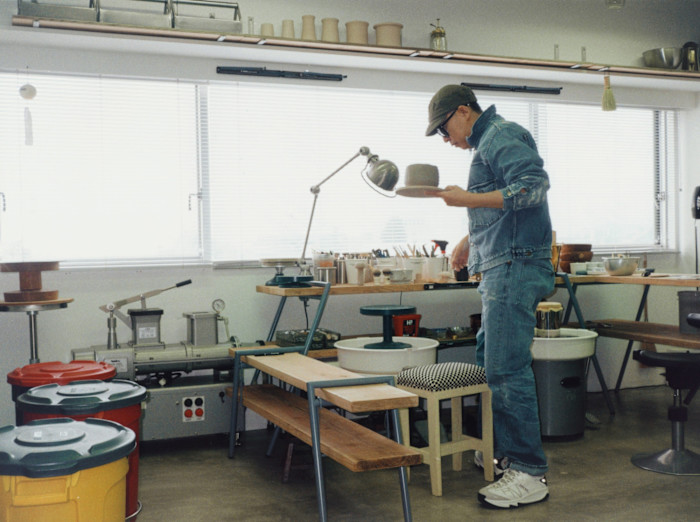
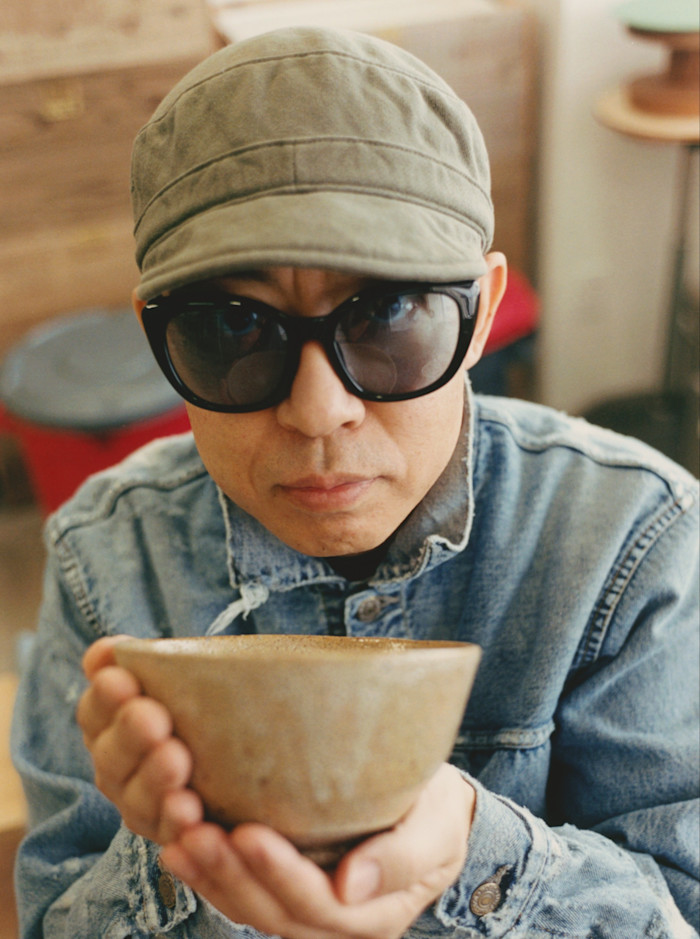
It’s a crisp morning in January and in his surprisingly clean and well-kept studio in Tokyo, Nigo is demonstrating his skills at the pottery wheel. The Kenzo designer is sitting on a stool covered with Alexander Girard fabric, wearing his signature double denim and sneakers from his Human Made label. His manner is reserved but perfectly amiable. “It’s precisely because pottery is difficult to control that it fascinates me,” he says.
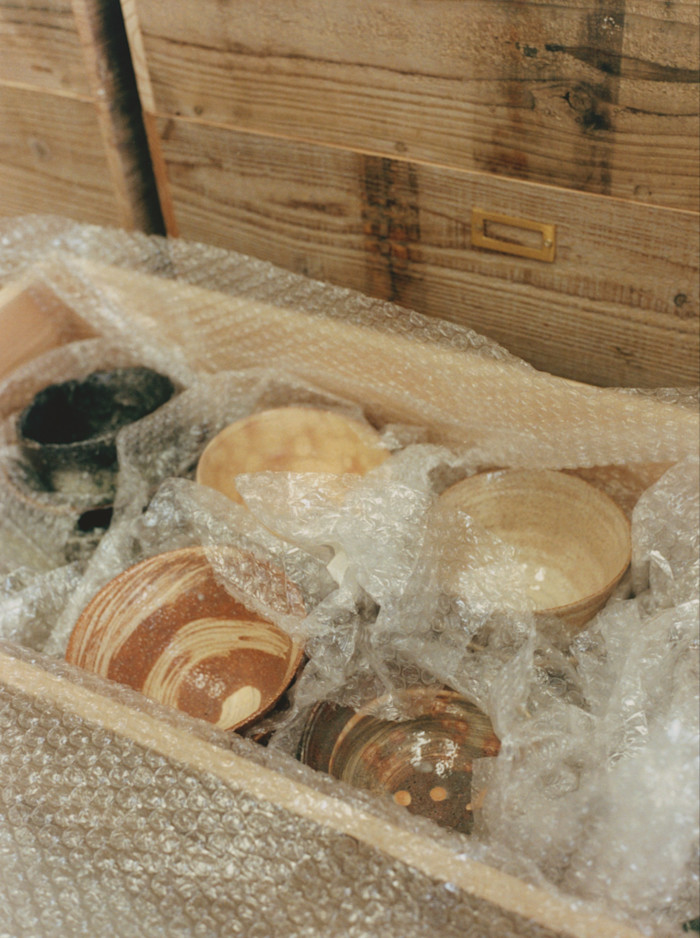
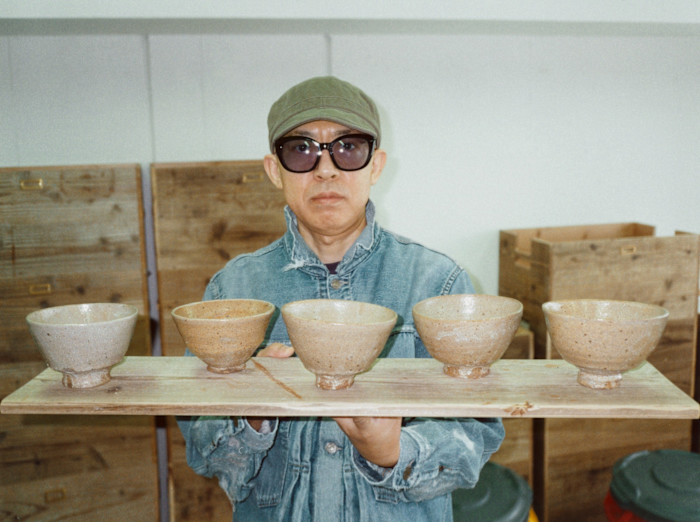
His current obsession is tea bowls; he has been studying the traditional tea ceremony under his wife’s guidance. He shows me how he shapes the clay into a rough form, allowing it to dry for a few days until it hardens, then carves it into the bowl shape before bisque-firing it in the kiln. Days later, it will be glazed and fired again.
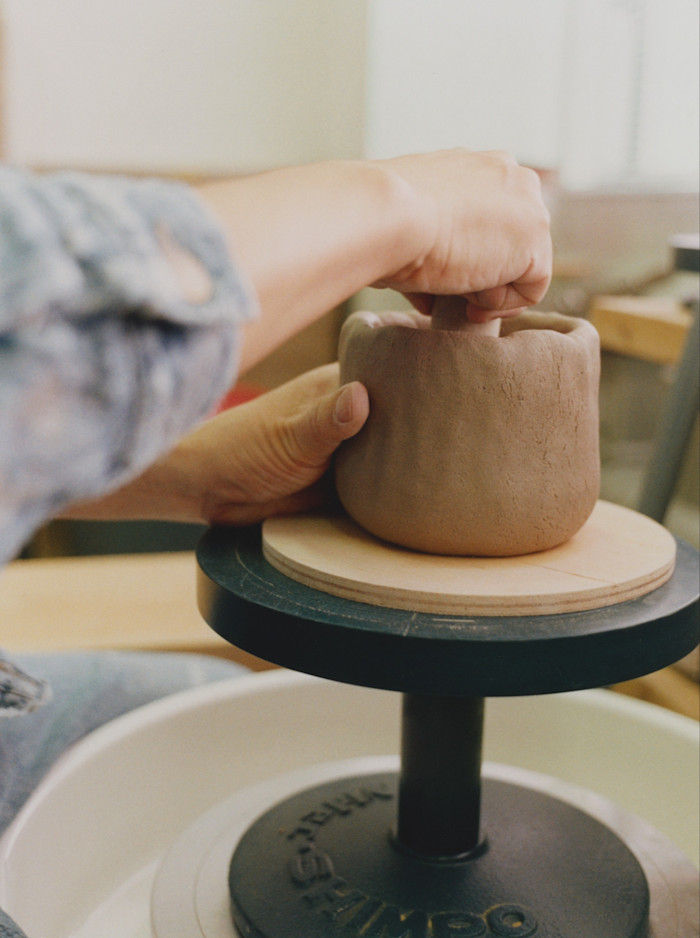
Nigo fell in love with pottery about a decade ago and became so invested in his studies that he constructed a studio and kiln in the complex in Meguro, Tokyo, that houses his archive and office. He carves out regular intervals to pursue his passion, using his time in Japan – when not working for Kenzo in Paris – to study with ceramicists at traditional potteries in Gifu, Shiga, Mie, Yamaguchi and Karatsu and learn new regional techniques.
He likes the lengthy process. “In fashion, once I’ve created the design and given instructions, and the sample comes out, it leaves my hands, goes to the production line and identical items are mass-produced. That has its own appeal,” he concedes. “But pottery is about shaping things directly with my own hands. The clay differs by region. You never know how it will come out after the firing in the kiln, and no two pieces are ever the same.”
The same could be said of Nigo’s creative output. The 55-year-old designer, streetwear veteran and record producer, whose real name is Tomoaki Nagao, wears many hats. In 1993, he founded the brand A Bathing Ape (BAPE), later establishing Human Made. In 2021, he was appointed artistic director at Kenzo, owned by LMVH, making him the first Japanese designer at its helm since its founder, the late Kenzo Takada. In 2022, he released his first album in 20 years, an all-star rap compilation featuring A$AP Rocky, Tyler, The Creator, Pusha T and Pharrell Williams. Since 2025, he has also worked as creative director for the Japanese convenience-store chain FamilyMart (a high-low marriage, as if John Galliano had taken the reins of Sainsbury’s own brand Tu).
Williams, now men’s creative director of Louis Vuitton, met Nigo in 2003. He refers to him as “my friend, collaborator and in many ways a mentor”. He writes: “His taste, his eye and his attention to detail are on another level. He has a rare depth of knowledge across culture – music, fashion, art and beyond. The way he draws from archives and references, from any era or discipline, and makes them feel relevant today, is something I’ve always admired. He doesn’t just understand legacy; he studies it, preserves it and adds to it. And beyond all of that, he leads with kindness.”

His myriad interests will be on display in a sprawling exhibition of 700 objects that opens at London’s Design Museum on 1 May. Titled Nigo: From Japan With Love, it will portray the creative through his expansive personal collections. From American toys to vintage fashion and rare, early design drawings, 600 pieces from his archives, including 25 of his hand-thrown ceramics, will be on show.
Nigo’s collections are central to his artistic process. “To use a fishing analogy, I’m not the type who aims to catch only tuna,” he says. “I cast a large net into the sea and, from the many fish caught, I edit, thinking, ‘This fish goes well for this dish, this fish can be used for that.’” Among his treasures are items as miscellaneous as vintage wooden-duck decoys. “Things are my teachers,” he insists. “I’ve learnt from things.”
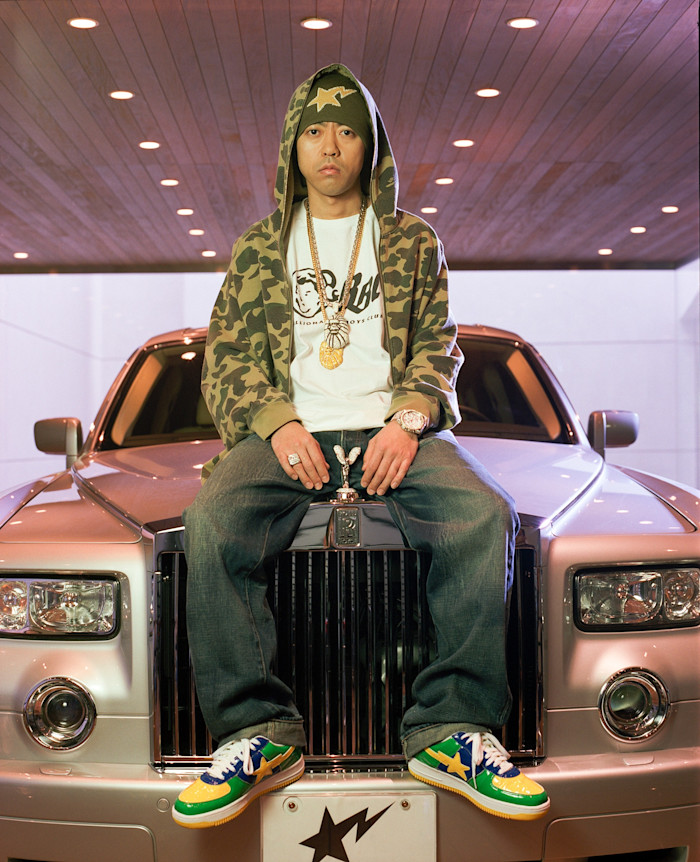
Photographed sitting on his Rolls-Royce in 2004
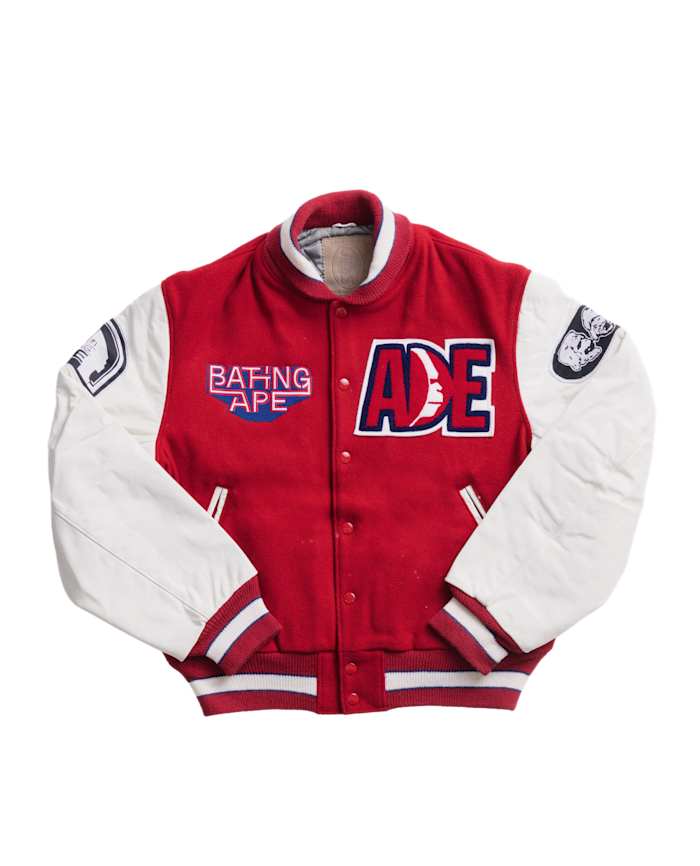
A Bathing Ape varsity jacket from his own collection
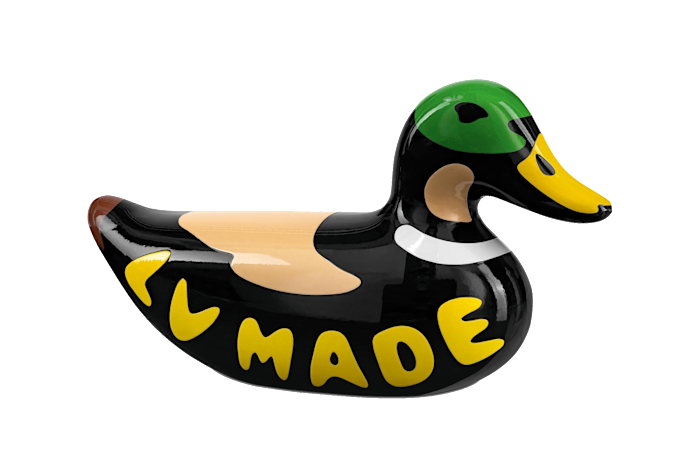
Louis Vuitton x Nigo duck decoy
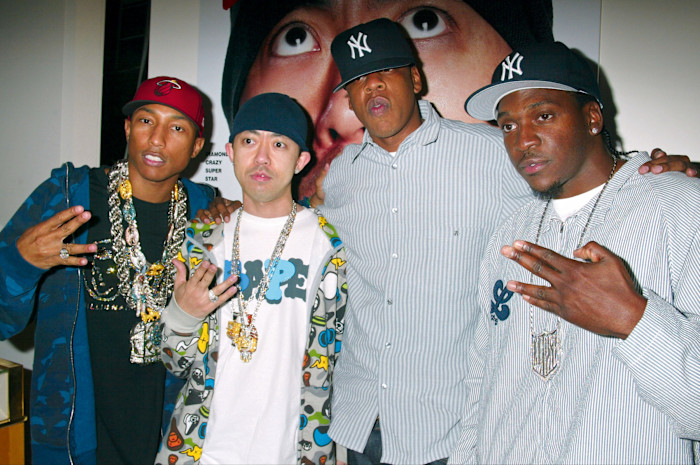
From left: Pharrell Williams and Nigo with Jay-Z and Pusha T in 2005
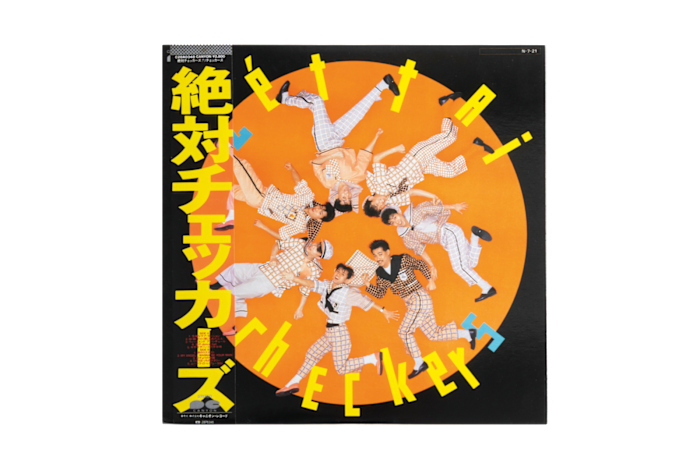
A record by The Checkers, the band that inspired Nigo to go into fashion
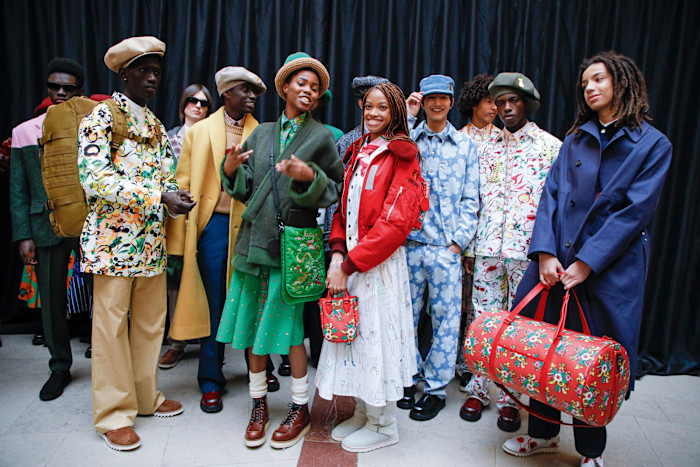
Models backstage at Nigo’s debut Kenzo AW22 show
The exhibition will question “what it means to be a collector”, says its curator Esme Hawes. “We are a design museum, we collect many objects. And we have done many designers’ exhibitions. But we have not really touched on creative directors before.” Few are as internationally admired as Nigo, who has 1.6mn followers on Instagram and occupies superstar status in his home country. “Nigo is not just designing an object or selling a T-shirt but selling the entire lifestyle surrounding the T-shirt,” adds Hawes.
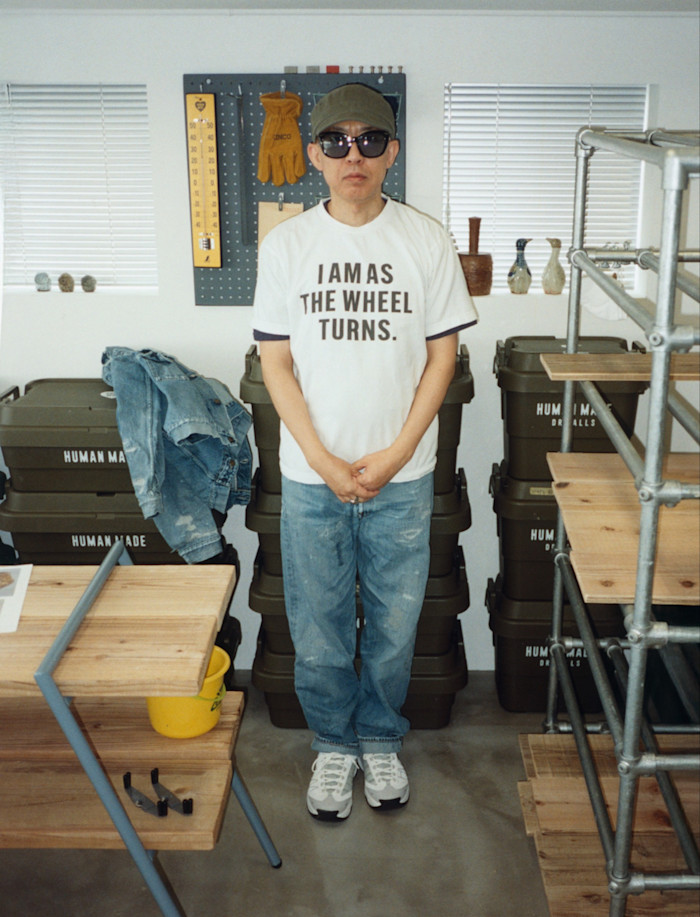
Born in 1970, Nigo spent his childhood in Maebashi, Gunma prefecture, where his archivist tendencies developed early on. He was looked after by his neighbour during the day while his nurse mother was working at a local hospital, and spent his time with toys. He developed a strong fascination with Americana, which was scarcely available in Japan at the time, forming a special attachment to a Donald Duck Push Puppet, which he bought with New Year’s money from his parents when he was five years old. He still treasures it. “It was the first Disney and American character I ever saw. It was so precious that I always displayed it beside my bed. I even brought it with me when I came to Tokyo to attend college.”

He became fascinated with fashion when he was a teenager thanks to the Japanese pop band The Checkers and went on to study at Tokyo’s prestigious Bunka Fashion College. There, he befriended Jun Takahashi, founder of Tokyo label Undercover, and the two quietly launched a store called Nowhere on a back street in Harajuku. After founding A Bathing Ape, which was popularised in the west thanks to the patronage of Williams, in 2010 Nigo set up the lifestyle brand Human Made. He sold A Bathing Ape the following year. In November 2025, Human Made listed on the Tokyo Stock Exchange with a valuation of $460mn. “Going public was on the horizon from the start,” he says.
Takamasa Ikeda, senior portfolio manager at GCI Asset Management, compares Human Made’s growth potential to that of Uniqlo, the phenomenally successful Japanese clothing company. Uniqlo’s parent company Fast Retailing last year generated close to $22bn in revenue. “By skilfully leveraging collaborations, Human Made is reaching a broad customer base. In terms of company valuation, its price-to-earnings ratio is on par with Fast Retailing,” Ikeda says.
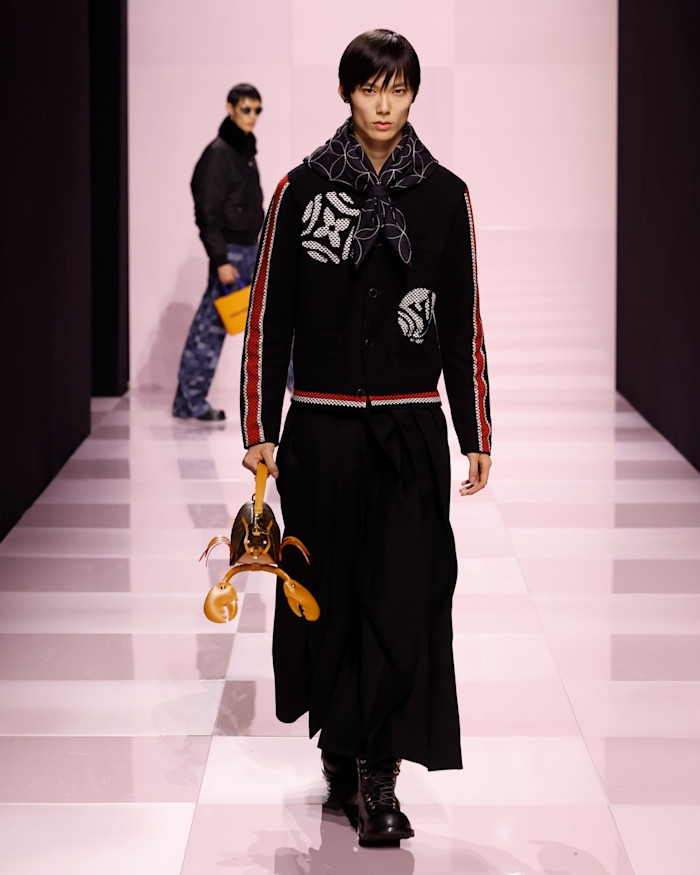
A look from the Louis Vuitton AW25 menswear show, a collaboration between Pharrell Williams and Nigo
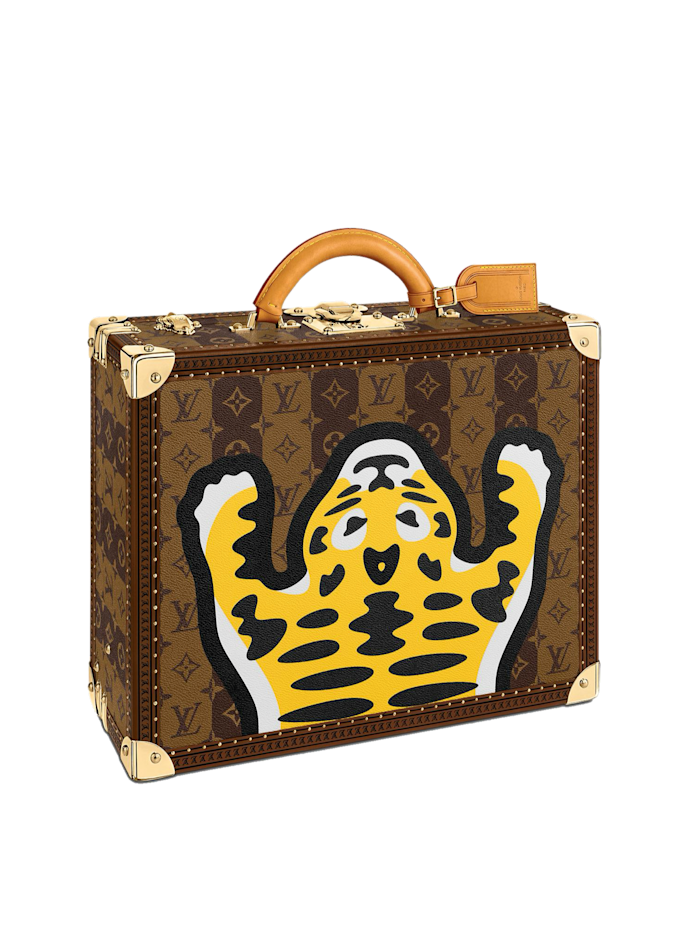
Louis Vuitton x Nigo canvas Tiger Cotteville bag
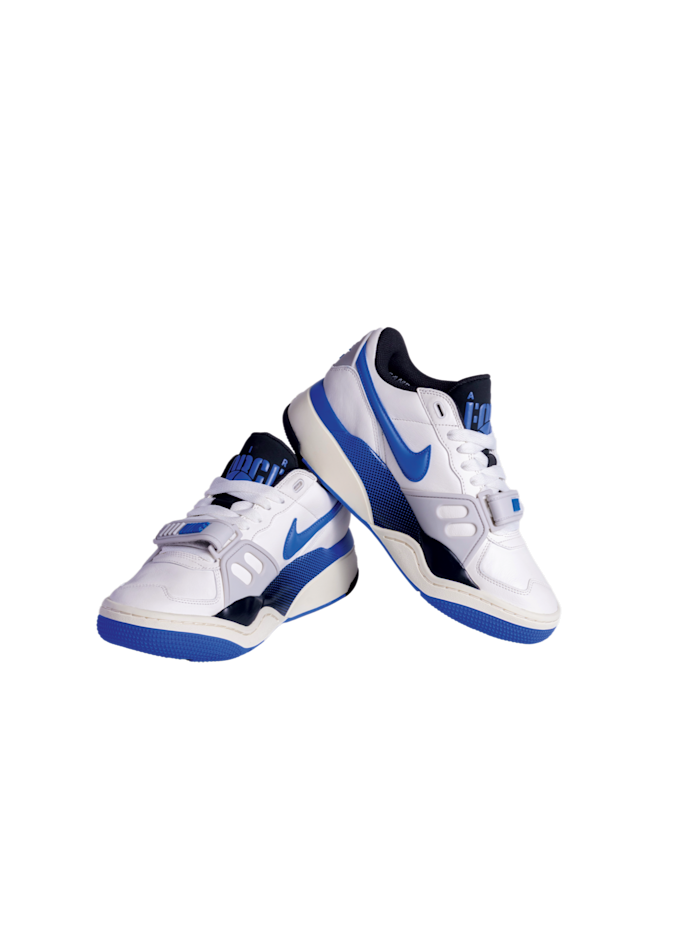
Ape Force Nike x Bape trainers
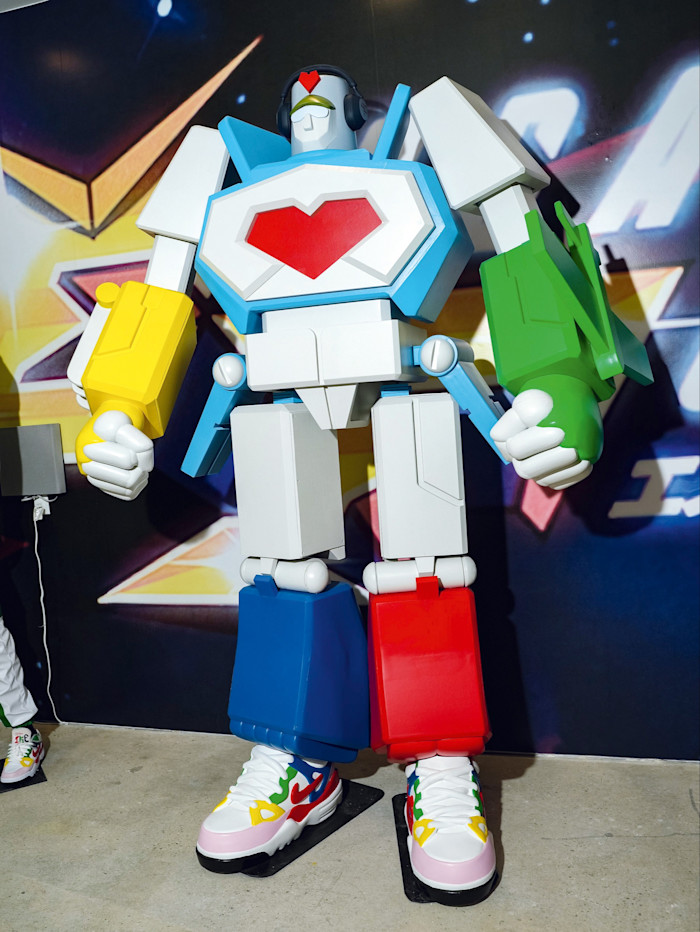
A display inside the Victor Victor store in New York in 2024, which exclusively stocked Nigo x Nike outside of Japan
At Kenzo, Nigo enjoys immersing himself in the archives. As a teenager in the early 1980s, he was intrigued by Kenzo’s early work, later amassing a collection of vintage pieces. Nigo’s practice of sampling references, from Kenzo’s archive and his own collections as well as from his cross-disciplinary career, adheres to the tagline he has assigned to Human Made: “The future is in the past”.
The designer Sir Paul Smith, another inveterate collector (of racing bicycles, ceramics, toys and vintage cameras), has become a friend over the decades. “I’ve been travelling to Japan since the early ’80s, and in that time Nigo’s success has blossomed along with his amazing output of interesting work,” he writes. “He certainly has a magic touch to whatever he turns to. His work is stylish and always hits straight away in whatever market. It’s very clever.”
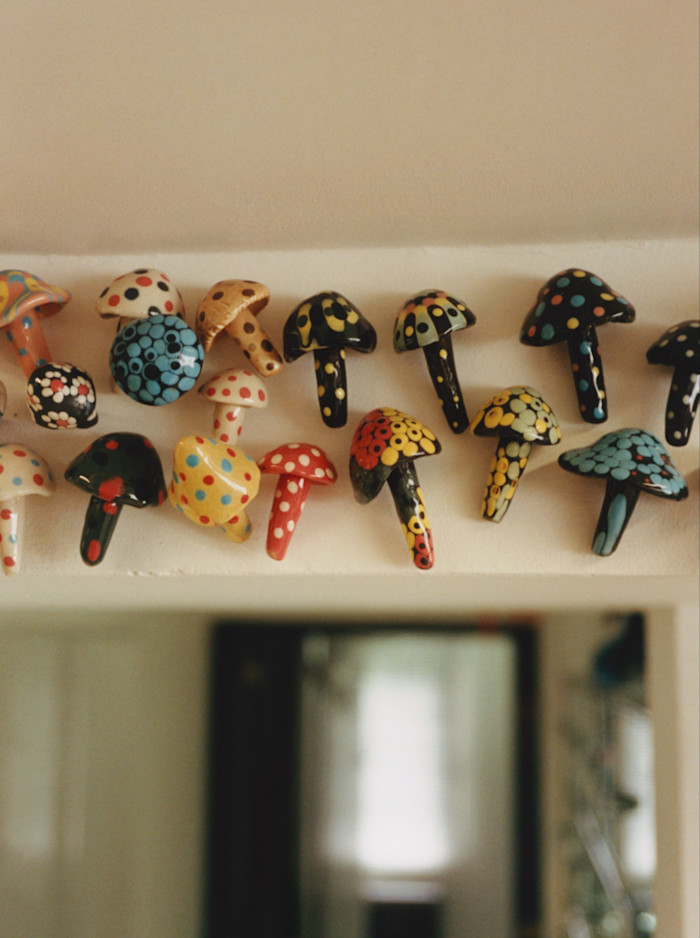
In April, Nigo will spend 10 days in London before the Design Museum show opens, meticulously installing each object on site. The exhibition will be uniquely revealing. It features items that he made in pre-school – “the totem pole I made from paper clay won a gold prize at kindergarten; I was so happy I kept it” – and a recreation of his teenage bedroom.
What does he want others to take away from his collections? “I want younger people to experience the joy I gained from the things I’d collected since childhood. When I find something I like, I want to share that elation.”
That extends to tea ceremonies, which he hosts in a tea room he has built in his Kyoto home. “The tea ceremony is akin to fashion,” he says. “The host contemplates which tea utensils, water jug, tea caddy, tea scoop and hanging scroll to use for the ceremony, considering seasonal pairings. It resembles coordinating trousers, jackets and shoes. There are tea bowls that can only be used during the New Year of a horse year.” A life-sized glass tea house, designed specially for the Design Museum show by Nigo in collaboration with its supporter Not A Hotel, will be another highlight of the retrospective.
For someone who has achieved so much, Nigo’s humility is striking. “Even now, it is a mystery to me why I am working for Kenzo,” he says, at one point during our conversation. “Coming from A Bathing Ape, which was not even considered a fashion label at the time, to Kenzo, is like a Sumo wrestler entering a boxing ring – they are such different fields.” He insists he still has more to learn. “You can only be off-the-wall once you master the fundamentals of one discipline. Without understanding the fundamentals, you end up just eccentric.”
As for the exhibition, he is most anxious about displaying designs from the earliest collections at A Bathing Ape, which he now says was his “greatest mistake”. “I was young then, perhaps acting with momentum. Seeing those collections now is embarrassing. I want to erase them. But to avoid repeating mistakes, I keep them. You learn more from a battle lost.”
Nigo: From Japan With Love is at the Design Museum from 1 May to 4 October