Nearly five decades ago, in 1978, a dozen or so professors from Shanghai Jiao Tong University (SJTU) were on a mission to visit their American counterparts as well as research institutes and factories across the United States.
The visit, said to be personally approved by then Chinese leader Deng Xiaoping, was designed to forge academic ties and led to sister-school agreements with four prestigious US universities, including the University of Michigan (UM).
It was a pivotal moment in academic collaboration between China and the US, laying the foundation for decades of transnational partnerships.
Advertisement
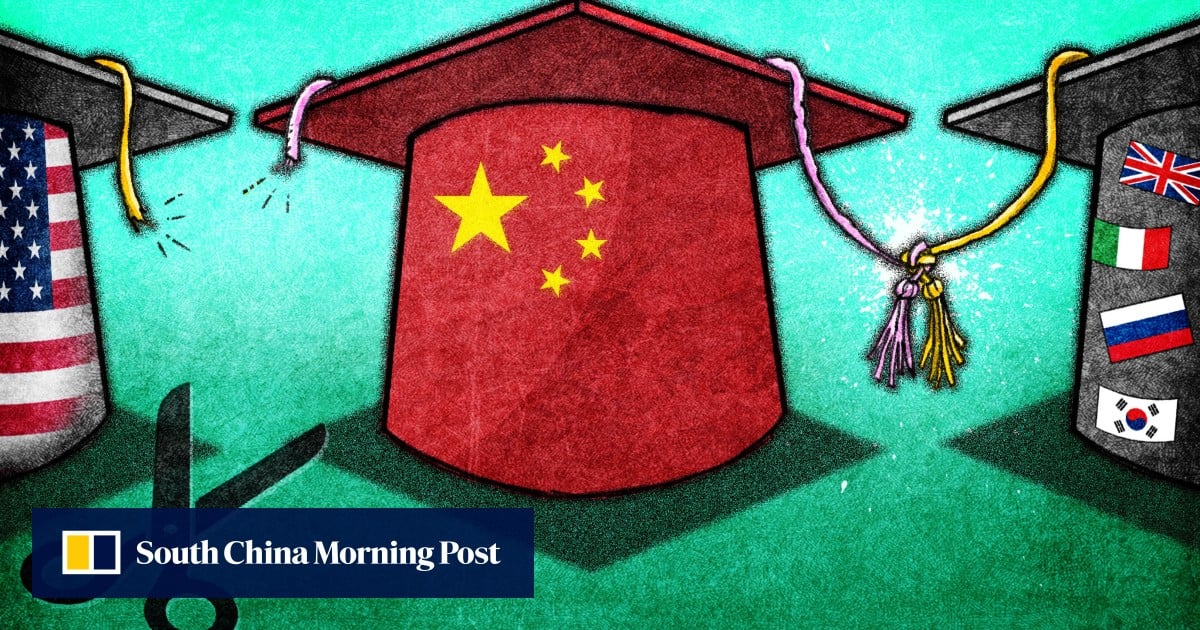
Building on this legacy, SJTU and UM established a joint institute in 2006, offering undergraduate and graduate degrees in mechanical, electrical and computer engineering. It was hailed as a gold standard for transnational higher education but the University of Michigan ended the partnership abruptly in early 2025, citing a combination of funding, political and security concerns.
In response, SJTU transitioned the joint institute into a more localised entity, now known as SJTU Global College, while pursuing new diversified partnerships.
Advertisement
It also plans to establish Zhangjiang International College of Technology this year, partnering with international universities, including Singapore’s Nanyang Technological University (NTU).
The demise of the SJTU-Michigan joint institute is one academic casualty on a growing list caught in the crossfire of geopolitical tensions between the United States and China.