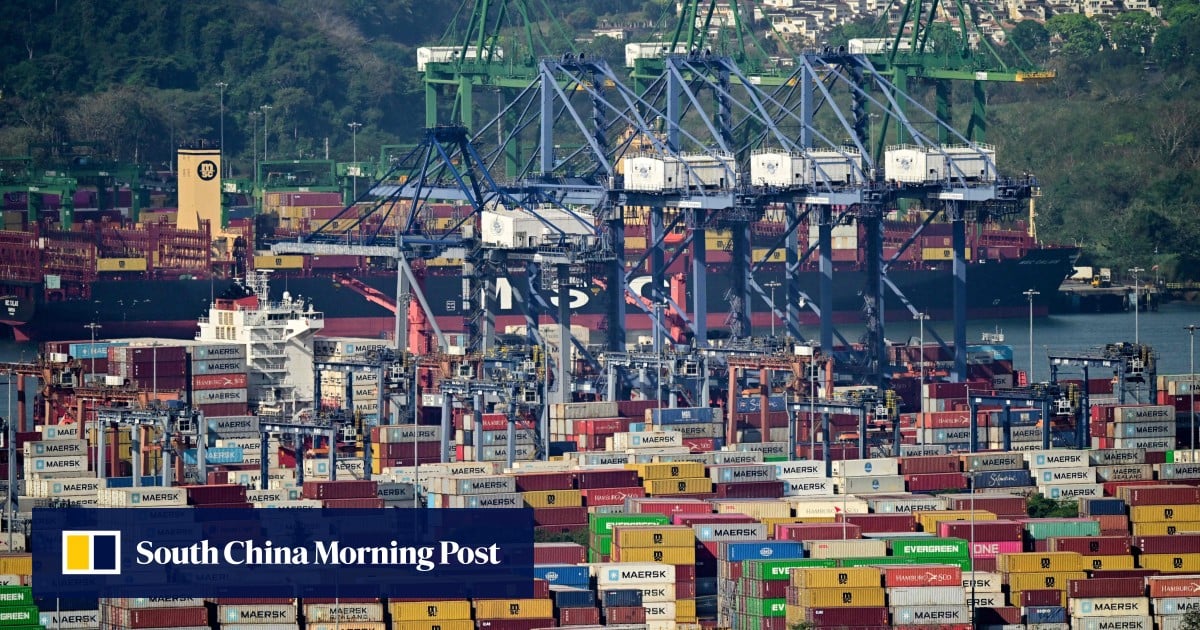
Specifically, they have invested a total of US$23.9 billion over the past quarter century in 363 ports and related activities abroad, according to AidData, a research lab at William & Mary University in the United States. AidData called the investments a safeguard against East-West supply chain decoupling.
The research team’s just-released study said 45.1 per cent of the Chinese port finance portfolio goes to locales in 20 “high-income” countries including Australia, Brunei, New Zealand, Spain and Singapore. That amount financed 30 individual ports.
Advertisement
“China’s nearly ubiquitous presence in the world’s top ports means that the US cannot currently insulate itself from Chinese supply chains, in either peacetime or conflict,” said the study titled Anchoring Global Ambitions, Beijing’s Ports Financing and the Race for Maritime Dominance.
Years of China-US trade disputes, rising tariffs and export curbs have raised fears of supply-chain decoupling, which was accentuated in 2025, when US Treasury Secretary Scott Bessent said Washington might push for delisting US-traded Chinese companies.
Advertisement
The most heavily financed sites include Hambantota International Port in Sri Lanka, the Australian ports of Melbourne and Newcastle, the Autonomous Port of Kribi in Cameroon and Israel’s Haifa Port. Financing totals ranged from US$1.13 billion for Haifa to US$1.97 billion for Hambantota, AidData found.