Unlock the Editor’s Digest for free
Roula Khalaf, Editor of the FT, selects her favourite stories in this weekly newsletter.
In 2040, just a decade and a half from now, the list of 10 most populous countries in the world is likely to include Nigeria, Pakistan and Indonesia. Missing will be one country that has been a mainstay of the list: Japan.
“Old people first outnumbered children in Japan back in 1995,” notes Tom Feiling in Alone in Japan. Schools are shutting down for lack of students, houses in the countryside lie abandoned because their owners die and there is nobody to inherit them, and robots sometimes have to be drafted in to conduct funerals. Japan has been a symbol of the future for many decades. But now instead of symbolising technological modernity, the future it shows us is one of a society hollowed out by rapid ageing.
Feiling is a British journalist who spent time in Japan in the 1990s, and returned for several years in the 2020s to find out how the country had evolved. He discovered a society changing steadily and seemingly irreversibly as its elders live longer, but its youth increasingly shun marriage and children.
Some of his interviewees are types who have become well-known social phenomena, such as the hikikomori, young people who refuse to leave the parental home and stay there playing video games and avoiding social contact. “Stuck in a state of perpetual adolescence without the means to become independent adults,” he writes, “a generation of young Japanese has effectively become futureless.”
But Feiling also breaks new ground with fascinating if bleak reports from rural Japan, which is emptying out as young people move to the city. In 2024, there were 9mn akiya (empty houses) in the countryside, some 14 per cent of Japan’s total housing stock. The streets of these abandoned villages are eerily lined with closed shops with signs in the windows claiming they are “getting ready” for customers who never come.
What has caused Japan’s crisis? Feiling attributes much of it to the erosion of the country’s old lifetime employment model, which at least guaranteed stable incomes, and its replacement with the model of becoming freeta, gig workers with few employment rights. For women with a more secure job, the continued sexism of the workplace gets in the way: some are told that they may only get pregnant when their employer deems the time is right. The country remains hostile to immigration, although the need for more care workers to deal with an elderly population may force change in that area.
Politicians have made proposals to address these issues. As prime minister, the late Shinzo Abe argued for reducing the pay gap between contracted and casual workers, and promoted ideas such as making Wednesdays “No Overtime Days”. He ran up against an unchanging corporate culture that still regards accommodation to family needs — by men or women — an imposition on the ability to produce maximum profitability.
Feiling writes with a clarity and poise that would resonate in Japan, which values such qualities. The book is also infused with the atmosphere of mono no aware — a phrase that he notes “refers to the fleeting of things”. That gives it a melancholy air, perhaps inevitable when the subject is the slow and seemingly inexorable disappearance of an entire society and culture.
Yet there are other aspects of contemporary Japan less visible in this book that give room for a more hopeful view. The country remains one of the great generators of soft power in Asia and it still has enough creativity to produce television shows, games and manga that make a splash around the world.
Japanese children make an occasional appearance in the background of the book, but it would have been interesting to have more conversations with teenagers or at least parents of teenagers. We learn a lot about the Japanese who chose or ended up not having children, but less about those who did.
Still, Alone in Japan is compelling and valuable because its central argument is clearly crucial: Japan may be ageing faster than any other society, but there are plenty close behind. The Singaporean television channel CNA recently ran a documentary series with the uncompromising title Dead Alone in Singapore. In China, the number of marriages and births reduces year by year: the state has switched from ordering people not to have children to pleading with them to do so, to little avail. Much of the rich global north is going in the same direction.
Feiling’s final message is sombre but compelling: Japan, like much of the developed world, must stop “clinging to the past”. The rise of Japan’s first female prime minister, Sanae Takaichi, came too late for Feiling’s book, but she stood on a platform that directly addressed the issues he discusses, proposing tax subsidies for childcare and domestic help to prevent women having to leave the workforce.
Such policies have not had a great record of success elsewhere in Asia. But her landslide election victory is surely a sign that Japan’s population feels, as Feiling does, that some sort of radical social change is urgently needed.
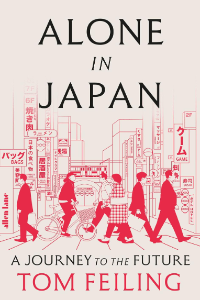
Alone in Japan: A Journey into the Future by Tom Feiling Allen Lane £25, 368 pages
Join our online book group on Facebook at FT Books Café and follow FT Weekend on Instagram, Bluesky and X