As China’s once powerful real estate moguls grapple with plunging sales — leaving many under stress or behind bars — one of them has managed a rare escape.
Zhang Xin, formerly one of the country’s most prominent commercial property developers, has shed the bulk of her China empire and is placing a big bet on New York to develop a residential tower that will require the demolition of six buildings covering 100,000 sq ft of land.
“There is stable demand for new developments in Manhattan’s historic districts,” Zhang said in an interview with the FT.
With a personal net worth of more than $1bn, Zhang is among the few Chinese billionaire developers, a symbol of the nation’s economic boom, who have managed to preserve their wealth and launch new ventures abroad, while many of her peers at home have been jailed, placed under investigation or left struggling under heavy debt loads.
Zhang was able to move billions of dollars overseas under the banner of foreign investment at a time when Beijing was encouraging local businesses to expand globally.
Her efforts to offload the remaining assets in China later stalled after regulators blocked a proposed sale — a move widely seen as reflecting Beijing’s unease over capital outflows. Chinese authorities are unlikely to allow Zhang to sell those holdings in the foreseeable future, according to people familiar with the matter.
Zhang’s career arc — rising with China’s private-sector boom, retreating as state control of the economy tightened and rebuilding abroad — mirrors the trajectory of Chinese entrepreneurs over the past three decades.
Her latest bet on New York real estate comes as private investment in China, once the main economic engine, has been declining for several years in a row.
Neil Thomas, a fellow at the Asia Society Policy Institute, said Zhang showed “great foresight” as she understood early on “America is a much safer place for billionaires than the People’s Republic of China”.
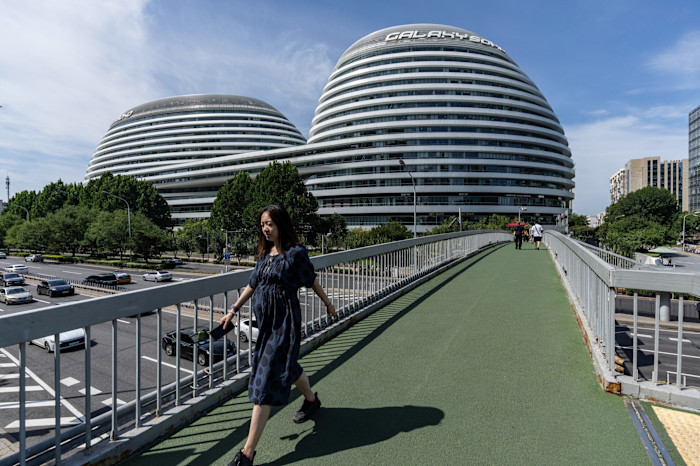
Zhang, co-founder of Soho China — one of the country’s largest commercial property developers with dozens of landmark projects in Beijing and Shanghai — had long epitomised the country’s economic rise before shifting her focus overseas.
She began unwinding her operations in China in the mid-2010s, even as the industry was still booming.
Zhang said high capital costs and low rents had pushed investment returns in Chinese real estate to “very low” levels well before Beijing’s 2020 crackdown on housing speculation triggered an industry downturn with no end in sight.
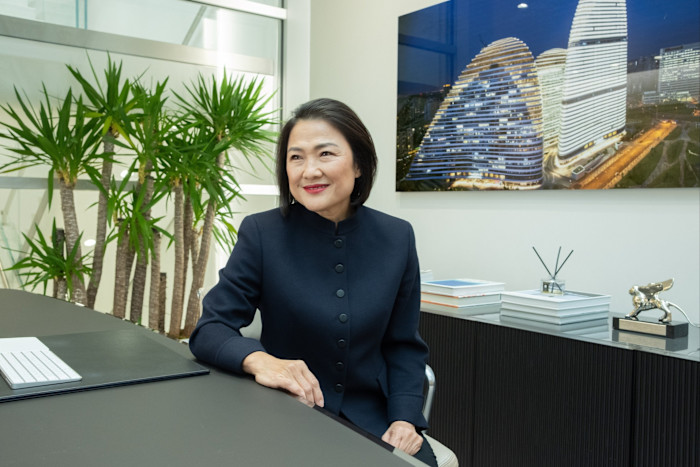
Her solution was to diversify into developed markets where returns are higher — “you cannot just put all your eggs in one basket”.
Soho China sold more than Rmb30bn ($4.2bn) of assets between 2014 and 2021, ranging from office buildings to parking lots, before Beijing blocked Zhang’s proposed sale of the entire group to Blackstone.
During the same period, Zhang invested in almost a dozen trophy properties in New York and Boston, including stakes in the General Motors Building and Park Avenue Plaza in Manhattan worth more than $5bn.
Her global expansion coincided with a period when Beijing was encouraging Chinese businesses to invest abroad, in sharp contrast to today’s more restrictive environment.
“Back then China pushed both companies and capital to go out,” Zhang said. “Today capital controls are tighter.”
She moved to New York before stepping down as Soho China’s chief executive in 2022. She remains on the board and holds a 64 per cent stake in the company, though it is now worth a fraction of its peak valuation.
Zhang then returned to real estate development, believing she would be better off developing projects herself rather than investing from the sidelines.
While US homebuilding has slowed amid high interest rates and rising construction costs, Zhang sees an opportunity in Manhattan’s historic districts, where prewar buildings dominate and amenity-rich luxury condos, popular among buyers, are in short supply.
She said her Upper East Side project will target local professionals who need a “three-bedroom apartment to accommodate three children attending nearby private schools”.
She expects well-paid financial professionals to account for half of the buyers — a group that is debating whether to flee the city to escape proposals by new mayor Zohran Mamdani to raise taxes on corporations and New Yorkers earning more than $1mn per year.
Zhang dismissed concerns that an exodus of high-income residents could undermine demand for her building, arguing that Mamdani, a self-described democratic socialist, may ultimately lack the power to push through aggressive tax increases on wealthy New Yorkers and should instead focus on “concrete things” like garbage collection.
“I had first-hand experience of how socialism, despite its good intentions, failed miserably to improve living standards, instead plunging a billion people into poverty,” she said. “It was the market economy that grew the economy, elevated living standards and brought prosperity.”
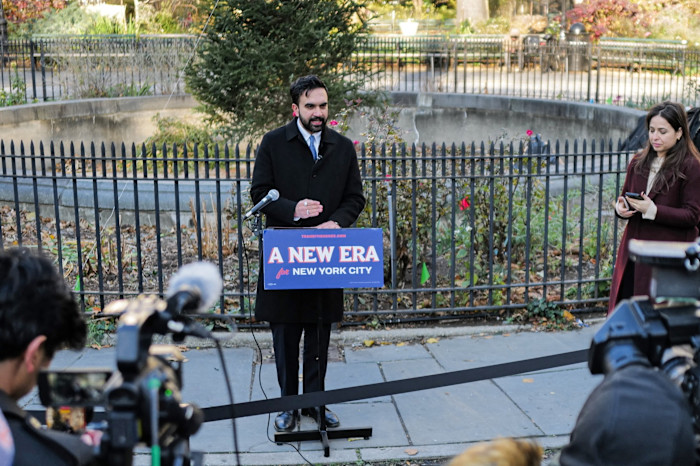
She hopes Mamdani will not dwell on ideological battles. “You need someone capable of running a city like New York — someone who can take care of the concrete things like collecting the garbage properly and getting homeless people into shelters.”
Brokers warn the proposed tax changes could materialise and reshape the high-end market. “The departure of wealthy residents has always been one of the biggest risks facing New York,” said Daniel Chang, a broker at Sotheby’s International Realty.
Despite the challenges, Zhang is bent on making it work in the US.
“Being an entrepreneur in China is always going to be the most important part of my career,” she said. “But I cannot just be sitting here thinking about the past.”