They are carnelian – a red gemstone prized across the ancient world, from the Indus Valley to the Middle East and the Mediterranean.
In China, however, carnelian was not commonly found in elite burials until the late Western Zhou dynasty (c1046-771BC), with red tones traditionally represented by other minerals, such as ochre and cinnabar.
Advertisement
The long-standing archaeological mystery of its presence in a Bronze Age site within the Sichuan Basin is finally beginning to unfold.
01:43
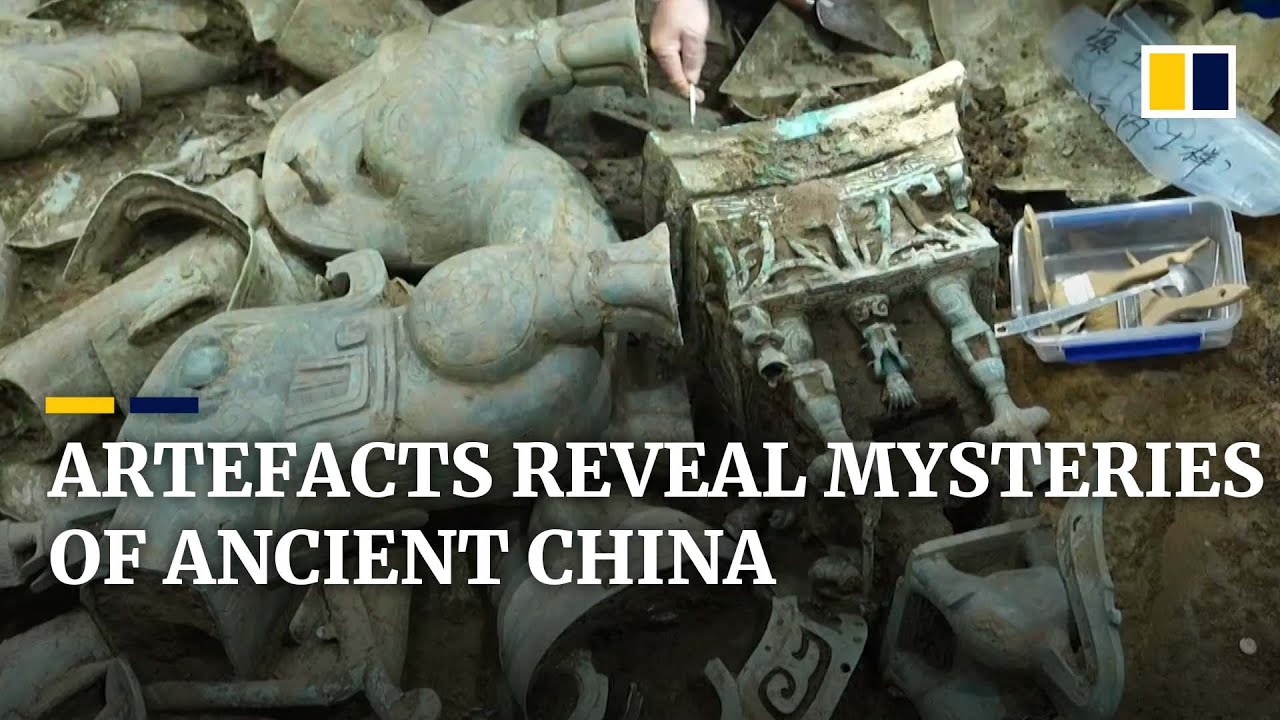
Ancient treasure trove unearthed in southwest China sheds light on mysterious kingdom
Ancient treasure trove unearthed in southwest China sheds light on mysterious kingdom
It was previously believed that these beads reached the area through two potential routes: either along the middle reaches of the Yangtze River or through maritime trade networks from South Asia.
Advertisement