Good morning from Melbourne, where I am winding down towards the end of my vacation. My colleague Chris Kay will step in for me on Tuesday, after which regular service will resume.
The “mother of all trade deals” was announced between India and the EU while I was away. This should bring some succour to exporters, who are seeking newer markets around the world as the US continues to be a difficult destination for Indian goods.
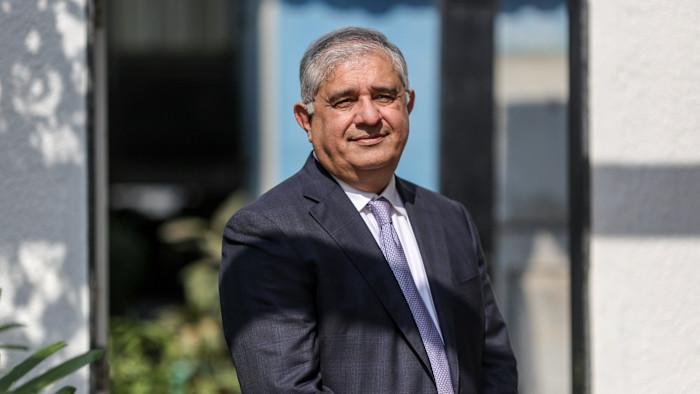
On to today: for the first edition of the India Business Briefing Q&A of 2026, I spoke with Amitabh Chaudhry, chief executive and managing director of Axis Bank, to get a sense of what we can expect from India’s economy and the banking sector this year.
Note: This interview has been edited for length and clarity
Let’s begin by taking stock of 2025. How was the year for the Indian economy?
It was a year of reform — both by the government and the Reserve Bank of India. Our economy is one of the few that has upped the growth forecast for 2026. Median inflation has been about 3 per cent for the past 18 months. So there is slack, and GST reforms etc are going to have an impact. Our view is that the GDP growth rate will be better and that inflation will not remain at these levels. It may go up to 4 per cent.
This does not mean we don’t have a lot of problems to solve, but the prognosis is good. While we are at $2,500 GDP per capita, there are parts of India which are still behind, which want to consume, want to have all these material things that they see people around the world enjoy. And that’s a huge market in itself. For a lot of global companies, India might be the last big market left to go after.
In 2025, urban consumption was slack and rural consumption was looking up. How do you see this change in 2026, especially in light of lower interest rates?
Growth rates of multinational consumer companies in terms of volume is only 2-3 per cent and this is reflective of what you said. But I see other kinds of consumption growing. Real estate inventory in urban markets, for example, is at 15-year lows. And the clear trend is that developers who are launching the right projects — premium projects — are selling the entire inventory overnight. I think this sector will be an important driver of urban growth. Secondly, GST reforms have had a positive impact, especially on large consumption items like cars.
So what you are saying, without spelling it out, is that there is a K-shaped economic growth.
Yes, there is a bit of that. For companies like Unilever, things will remain tough.
And just to round this up, what are the key themes that you see emerging in 2026?
First, I think the government and regulators will continue the reforms agenda they have begun. Second, the government knows that it has to keep playing the important role of investing. It will have to either do the investment itself or create the framework, infrastructure and incentives to push others to invest. Our view is that what’s happening to the currency does not matter, whether the RBI intervenes or not. Some depreciation in the overall scheme of things is helpful for India. But there are some concerns around tariffs and geopolitical tensions, especially in the neighbourhood.
You mentioned investment. But only the government is spending; private capex is yet to take off. Isn’t this a strange phenomenon in a growing economy?
Absolutely right, it is a bit embarrassing that we have been talking about private capex picking up for some three years now and it has not happened. But the one big factor that was working in their favour was that capacity utilisations were lower. Now they’ve reached 70-75 per cent. So if you want to grow with the economy now, you need to invest.
But at the end of the day, we also have to admit that there are only five or six business groups in the country that can put in money at a decent pace. The problem is that in a lot of cases, operating cash flows are strong and the cost of equity is so low that a lot of them are relying on other means of finance rather than going to the banking sector to fund their growth. The other aspect is around the bankruptcy code. It has given entrepreneurs a very clear message — do not over-leverage. You could lose your entire business. And if you divert funds elsewhere, you might not be able to raise money from the banking sector forever. So no one is taking any big bets.
Coming to Axis Bank, would it be correct to characterise this as a hit-and-miss year?
No, no, we have declared results only for two quarters this year and both have had one-offs in it. So I’d call it a miss entirely. (NB: This interview was recorded before January’s results.) But these were driven by some specific events. They are now out of the way and we will hopefully not have this happening in the future.
The primary reason for the write-off is that the RBI has tightened the definitions of what qualifies for priority sector lending. (The central bank mandates that banks allocate a part of their credit to some vital sectors in order to ensure socio-economic development.) In tightening these definitions, some loans that were given out fell outside of the priority sector. It’s not just us, we are seeing this across the banking system. The RBI is also calling banks and ensuring that the definitions are now common across all lending institutions.
When you started as CEO, your stated goal was to improve the bank’s ranking from number three. You have not been able to do that. You later called it a “grandiose” statement. Do you regret it?
I knew this question was coming. No, I don’t regret saying it. We have improved some significant metrics and closed the gap on several of them. In fact, in many of our businesses, we are number two. And in some verticals, we are the clear market leader.
This year the RBI has approved several proposals for foreign investment in local banks. What do you think will be the implications?
At one level it’s a great indication: foreign players who have deep pockets are seeing India as a frontier, and as a market where they can make a good amount of money. Since they are successful institutions in their markets, they also bring technologies, practices and products, which perhaps India needs. But the other point is that the local institutions that have attracted this money are between five and 10 in the pecking order of private banks. The big problem they will face is that now that they are well capitalised, they need liabilities. Banks are the highest leveraged institutions in any economy. The only way you get that leverage is by getting deposits. It’s going to be a long and not an easy journey for them to compete with the larger banks.
What do you think international players in financial services should be looking at or thinking about India right now?
Most foreign players have withdrawn from the retail side of the market. HSBC is the only one left; they are increasing branches even if on a small base. On the wholesale side, larger foreign banks with global relationships are coming into India. They are well placed to provide trade and forex flows and support their clients in their businesses locally, especially in the initial phases. They play that game very well with anything that involves cross-border flows. They also help companies raise money through either foreign equity or debt. In these areas, they are doing better than some of the leading Indian banks.
On the equity-raising side, especially in the local listings, there are three or four Indian players who are stronger than them. While some companies that are listing might keep some foreign banks because at some stage they may want some foreign investors to come in, most of these transactions are led by local houses. We understand the local market much better.
My biggest mistake
I don’t think about that. We can keep beating ourselves up for things that did not happen, but I am very thankful for whatever has happened. I have no right to crib.
Speaking of deals, the RBI has also floated the idea of allowing Indian banks to finance corporate mergers. Is that a significant play?
It’s a big market. From our perspective, it’s not just about creating the financing, it is about being able to put a structure together and being an efficient syndicator. Depending on the size, this gives us the ability to underwrite the whole deal. If you play an important role in the acquisition of an entity for any corporation, it’s an opportunity to go deeper in the relationship. So we are excited. RBI has put some controls around how much financing, to whom, how will you measure it etc. We have sought some clarifications. It’s a draft right now, but we hope it will be official soon.
You started this job in 2019. Last year, you got another three-year extension from the RBI. What have been the key successes when you look back and what are your key ambitions when you look forward?
I think we definitely got the bank back in the reckoning. It is being seen as a viable, thriving competitor both by customers and the industry. The quality of our franchise has improved both on the asset and liability side, as has our reputation. This is reflected in our numbers too. Looking ahead, there is still a lot of work to be done, especially in the quality of our deposits franchise. There is work to be done in raising the aspiration and ambition level of our employees. I thought the glass was half empty when I came in. Now I feel I have a half-empty jug.
After hours
I read a lot. I have some 10,000 books on my Kindle now. I’ll perhaps not be able to read all of them in this lifetime but I feel good about the prospect of having so much to look forward to. I also love music, especially Indian music of all kinds.
Recommended stories
AI will not lead to mass lay-offs, says TCS chief K Krithivasan.
India and the true cost of coal.
Tesla has pivoted to AI and trimmed its car line-up as its annual revenue fell for the first time.
Indonesian stocks tumbled after MSCI warned about the market’s investability.
Amazon is axing another 16,000 corporate jobs.
What is the ultimate health hack? Proper breathing.
Buzzer round
Which filmmaker, comedian and composer, whose most famous character had a bowler hat, cane and a waddling walk, received the longest standing ovation in Oscar history?
Send your answer to indiabrief@ft.com and check Tuesday’s newsletter to see if you were the first one to get it right.
Last Friday, we asked: which highly profitable European company maintains an effective monopoly over semiconductor lithography?
The answer is Dutch group ASML. Aniruddha Dutta was first with the correct answer, followed by Mahithi Pillay and Himanshu Sharma. Congratulations!
Thank you for reading. India Business Briefing is edited by Tee Zhuo. Please send feedback, suggestions (and gossip) to indiabrief@ft.com.