Unlock the Editor’s Digest for free
Roula Khalaf, Editor of the FT, selects her favourite stories in this weekly newsletter.
The US-shaped hole in global governance is now clear for all to see, and raises what may be a defining geopolitical question of our times: can some version of a rules-based international order be salvaged for the rest of the world? In some areas, at least, there are grounds for hope — if other powers, above all Europe, step up to the task.
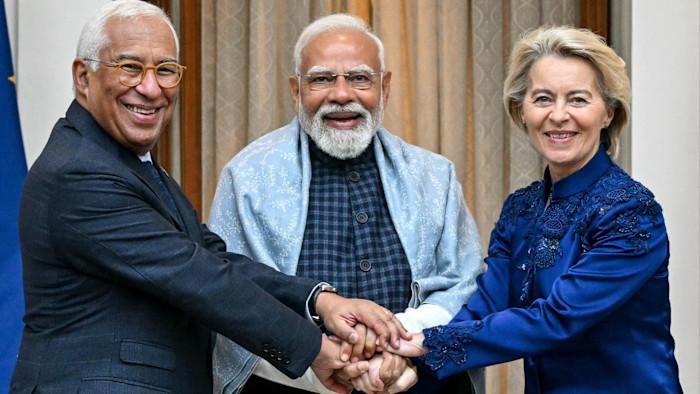
The most straightforward area is trade, which is where most efforts have been put in. Brussels and New Delhi this week agreed a long-sought EU-India trade deal billed as the largest ever concluded by either side. This followed final agreement on a massive EU pact — a quarter-century in the making — with the Mercosur bloc of southern American states. Together these two agreements cover trade between more than a quarter of humanity. Also this week, UK Prime Minister Sir Keir Starmer met China’s President Xi Jinping, hot on the heels of Canada’s Prime Minister Mark Carney, as both tried to forge partnerships to deepen economic relations between their countries and China.
These deals will do their bit to compensate for new barriers to trade with the US. And there is broad interest in even further trade integration, including a tie-up between the EU and the countries forming the Comprehensive and Progressive Agreement for Trans-Pacific Partnership. With luck, such arrangements will also help to build trust needed for deeper co-operation in fields beyond trade.
They do not, however, amount to a fully fledged, substitute rules-based order for the “world minus one”. The EU, in particular, is torn between different instincts. Its parliament ensured the Mercosur deal will only be provisionally applied with the delaying tactic of submitting it for judicial review.
The European Commission, meanwhile, has floated an abandonment of the “most favoured nation” principle. This foundation of the post-second world war trading system means countries grant equal treatment to all nations they do not have comprehensive trade treaties with — ruling out the use of the ad hoc tariff threats for unrelated political demands that the second Trump administration has revelled in. If the EU wants freedom from trade rules to do the same, it bodes ill for its ability to lead an orderly trading system.
Preserving rules-based relations is also going to take work on areas outside trade. This year’s agenda of the G7 group of large economies, under France’s presidency, is focused on global macroeconomic imbalances. The unspoken intention is a common front against China’s surpluses. But forcing Beijing to change policy is easier said than done, and in any case the EU, too, runs large external surpluses. The US is determined no longer to be the world’s borrower of last resort, but its success is inconceivable unless Europe, too, adjusts its savings and investment balances, which trade policy alone cannot do.
The irony is that the EU itself wants to invest more at home. With more political boldness than is currently on display, the bloc, by reforming its surplus model, could become an anchor for the world economy and raise its own productivity into the bargain.
Beyond trade and capital flows are a host of other items which global governance, such as it was, tried to grapple with: climate change, disease management, development. On all of these, much can be salvaged without the US by “coalitions of the willing” — but success will often depend on Europe’s and China’s ability to work together.
Beijing’s willingness to play a more accommodating role in the global economy is hardly assured. The heavy lifting, then, falls to the EU — to pressure China into being team player, or if that fails, to take the lead alone.