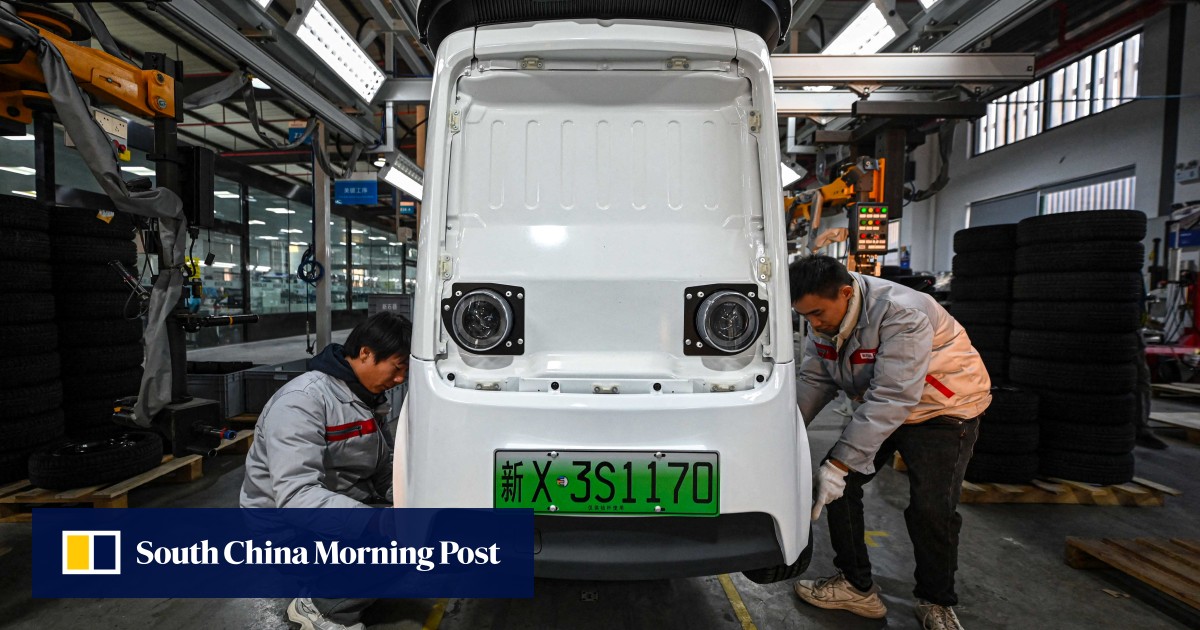
Though driverless taxis are so far only being tested in designated areas in Chinese cities, he prophesied that autonomous driving would soon become widespread.
“Autonomous driving will erupt in the next couple of years. Large models enable a unified driving paradigm, letting tens of millions of vehicles reach or exceed ‘old pro’ driver levels – and become significantly safer,” Ren wrote in a social media article on Wednesday.
Advertisement
Acknowledging a visible substitution effect on jobs from the development of AI, China’s Ministry of Human Resources and Social Security announced on Tuesday it was working on a policy directive aimed at easing the worries the technology has created among the workforce.
Advertisement
At a press conference, the ministry said it will issue a document addressing the impact of AI on employment later this year. Though no details were released, the document would represent China’s first systematic response at the central government level to the matter as it advances the technology as a core growth driver.