Despite the United States pushing to acquire Greenland, geological and technical constraints have so far prevented any country – including China – from successfully extracting and processing one of the Danish territory’s main critical minerals, a New York-based mining investor said.
“In the Arctic, one of the popular – the sort of commonly occurring mineral – is called eudialyte,” said Tomasz Nadrowski, portfolio manager at Amvest Terraden, an investment and corporate finance firm specialising in natural resources.
“So far, no one has managed to successfully extract and separate rare earth oxides from eudialyte: not the Germans, not the Finns, not the Chinese, not the Russians.”
Advertisement
“Maybe science will find a solution one day, but not today.”
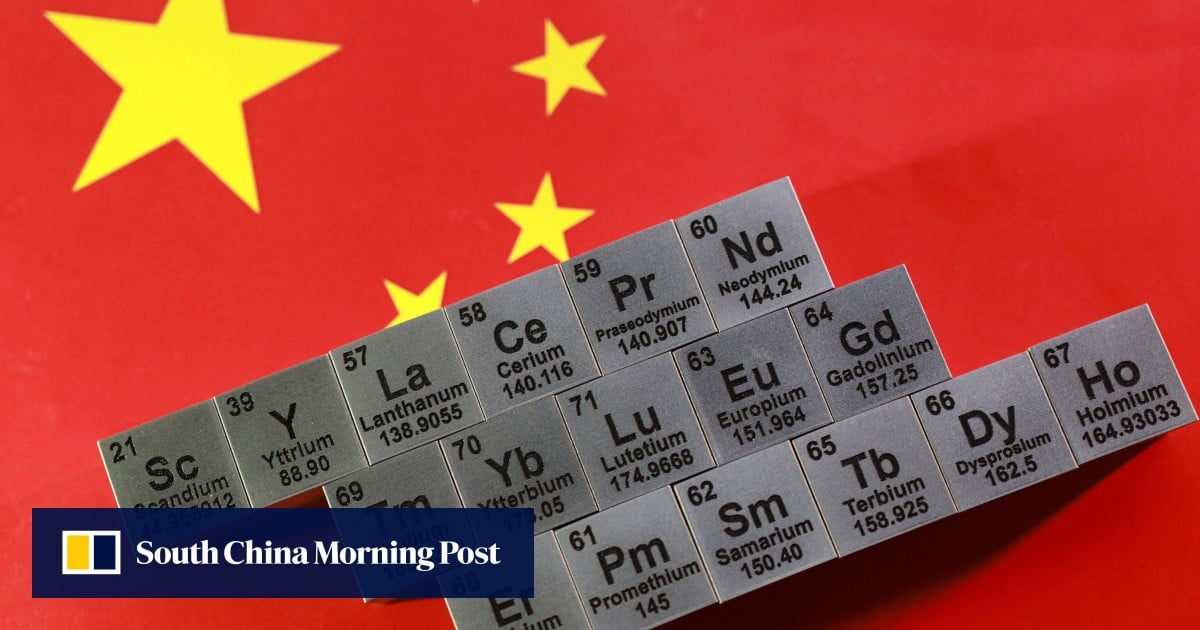
The stakes are high. If processed at a commercial scale, eudialyte’s rare earth elements could be used to make permanent magnets – essential components in numerous hi-tech products. At present, China has a functional monopoly on the trade of these materials thanks to its unmatched refining capacity, with the country controlling about 90 per cent of the global supply.
Advertisement