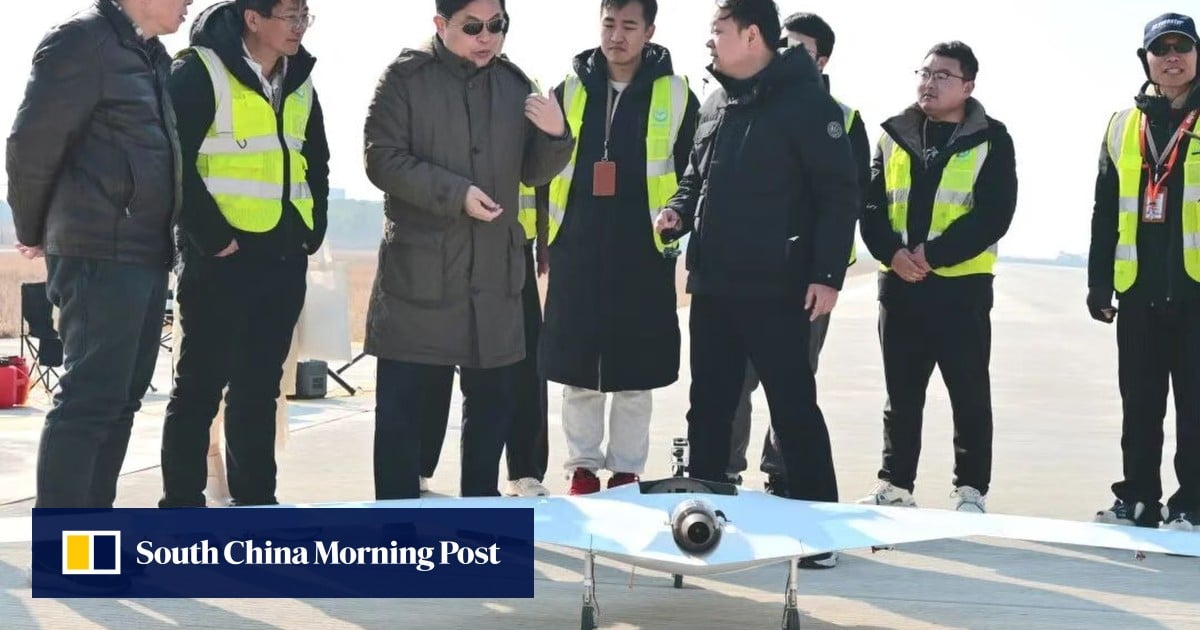
The old rules said you had to choose: stealth or speed. The US picked stealth. Russia went fast. China is trying to throw away the rule book.
Advertisement
However, this design comes with a trade-off. By eliminating the traditional tail, the plane responds quickly when pitching, but its long, thin wings can bend and shake in high-speed airflow, sometimes causing severe vibration across the entire aircraft.
This vibration is known as “rigid-elastic coupled flutter”. Once it occurs, it can lead to flight instability in mild cases, or even cause instant mid-air disintegration in severe scenarios.
Advertisement
To avoid flutter risks, earlier flying-wing aircraft, including the B-2, have been limited to subsonic speeds. This inevitably compromises a bomber’s rapid response and penetration capability, making it difficult to evade modern air defence systems once detected.