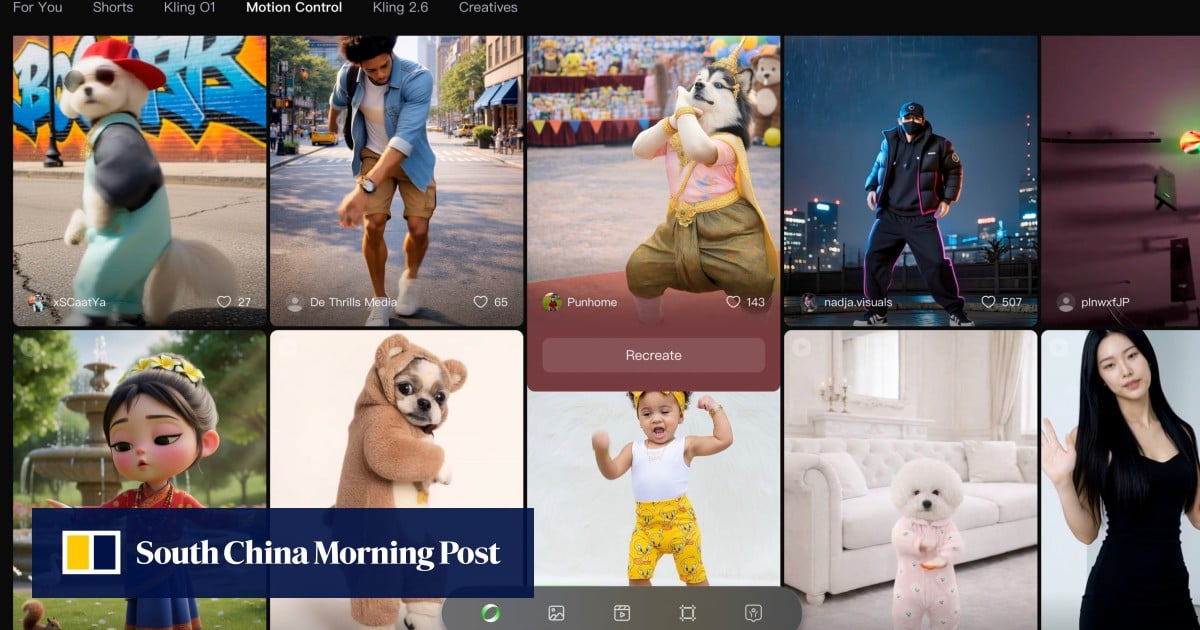
As AI video generation has evolved from a curiosity to a productivity tool embraced by serious creators, the Kling platform developed by China’s Kuaishou has landed firmly in the top tier alongside Google’s Veo and OpenAI’s Sora.
Kling has rapidly grown into a meaningful new business line for the company – long a runner-up to TikTok owner ByteDance in China’s short video arena – since its launch in June 2024, reaching about 12 million monthly active users and annual recurring revenue of roughly US$240 million.
The figures are hardly surprising at a time when dancing puppies, alien invasions and digital human live streaming hosts are already everyday scroll-past content, and “AI slop” has become a common concern. While Kling’s success is welcome news for Kuaishou, the question is why Kling has become such a hit.
Advertisement
The tool’s latest metrics, from sources and company announcements, show its momentum. It garnered more than US$20 million in revenue in December alone, bringing it to US$140 million for the year, more than double the US$60 million target Kuaishou set internally at the start of 2025. In January, average daily revenue jumped about 30 per cent from a month earlier.
That traction has lifted Kuaishou’s long-sluggish Hong Kong shares, which gained 23.3 per cent over the past month to close at HK$78.60 on Monday.
Advertisement
Kuaishou positions Kling as the new poster child for the generative-AI era. The Beijing-based company set up a stand-alone business unit in April 2025 for the tool, and executives have repeatedly pointed to its rising user base and revenue in earnings calls over the past year.