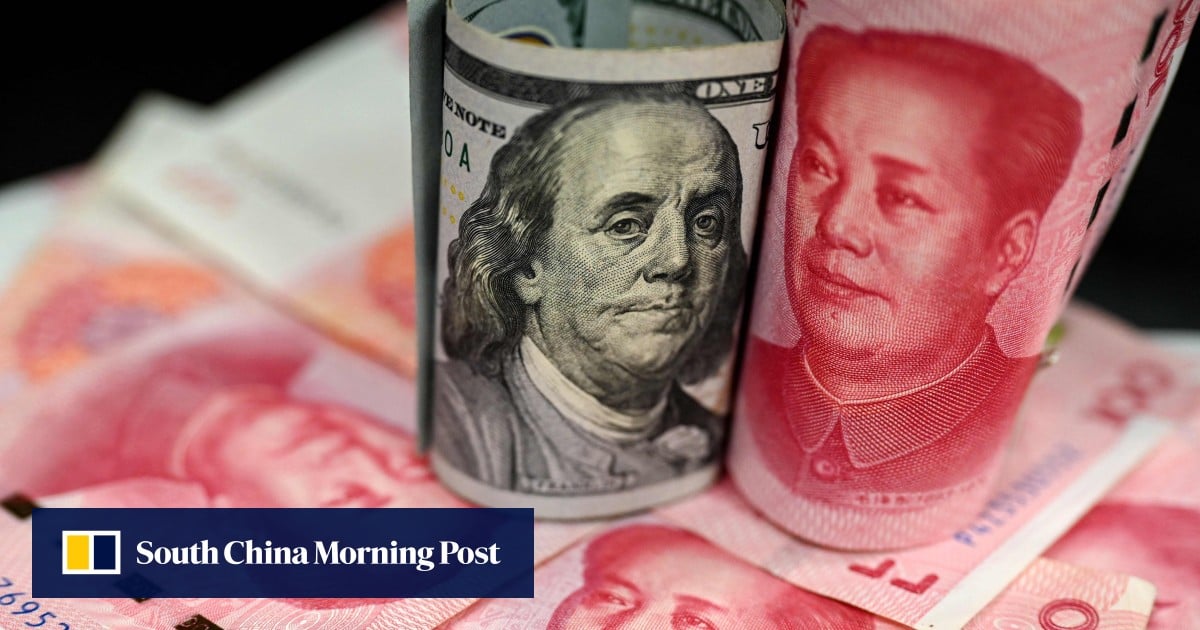
China should leverage its massive buying power to boost imports settled in yuan and shift towards a more balanced trade structure, to accelerate the currency’s global use, according to a former central bank adviser.
“China is the world’s largest goods exporter, but the yuan’s international standing still lags far behind,” said Liu Shijin, a former vice-minister at the Development Research Centre of the State Council, according to a report by the state-owned Securities Times.
Advertisement
Liu’s comments, which echoed similar remarks he made a couple of months ago, have taken on renewed significance amid the yuan’s recent steady appreciation and growing concerns over the US dollar due to policy uncertainty under US President Donald Trump. The worries have been exacerbated by Washington’s recent moves over Greenland and pressure on US allies.
Advertisement
A strong currency is marked by a large share of imports settled in the home currency, Liu said on Saturday, adding that with China’s population roughly four times that of the United States, it should be fully possible for China to build a consumer market far larger.