Its spacecraft is expected to touch down near the rim of Shackleton crater at the lunar south pole, where it will deploy a rover and hopper to search for ice.
While water could support long-term human activity on the moon, from providing drinking water and oxygen to producing rocket fuel, water on the moon does not behave like it does on Earth. It is locked in frozen soil, not exposed to air and held in place only by cold and vacuum.
Advertisement
Collecting lunar ice properly could prove far trickier than measuring it, according to a team from the Harbin Institute of Technology and the Chinese Academy of Sciences that is helping prepare the mission to collect and test lunar water samples.
01:57
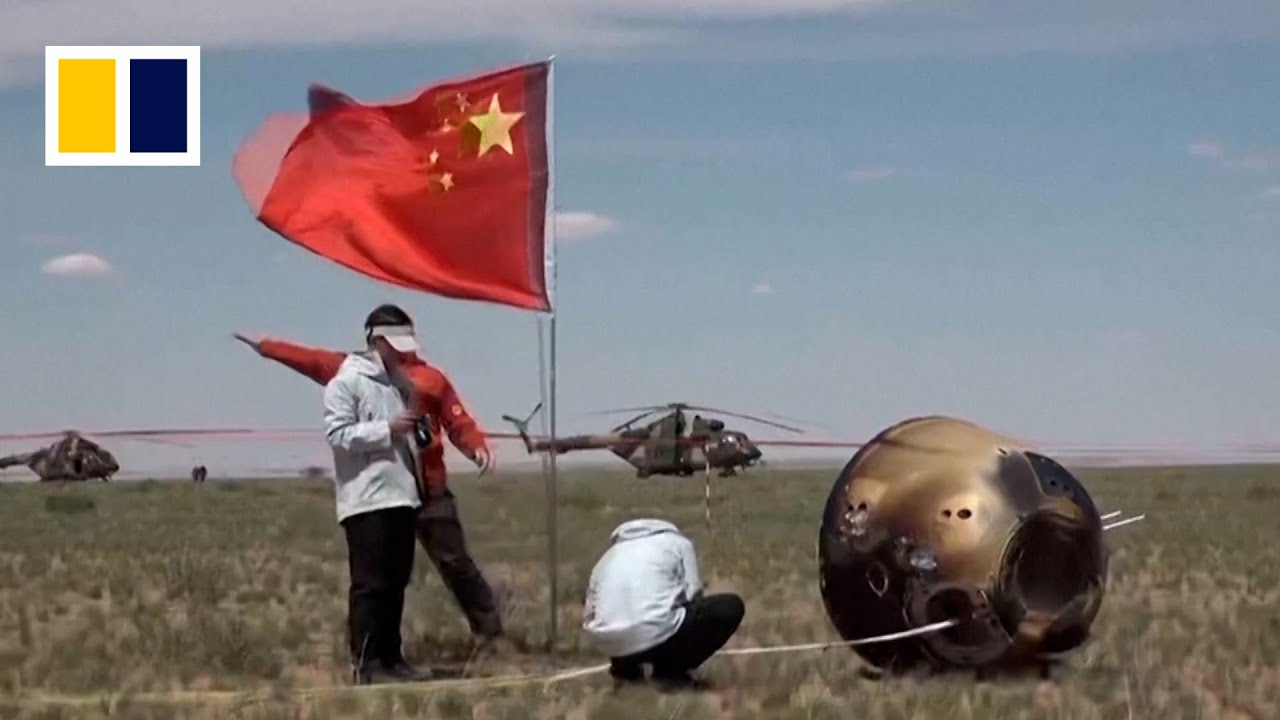
China’s Chang’e-6 mission returns to Earth with first samples from moon’s far side
China’s Chang’e-6 mission returns to Earth with first samples from moon’s far side
As the Chang’e-7 sampler on the rover’s robotic arm scrapes into icy soil, even slight warming from contact and friction could loosen water molecules, the researchers wrote in a paper published in the Chinese Journal of Space Science this month.
Advertisement