When contemporary Europe engages with the world, it increasingly presents as two distinct Europes operating within the same institutional framework. This duality – a Europe of strategic dependence vs a Europe of normative assertion – creates a contradiction.
For partners, particularly in China and across Asia, this is not merely an abstract identity crisis but a practical geopolitical puzzle that complicates engagement and challenges assumptions about Europe’s global role.
One Europe, embedded within Nato and the US-led transatlantic security architecture, anchors its survival to American military power and strategic priorities. This “Nato Europe” has internalised a position of security dependence, solidified through decades of integrated defence planning, intelligence sharing and military procurement tied to Washington. Its strategic subordination means its positions on critical issues – from technological competition, trade and tariff issues, and sanctions policy to the Taiwan question – are often structurally pre-aligned with US objectives.
Advertisement
The other “sociopolitical” Europe sees itself as a post-militarist, normative power. It projects influence through regulatory standards, values-based diplomacy and regulated capitalism, positioning itself as a moral and civilisational counterpoint to American unilateralism and other global models.
From the vantage point of China and Asia, Europe’s internal split translates into tangible challenges for cooperation. First, it creates a credibility deficit. When “sociopolitical Europe” advocates for a rules-based international order, champions multilateralism or criticises other powers’ internal affairs, its moral authority is undercut by the reality of “Nato Europe”.
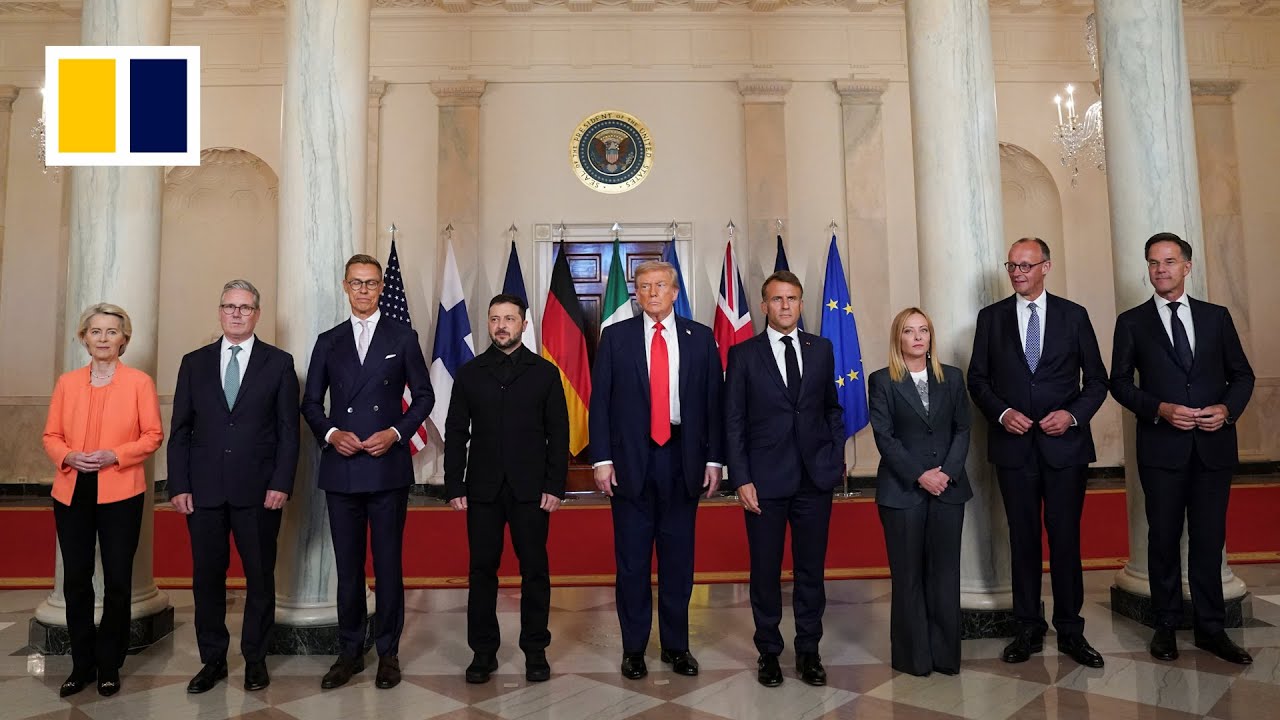
EU leaders praise Trump’s efforts to end Russia’s war in Ukraine
EU leaders praise Trump’s efforts to end Russia’s war in Ukraine
The credibility of advocating for strategic autonomy or principled engagement is significantly undermined when final security sovereignty is entrusted to the United States, whose strategic objectives, especially towards China, are fundamentally confrontational.