Good morning and welcome back to FirstFT Asia. In today’s newsletter:
Takaichi’s election gamble
US partially evacuates Qatar base
Why the world is stockpiling food again
We start in Japan, where Prime Minister Sanae Takaichi is planning to call a snap general election as she seeks to convert her high public approval ratings into a parliamentary majority for her ruling Liberal Democratic Party.
What to know: Takaichi informed senior colleagues yesterday of her intention to dissolve the lower house of parliament soon after it reconvenes on January 23, according to Hirofumi Yoshimura, whose Japan Innovation Party governs in coalition with the LDP. She is then expected to call the snap poll in February. Yoshimura said the coalition between the LDP and JIP, which was formed in October, had not yet earned a public mandate in a general election. He said he and Takaichi discussed the prospect of a snap poll as a “chance for the new government to seek public trust”.
A risky move: The general election will be Japan’s second in less than 18 months. The LDP lost its majority in the lower house of parliament in 2024 under Takaichi’s predecessor Shigeru Ishiba. The following year, its then-governing coalition lost its majority in the less powerful upper house.
The ruling party’s overall approval ratings are relatively low at about 35 per cent, according to numerous polls, but cabinet approval, which reflects the personal popularity of the PM, has ranged as high as 76 per cent. Still, analysts said the move was a major gamble.
Why Japan has fallen for Takaichi: The prime minister’s unexpected surge in popularity reflects voters’ desire for a fresh set of ideas about how to deal with Japan’s chronic problems.
More Japan news: Advertising group Dentsu’s efforts to sell its international operations are close to collapse after potential trade buyers and private equity suitors walked away from talks.
Here’s what else we’re keeping tabs on today:
Economic data: South Korea and Hong Kong publish trade data.
Rate decision: The Bank of Korea is expected to keep its key interest rate unchanged. (Reuters)
Results: Taiwan Semiconductor Manufacturing Co, Goldman Sachs, Morgan Stanley and BlackRock report earnings.
Tennis: The Australian Open main draw ceremony takes place in Melbourne. The event itself, the first Grand Slam tennis tournament of the year, begins on Sunday.
Five more top stories
1. Donald Trump said he had received assurances that Iran had “stopped” killing protesters, delivering a more measured tone towards Tehran even as he did not rule out US military action. The president’s comments came after the US began evacuating some personnel from its largest military base in the region.
How Iran switched off the internet: Experts say the blackout is one of the deepest and most sophisticated shutdowns in history.
More on the protests: Tehran’s Grand Bazaar, whose shopkeepers helped bring Islamist clerics to power in 1979, once again became a hotspot for anti-regime rallies.
2. China blamed the US for growing global trade imbalances as the world’s second-biggest economy reported a record full-year trade surplus of $1.2tn for 2025 despite Trump’s trade war. Exports in goods grew 6.6 per cent in dollar terms in December on a year earlier, according to official data released yesterday.
3. The US, Denmark and Greenland will set up a high-level group to discuss the future of the vast Arctic island but “fundamental disagreement” remains between the two sides, according to the Danish foreign minister. Yesterday’s talks at the White House came as Denmark and several Nato allies sent troops and equipment to Greenland.
4. Toyota Motor has raised its offer to buy its biggest subsidiary to ¥5.4tn ($34bn) after activist investors and shareholders accused it of severely underpaying in one of the world’s largest take-private attempts. The Japanese carmaker said it had raised its offer for Toyota Industries, a crucial engine and component supplier, by 15 per cent to ¥18,800 a share.
5. New Zealand’s foreign minister has publicly reprimanded Anna Breman, the central bank governor, after she signed a letter of support for Federal Reserve chair Jay Powell alongside other global reserve bank leaders. Breman should “stay in her New Zealand lane”, the country’s outspoken foreign minister Winston Peters wrote on X. Read the full story.
The Big Read
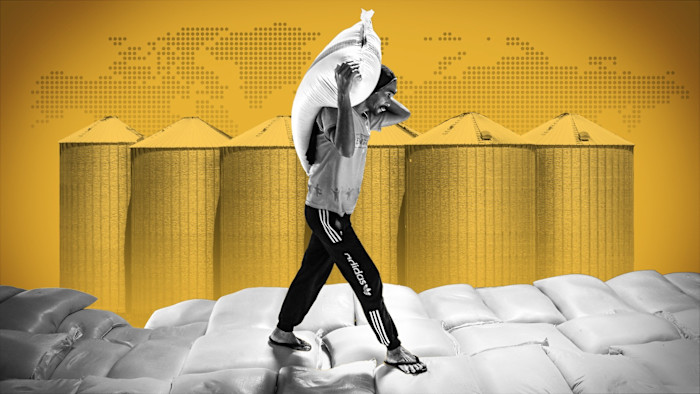
From Sweden and Norway to India and Indonesia, countries are holding back increasing quantities of rice, wheat and other staples as insurance against a world they view as increasingly unstable. But many economists believe the move could be counter-productive.
We’re also reading . . .
Hong Kong: David Webb, an activist investor and advocate for corporate governance reform in Hong Kong that made him a gadfly to the city’s financial establishment, has died.
Commodities: A powerful Beijing-backed company that has a stranglehold over China’s massive purchases of iron ore has become the biggest risk in the global market for the commodity, according to Australian miner Fortescue.
Elite British school: The Singapore offshoot of a prestigious London school has told parents it has scrapped a planned expansion weeks after an FT investigation.
Chart of the day
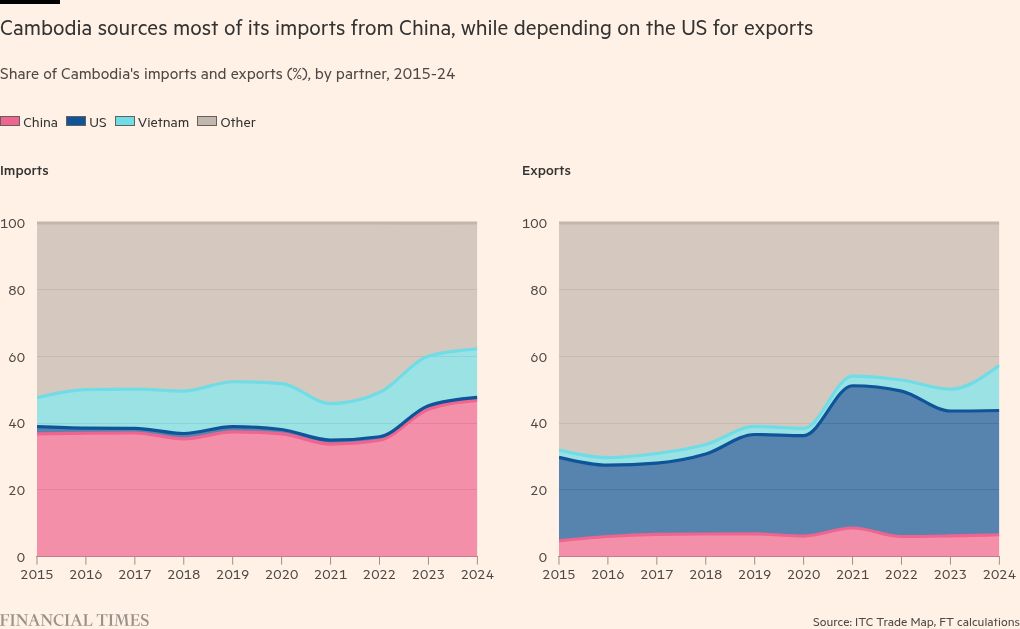
Cambodia is looking to reduce its reliance on China, its long-standing ally and largest trading partner, as it seeks to shield its economy from the superpower rivalry between Washington and Beijing, its deputy prime minister has said. “We had a wake-up call when President Trump declared ‘liberation day’,” Sun Chanthol told the FT.
Take a break from the news . . .
How should you talk to someone you disagree with? New research shows that declaring what you oppose, rather than what you support, could be key to reaching across divides.