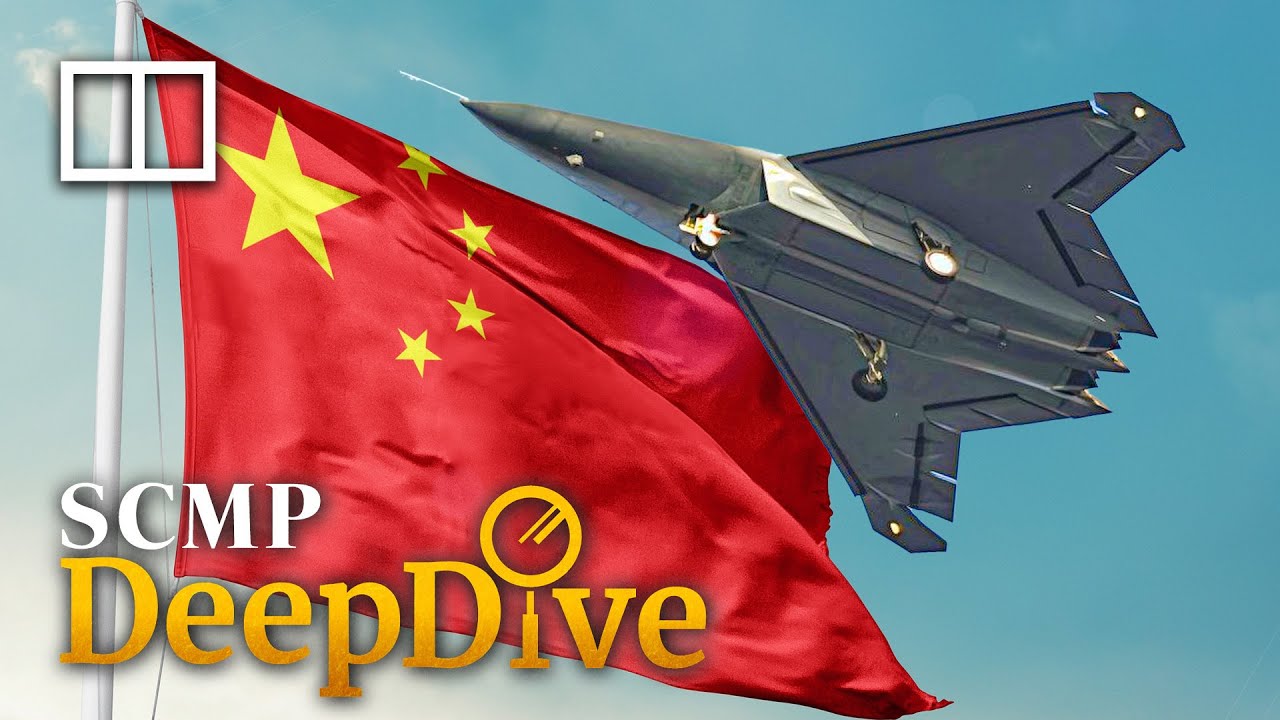
Integrated space-air fighters featured in China’s Nantianmen science-fiction project, represent the future of aerospace technology, and it is only a matter of time before they are realised, according to state media.
The comments appeared on Friday in a programme on CCTV’s military channel that repositions the Nantianmen Project – a research initiative dating back to 2017 that focused on future air and space warfare – from a collection of fantasy concepts to attainable future tech.
In the programme, CCTV showcased conceptual fighter jets that had previously been unveiled along with fresh animations to show them in space combat.
10:01
What do we know about China’s two next-generation aircraft?
What do we know about China’s two next-generation aircraft?
Advertisement
Until last week’s CCTV programme, observers had generally regarded the models as science fiction-inspired models produced by China’s aerospace industry, primarily for educational and public engagement purposes, but a long way from operational reality.
However, in Friday’s broadcast, military analyst Wang Mingzhi, of the PLA Air Force Command College, said, “these frontier technologies [from the Nantianmen Project] reflect both expectations for future aerospace and space superiority, and the directions being pursued to safeguard national security”.
Advertisement
Wang said the project integrated a range of advanced technologies into futuristic combat aircraft. Those technologies included hypersonic flight, dual-mode air-and-space propulsion, metamaterial stealth, adaptive airframe configurations, autonomous unmanned swarm coordination, AI-enabled decision making, directed-energy weapons and space-to-atmosphere operations.
“These frontier technologies are not a question of whether they can be achieved,” Wang said, “but rather which ones will be realised first, and when will they ultimately all be realised.”