For China’s leadership, the most urgent lesson of modern military power comes not from a foreign manual but from its own history books.
Its catastrophic defeat by Japan in 1895, born of internal corruption, forms the invisible backdrop to every Chinese showcase of modern hardware. The recent live-fire drill around Taiwan code-named Justice Mission 2025 – a forceful display of Beijing’s resolve to achieve reunification and deter any challenge to its core interests – was no exception.
To Beijing, the true foundation of an effective military lies not only in advanced technology but also in institutional integrity. History teaches that material investments must be translated into real warfighting capability. It’s a lesson China is resolved to learn.
Advertisement
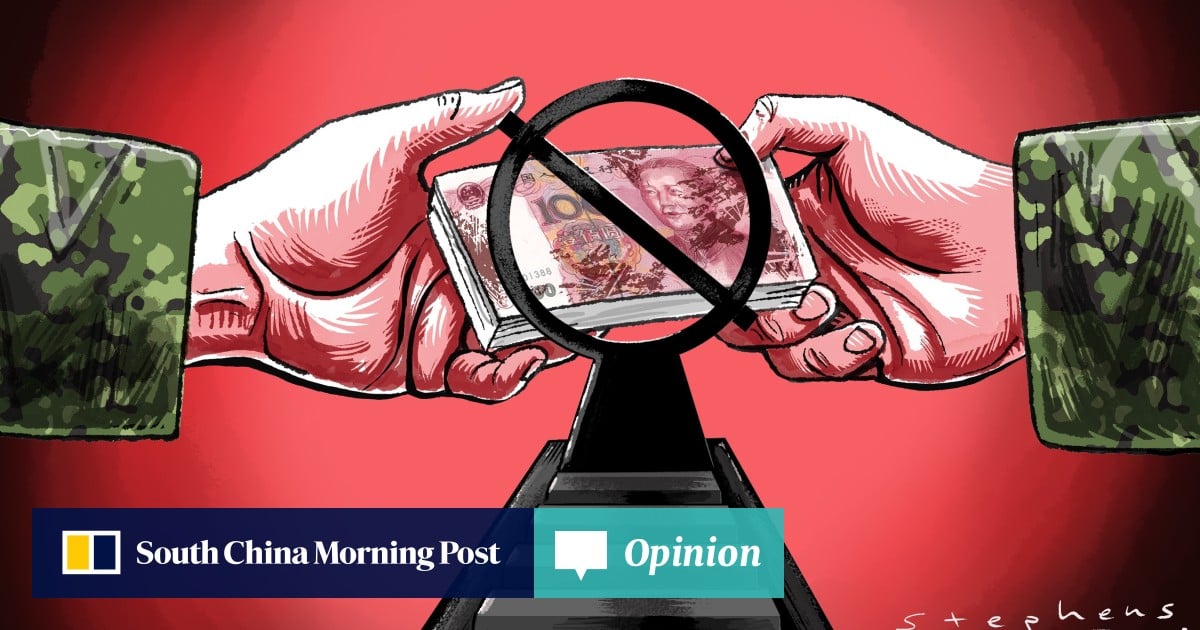
Here then is the driving force behind the rigorous anti-corruption campaign that has defined the Chinese military apparatus in recent years.
The anti-corruption drive in China’s military is notable for its scale. Official narratives frame this as a manifestation of institutional strength and self-purification. While the dismissal of senior figures like He Weidong and Miao Hua is presented as evidence of systemic resilience, independent analysts observe that such campaigns also serve to consolidate political control and eliminate rivals, raising questions about the interplay between genuine reform and political manoeuvring.
Advertisement
While the stated logic is unmistakable, the ultimate test of the purge’s effectiveness will be its tangible impact on military professionalism, morale and warfighting capability, metrics inherently difficult for external observers to quantify.