A comedy about animal cops investigating a reptilian mystery has become the highest-grossing foreign animated film ever in China, bucking the trend of declining interest in overseas productions that has resulted in Hollywood films struggling in the Chinese box office.
Zootopia 2 (called Zootropolis 2 in some European countries), a hotly anticipated and widely marketed sequel to 2016’s Zootopia, was released in China last week. In its first seven days, it made about 2bn yuan (£213m) in ticket sales, making it one of the best-performing films of the year.
On its fourth day of release, it broke the single-day earnings record for an imported film, surpassing the previous record-holder, Avengers: Endgame.
The Walt Disney production has a track record in China: the original Zootopia reportedly took 1.5bn yuan in the Chinese box office, making it the country’s highest-grossing animated Hollywood film at the time – a title now taken by its sequel.
The American film has performed better in Chinese theatres than in North American ones in its first week.
Hollywood once saw China as a huge potential market for boosting box office sales. But in recent years Chinese cinemagoers have chosen domestic productions rather than overseas films. So the success of a foreign movie – the imports of which are strictly controlled in China – has surprised some observers.
Chinese cinemagoers and critics say the film’s feelgood energy overrides other factors, especially in a challenging economic and geopolitical environment.
“I am grateful that Disney is still willing to present stories like this in such a divided era,” wrote one user on Douban, a Chinese review website. “If this film had been released 10 years ago, I would have said Disney was merely serving another plate of exquisite, old-fashioned dessert. But precisely because it was born into today’s world, I sincerely hope to see more films like this.”
Walt Disney’s chief creative officer, Jared Bush, who wrote and co-directed Zootopia 2, has said that the success of the 2016 original took the company by surprise.
“We didn’t know that it was going to turn into this phenomenon [in China],” he told the LA Times. Bush said that Chinese regulators had allowed Zootopia to be screened in cinemas for six weeks, rather than the standard four.
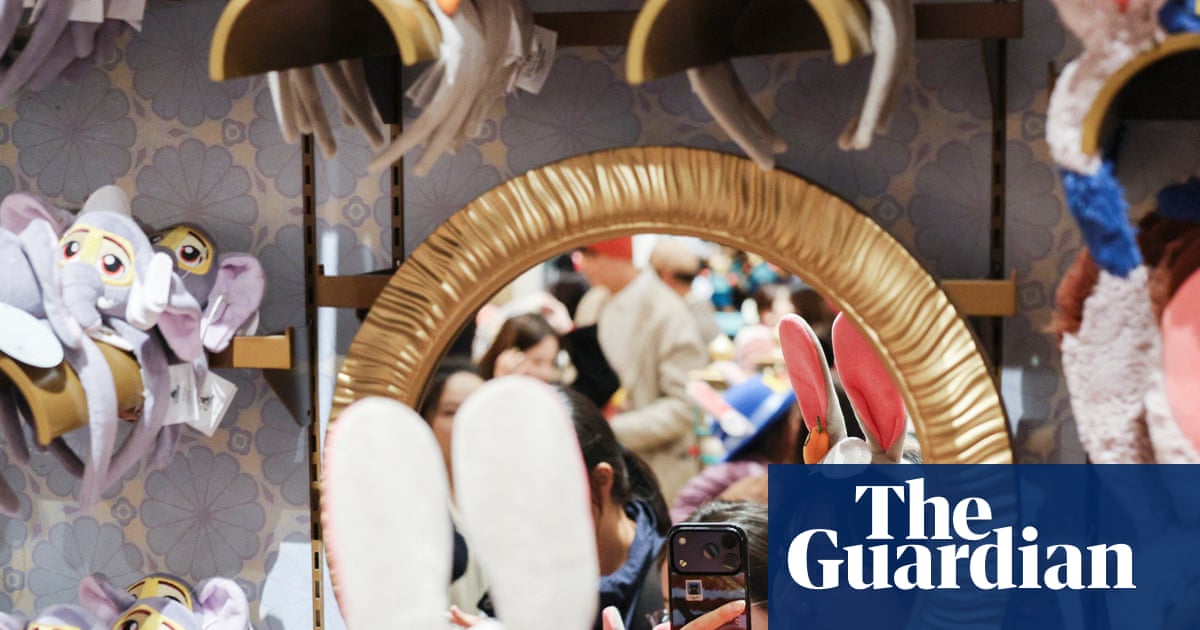
Shanghai Disneyland resort is home to the world’s only Zootopia-themed land, and last year Disney partnered with the airline China Eastern to make a Zootopia-themed plane.
Yu Yaqin, an independent film critic based in Beijing, said the prolonged marketing campaigns in China around the release of the original Zootopia film in 2016 meant that children were very familiar with the characters, which had helped created hype for the sequel.
Rance Pow, the chief executive of Artisan Gateway, a film and cinema advisory firm, said that Zootopia 2’s success “demonstrates Chinese moviegoers’ continuing interest in films that resonate, regardless of origin, and the potential of import films to play an important role in the renewed growth of China’s theatrical industry in general”.
He added that a new character created for the sequel, Gary De’Snake, a blue-scaled pit viper voiced by Ke Huy Quan, was particularly popular with Chinese audiences. According to the Chinese zodiac, 2025 is the year of the snake.
Nonetheless, Zootopia 2’s success bucks the trend for US releases in China.
In 2024, 41 Hollywood films were screened in Chinese cinemas, grossing 5.8bn yuan, while domestic productions made 31.7bn yuan.
In 2025, 48 Hollywood films have been granted entry into Chinese cinemas. This year’s releases have so far grossed about 5.7bn yuan, with about 40% of that income coming from Zootopia 2.
In April, amid a spiralling US-China trade war, the China Film Administration said it was reducing the number of US films that would be granted licences for China. However, the exact details of the restriction were unclear, and this year China has allowed more Hollywood movies into its cinemas than last year.
The government has pushed a patriotic trend in blockbuster releases, with many of the most popular films being so-called “wolf warrior” epics such as The Battle at Lake Changjin, a 2021 Communist party-sponsored film that depicts Chinese soldiers battling Americans in the Korean war.
China’s biggest success of recent years is Ne Zha 2, a Chinese animation that soared to stratospheric heights earlier this year, earning a total of 15.4bn yuan at the Chinese box office, dwarfing the success of the Zootopia franchise.
“Ne Zha 2 is domestically made and Chinese consumers feel closer to domestic movies compared to any other films, not just Hollywood,” Yu said.
Yu cautioned that Ne Zha 2’s success was so extraordinary that it should not be taken as a barometer of Chinese cinema in general.
She added: “Just because Chinese domestic movies are on the rise, that doesn’t mean there is no need for Hollywood movies. It just means the competition is more fierce.”
Additional research by Lillian Yang