Unlock the Editor’s Digest for free
Roula Khalaf, Editor of the FT, selects her favourite stories in this weekly newsletter.
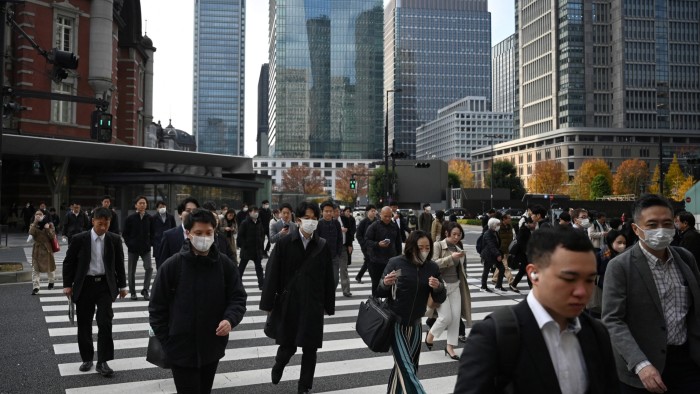
Yields on Japan’s benchmark government bonds rose to their highest level since 2007 as investors fretted over Prime Minister Sanae Takaichi’s spending plans and braced themselves for an interest rate increase.
The 10-year yield on Thursday climbed 0.03 percentage points to 1.92 per cent, approaching levels at which analysts said domestic banks could begin fundamentally adjusting their bond-buying strategies. Yields move inversely to prices.
The rise takes 10-year yields to levels last seen before the collapse of Lehman Brothers sparked a global financial crisis and ushered in an era of lower interest rates worldwide.
Thursday’s move echoed broader jitters in global bond markets, which have been jolted by renewed speculation that the Bank of Japan is preparing to raise interest rates at its December 18-19 meeting.
Yields on 30-year JGBs rose to a record high of 3.44 per cent before a government auction on Thursday of ¥700bn ($4.5bn) of the long-dated notes. The auction attracted the strongest demand since 2019, sending yields back down to 3.39 per cent.
Traders said the recent rise in yields appeared to have drawn unexpected demand from Japanese pension funds and foreign investors, even as domestic life insurers remained reluctant to step in as significant buyers of 30-year JGBs.
Stephen Spratt, a rates strategist at Société Générale, said short covering was likely to have driven some of the auction activity after markets raised bets that a sell-off of 30-year JGBs would deepen.
“This 30-year auction should cool things down a little after what has been a very busy period and what has been some quite frenzied action on regional bond markets in recent weeks,” said Spratt.
Minoru Kihara, the government’s top spokesperson, said the administration was “closely watching” market moves in long-term interest rates.
“It is important to comprehensively understand the impact of rising interest rate effects on the economy,” he said.
Yields on two-year bonds, which are most sensitive to interest rate expectations, rose to a 17-year high of 1.01 per cent on Wednesday and held there on Thursday.
Investors have been concerned about Takaichi’s $135bn spending plan, Japan’s largest stimulus package since the Covid-19 pandemic.
Shoki Omori, chief desk strategist at Mizuho, said JGB markets were steadily absorbing the risk of Takaichi’s fiscal spending and were reflecting doubts about a government efficiency drive.
He added that, while past JGB moves had limited impact on global bond markets, this time around “the JGB sell-off will have an effect on global rates”.
Omori warned that there was a shortage of stable buyers of super-long-dated JGBs as Japan prepares for what could be a phase of rapid interest rate increases.
“Although the latest auction was firm, we have to see consistent buying, and I do not think that this yet represents the start of consistent buying,” he said.