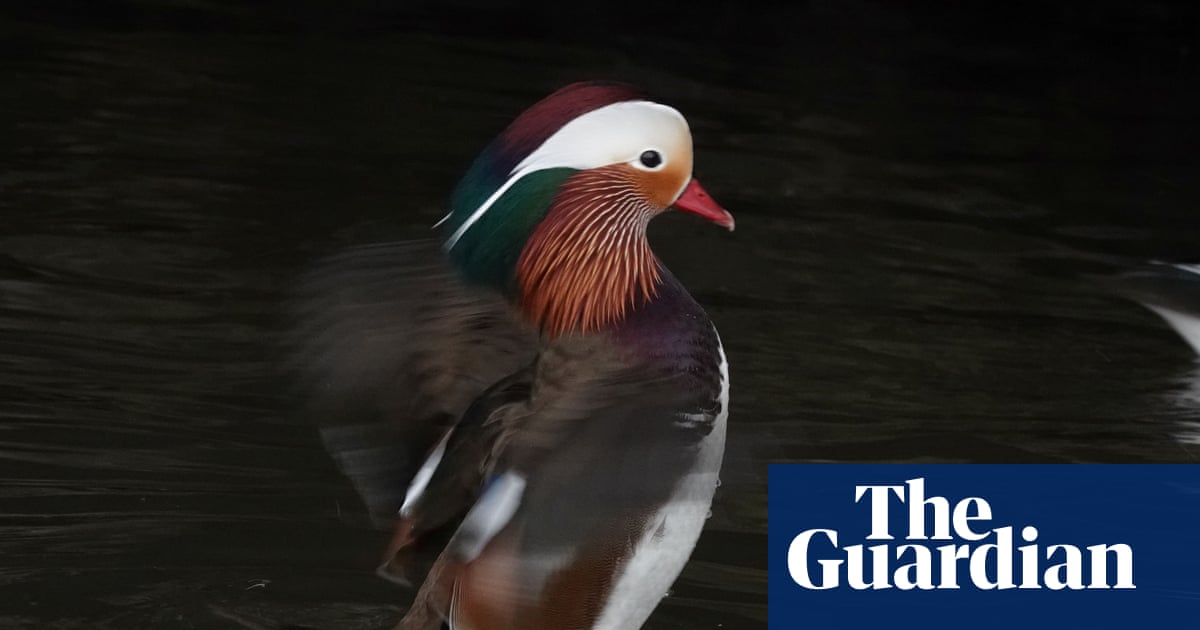
It’s funny to think that the 80 ducks present on this reservoir before me would have been unthinkable in my childhood. Even stranger is that we now get the birds on our garden pond. Yet all the known sites in the 1970s were in southern England and were often inflected towards landed privilege and material wealth. Windsor Great Park was one of their more prestigious addresses, but the other stronghold for the country’s entire population was at Virginia Water in Surrey (where the average house price today is £1.4m).
Even the name of this hole-nesting waterfowl – mandarin duck – arose because the people bringing them back from China wanted to conjure both their exoticism as well as their elite status. In those days, the idea was further backed by hard cash. In 1864, the Zoological Society of London had to pay £70 for just two pairs. At that price in today’s values, my 80 Fernilee birds would be worth £158,820.
The species’ recent huge increase in national numbers, which were estimated at 4,400 pairs during the last census in 2011, have probably caused the unit price to drop. Yet we can hopefully admit that the most important elements in nature cannot be measured by money.
The male mandarin duck is notable for an immense single tertial feather that rides above his mid-back as a square cinnamon sail. The forecrown is glittering green and the lower neck imperial purple, but what I had never seen until today was the way the drakes command these colours to enhance their mating displays. He puffs out his white satin breast, stretches the neck in contorted fashion and flirts out momentarily at the rear of the crown an otherwise unseen ensign of shining emerald.
It wasn’t just the plumage that made the whole thing priceless, but the fact that as the drakes rotated, they unfurled circles of sparkling white across the dark upland water. On to this momentary glitter the males then scattered their weird shrill twittering calls, while from the dead bracken at the edge several wrens churred in a niggardly winter chorus.