European manufacturers are increasing their investment in Chinese factories, despite growing anxiety among the continent’s political leaders about industrial dependence on the world’s exporting superpower.
France’s President Emmanuel Macron is expected to be the latest leader to warn about China’s crushing trade surpluses with Europe — which hit €305.8bn last year — during a three-day visit to Beijing this week.
However, steady investment by European manufacturers — much of it intended to produce goods for exports — is adding to China’s already powerful industrial base.
European companies say China’s low costs and efficient supply chains make it increasingly difficult to compete with Chinese rivals, while Beijing’s government procurement rules also make a local presence necessary to tap the Chinese market.
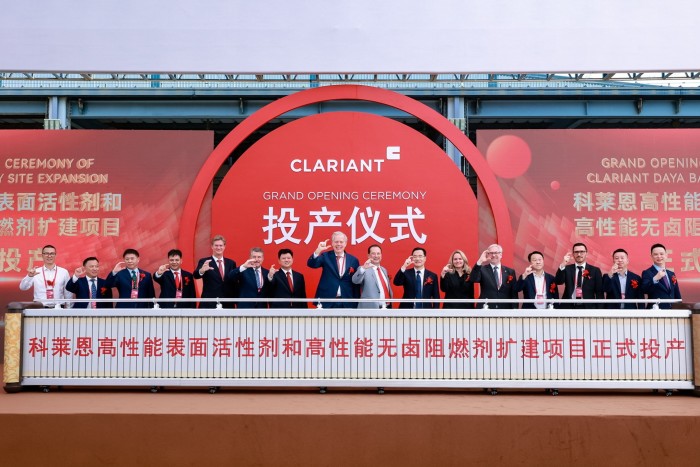
“Today, it’s not competitive any more to bring [products] into China when there’s local competition,” said Conrad Keijzer, chief executive of Swiss chemical maker Clariant.
The company is spending SFr180mn ($226mn) expanding its plant in China’s Daya Bay petrochemical hub, where last year Germany’s BASF and Shell also announced big investments.
“On balance, European companies are not becoming less dependent on China. On the contrary . . . companies around the world are in general becoming more dependent on China,” said Jens Eskelund, president of the European Chamber of Commerce in China.
A survey by the chamber of its members this year found that about one-quarter were moving more production into the country, or “onshoring” — twice as many as were diversifying to other countries.
The numbers included 80 per cent of respondents in the pharmaceuticals sector, 46 per cent in machinery and 40 per cent in medical devices.
China’s increasing local content requirements for government procurement were spurring this trend as international companies sought to tap the local market, the chamber said.
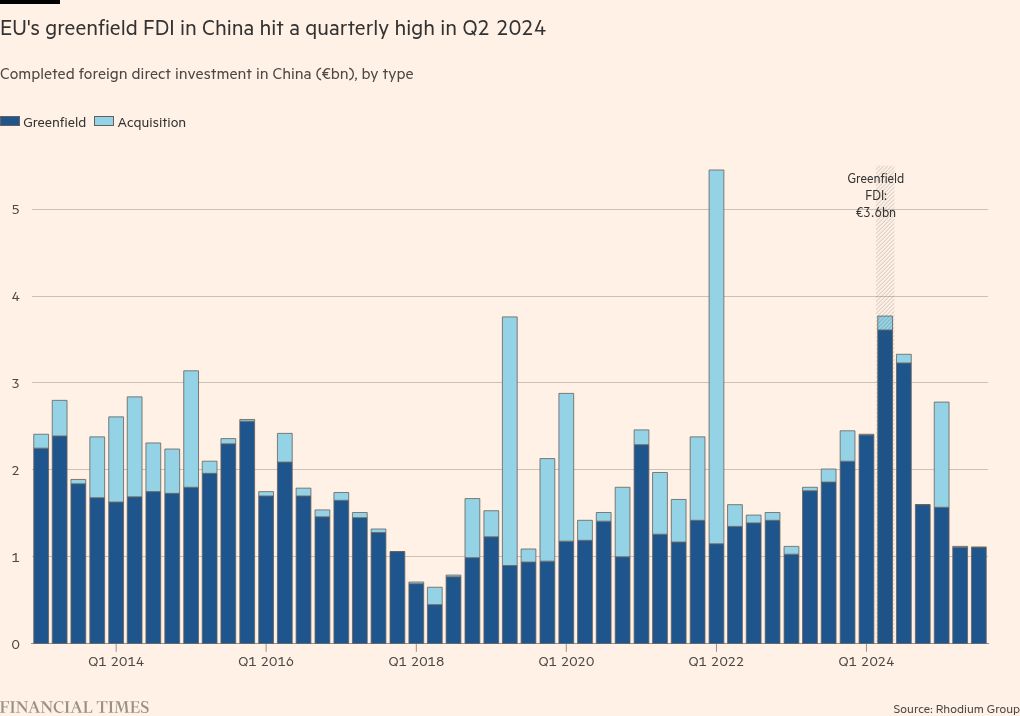
Washington-based Rhodium Group said its figures suggested that EU manufacturing foreign direct investment had continued to flow into China since 2021, with completed EU greenfield FDI hitting a record high of €3.6bn in the second quarter of last year.
But perhaps more worrying for Europe is that many companies are moving production into China to use it as a base for exports.
More than three years of producer price deflation and a 20 per cent depreciation of its currency against the euro since mid-2022 have made China a far cheaper production base than Europe, while European energy and other costs have also soared following the Ukraine war.
“Strengthening domestic consumption and allowing a more market-driven appreciation of the renminbi would both help reduce trade imbalances and contribute to a more stable long-term economic relationship with Europe,” said Elisa Hörhager, chief representative in China of German industry group BDI, in a speech at a recent think-tank forum in Beijing.
But instead, Beijing is planning to prioritise supply-side industrial policies and subsidies over the next five years, analysts say, potentially further depressing costs locally and ultimately forcing more production to China.
“If you have a global supply chain and you need to stay cost competitive, you will go to the place where you get the most cost-competitive components and in many, many industries, this is in China,” said Eskelund, of the EU chamber.
This comes as companies in Europe are shedding jobs — particularly in automotive, where German companies are laying off workers at home while investing heavily in China’s electric vehicle sector.
German auto supplier ZF Friedrichshafen, for example, recently announced job cuts of 7,600 in Europe by 2030, less than a year after announcing its latest expansion in Shenyang, north-eastern China. Automotive parts maker Schaeffler, which told state media in China it planned to double its business in the country in six to seven years, has announced the closure of some of its European operations and gross job cuts of 4,700.
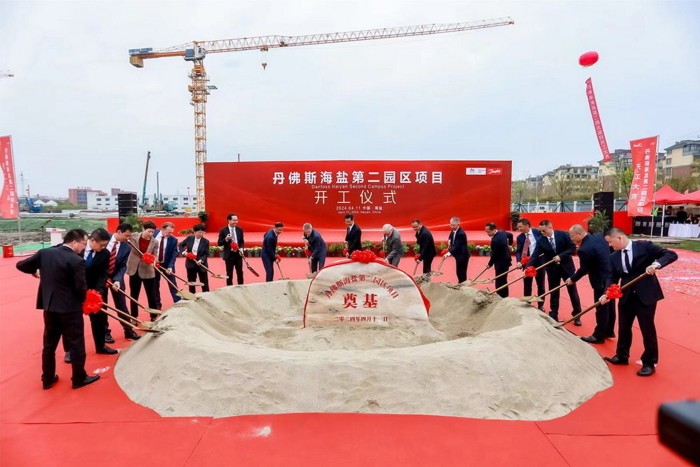
French engineering group Schneider, Danish power-train maker Danfoss and wind turbine maker Vestas and pharmaceutical companies including Swiss drugmaker Roche and AstraZeneca have all also recently announced China expansions or factory upgrades.
In addition to moving their production capacity to China, western companies are deepening their research and development work in the country.
Shell declined to comment. BASF said it was not relocating capacity from Europe but investing in China to participate in expected rapid growth there. Schneider said it was unable to comment.
Danfoss chief executive Kim Fausing said the company was “regionalising” production to be closer to customers.
Schaeffler and ZF said their China expansion was aimed at the regional market and did not come at the expense of European jobs. Roche, AstraZeneca and Vestas did not respond to requests for comment.
Joerg Wuttke, a partner at consultancy DGA Group and former EU Chamber in China president, said Europe must bear some blame itself. “What Europe has to do is, first and foremost, fix themselves, deregulate, get energy prices down, get competitiveness up, raise education standards, particularly in engineering,” Wuttke said. “We can’t blame China for that.”
He said the European carmakers were using the country’s market for electric vehicles as a “fitness centre” to navigate the transition from legacy combustion engines. But China with its lower costs might then become the main export centre for European companies to sell to third markets as well, further hitting the industry at home.
“The car industry is definitely going to export from China into those markets, which will then cannibalise the exports of the headquarters. So what is Europe doing about that?” Wuttke said.
The European Commission is beginning to respond, with plans to improve the bloc’s industrial landscape, including measures to push Chinese companies to invest in the EU in order to access the bloc’s single market.
And if exports from European companies in China also flow back to their home markets, that could prove politically explosive, others warn.
“You can try to sustain the global rules-based order as much as you want but if China is doubling down on policies that are hurting growth and jobs, that will lead to the kind of reactions that you’re seeing in the US,” said Agatha Kratz, a partner at Rhodium Group. “I would imagine it will soon happen with European partners too.”
Additional reporting by Andy Bounds and Alice Hancock in Brussels and contributions from Tina Hu in Beijing. Data visualisation by Haohsiang Ko in Hong Kong