In early September the US secretary of commerce, Howard Lutnick, appeared on television to trumpet the conclusion of months of trade negotiations with America’s closest ally in Asia and the formal signing of a tariff deal he described as “tremendously beneficial to Japan”.
Japan, then under the administration of prime minister Shigeru Ishiba, had little choice but to accept that form of wording, even as the nation wondered what exactly was so tremendous about the deal and whether it was even true that Tokyo and Washington were still bonded by a “special relationship”.
After all, when Donald Trump had signed a trade deal in 2019 with the then prime minister Shinzo Abe, the US president described that too as “tremendous”.
Elsewhere around the world, other national leaders, each dealing with the implications of America’s “liberation day” tariffs, wondered just how much of a template Japan’s deal would be.
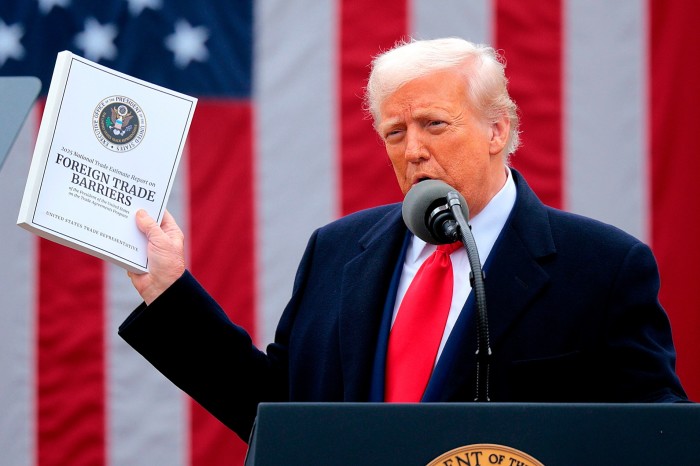
Japan was the first large economy to enter into tariff talks with the US in Trump’s second term, and many assumed that the first-mover advantage would be significant. As the months of negotiation rolled on without conclusion, until finally a deal was reached in July, it became less clear whether Japan was a model of what to aim for, or what to avoid.
Japan, Lutnick told interviewers after announcing the deal, had successfully “bought down” the rate of tariffs that the US would impose on imported Japanese goods, from a threatened 25 per cent to a more manageable 15 per cent. In particular Japan’s all-important automotive sector would be spared a much higher tariff rate that would have been hugely damaging to the country’s most important industry.
Already, said Japanese government officials, Lutnick was using the language of a transactional relationship to describe one that had, for many decades, been framed in much more altruistic and collaborative ways.
The centrepiece of the deal, whose details were partly fleshed out following an October summit in Tokyo between Trump and Japan’s new prime minister, Sanae Takaichi, was a commitment by Japan to invest $550bn into the US between now and January 2029, when Trump’s presidency is due to end.
According to documents released during Trump’s visit to Tokyo in October, Japan’s investments would focus on advancing the “economic and security interests of the US”. Japan also agreed to buy more US agricultural products and energy.
But Lutnick revealed a critical twist in the deal, telling reporters that the Japanese “are going to give America the ability to choose the projects to decide the projects and execute the projects”. This was startling, even for Japanese now used to the idea that the relative manageability of the first Trump administration is no guide for what to expect in the second.
“So let’s say we want to build generic pharmaceuticals [factory] . . . Japan will finance the projects and [the project] will be given to an operator and the profits will be split 90 per cent for the taxpayers of America and 10 per cent to the Japanese,” Lutnick told a TV interviewer.
Stephen Nagy, professor of politics and international studies at the International Christian University of Tokyo, said that Japan’s deal — negotiated to relieve a tariff that was opaquely and suddenly imposed — was “an extortion representing a failure of Ishiba’s administration”.
Although Takaichi, is unlikely to seek a renegotiation of the deal in her first few months in office, Nagy said it was possible that talks would eventually head in that direction.
Japan, said Nagy, has a number of advantages that South Korea and others do not have, including the central importance of Japan to America’s security position in the Indo Pacific. Japan’s willingness to co-operate with the US on semiconductors and artificial intelligence was not easily replaceable by any of the US’s other Asian allies and Japan’s relationship with Southeast Asian countries was of direct advantage to Washington.
Some are convinced that Japan’s deal with the US was worth the effort. Trump’s visit to Tokyo, in which he was effusive in his praise for the strength of the US Japan relationship and the excellent prospects for trade, was widely interpreted as the reward for Japan accepting a one-sided trade deal.
Joshua Walker, chief executive of Japan Society, a non-profit focused on relationships between the two countries, said: “Japan did very well getting a deal with Trump done quickly . . . but the devil is in the detail and ultimately how the investments are calculated will determine how the deal is judged.”
Others are less optimistic, and suspect that Japan has agreed to terms that others would balk at. While still negotiating a deal for South Korea, with similar elements to the one struck by Japan, president Lee Jae Myung told Time Magazine in September that the US demands were so strict that “if I were to agree then I would be impeached!”.
David Boling, a veteran US trade negotiator and director at the Eurasia Group, a think-tank, said that the Japanese goal had been to lower the auto tariffs, and that the government had also been at pains to ensure that whatever was offered to the US in terms of other concessions would not require time-consuming approval from parliament. In the broad sense, said Boling, the deal was successful, and bought Japan time.
Japan went into the negotiations with Washington as the biggest provider of foreign direct investment into the US: its negotiators will have calculated, said Boling, that the $550bn investment pledge will ensure Japan remains in that position and may give it preferential access to investments.
“Japanese look on the bright side and are breathing a sigh of relief they got a deal. But the real issue is going to be how this is implemented. Takaichi is being proactive,” he said.
Boling added that, on the face of things, based on the savings that Japan got from the lower tariffs on autos and reciprocal tariffs the pledged investment does not make sense.
“But you need to look at this deal as insurance. If they didn’t do this Trump would retaliate with much higher tariffs. From that standpoint it’s roughly equal. If you consider the national security relationship and issues that could bleed over into the alliance and that is hard to calculate. If you think about the bigger issues, it starts to make sense,” said Boling.