Unlock the Editor’s Digest for free
Roula Khalaf, Editor of the FT, selects her favourite stories in this weekly newsletter.
Less than a year after Prabowo Subianto took over the Indonesian presidency promising to boost growth and narrow inequality, he has come under siege as protests have erupted across the country over economic insecurity.
Thousands have taken to Indonesia’s streets in recent days in opposition to generous housing allowances for lawmakers, growing inequality and the government’s failure to boost economic prospects.
At least eight people have been killed, and mobs have set fire to a regional parliament building and looted the finance minister’s home.
At the heart of the protests is financial hardship faced by millions of ordinary Indonesians, who say they have not benefited from the country’s economic growth and accuse Prabowo and the political elite of indifference to their plight.
“The protests came from a growing inequality in Indonesian society,” said Achmad Sukarsono, an associate director at consultancy Control Risks. “Post-Covid economic growth benefited business and political elites but left behind millions among the disenfranchised masses, widening the social chasm between the haves and the have-nots.”
He added: “If Prabowo cannot treat this problem with solutions that can create jobs and distribute wealth . . . the issue of inequality will continue to haunt his tenure.”
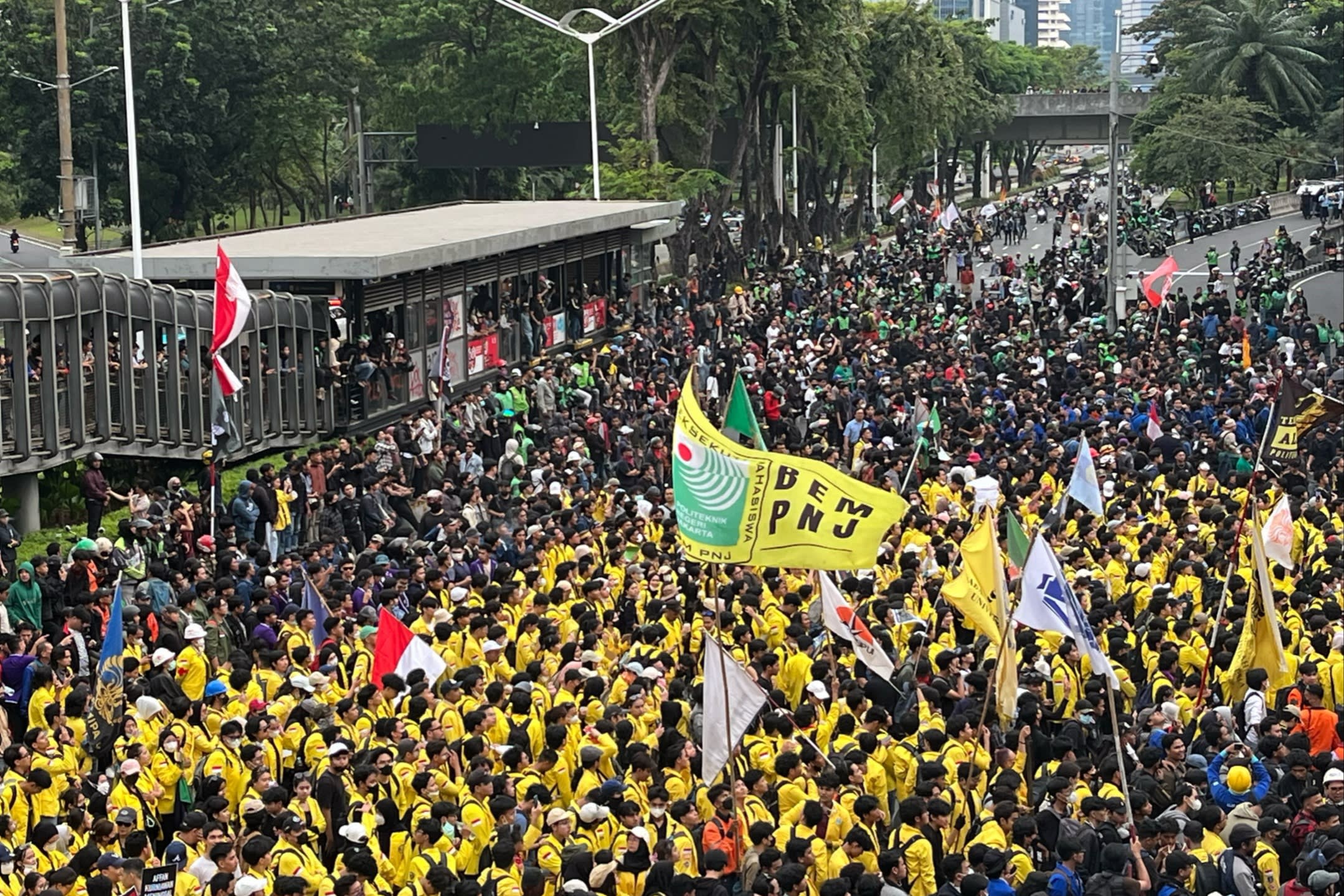
The unrest — among the worst in south-east Asia’s largest economy since a popular uprising ended the three-decade reign of dictator Suharto in 1998 — has posed the first serious challenge to Prabowo, threatening to undermine political stability and investor confidence.
It could also test Prabowo’s commitment to Indonesia’s democratic principles. The former general has previously been accused of human rights abuses.
Prabowo won last year’s election in a landslide with vows to boost annual growth to 8 per cent and provide free meals to millions of schoolchildren across the country.
But Indonesia’s economy has weakened. A focus on the capital-intensive commodities sector, which has offered some benefits, has failed to create higher paying jobs, and the manufacturing sector has been eroded, leading to mass lay-offs this year.
Purchasing power has declined and underemployment increased, with more workers forced into informal jobs as the country’s once-burgeoning middle class has been diminished.
Economists have increasingly cast doubt on official data that shows growth of about 5 per cent, given the sharp dichotomy on the ground.
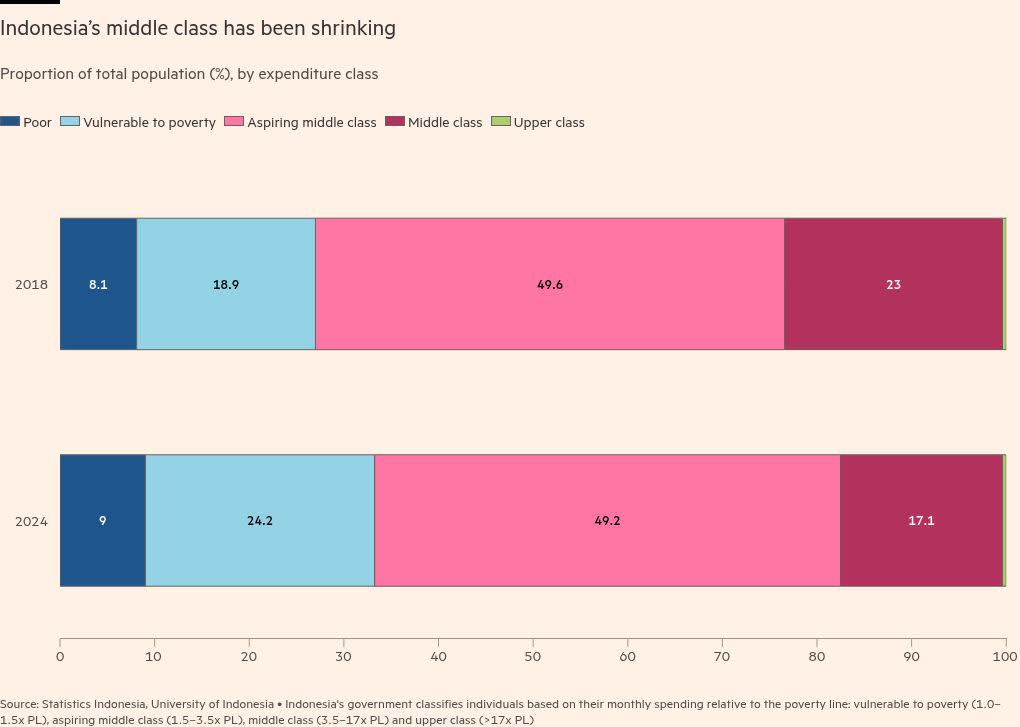
Amid these economic woes, revelations last month that lawmakers had been allocating themselves a monthly housing allowance of $3,000 — 10 times the minimum wage in the capital Jakarta — stoked outrage.
The protests exploded after the death of Affan Kurniawan, a 21-year-old motorcycle taxi driver who was run over by an armoured police vehicle at one of the demonstrations.
“If the House of Representatives wants large allowances with an opulent lifestyle, they should prove their work . . . how many jobs they can create, for example,” said Kezia, a 20-year-old student from Sahid University who was protesting in front of the parliament building this week.

She said even graduates were having trouble finding work. “The government has only gotten more chaotic over the past 10 months . . . it doesn’t seem to care about these issues,” she said.
While economists, businesses and the central bank have warned of mounting economic distress, Prabowo’s government has dismissed concerns of a slowdown. His administration has introduced short-term stimulus, but has not embarked on structural changes to make industries more competitive or create jobs.
Meanwhile, his flagship free lunch programme, which will cost an estimated $28bn a year, has forced funding cuts to other government programmes, including infrastructure and education.
Frustration has been building for months. Students protested against education budget cuts in February. Ahead of the country’s 80th anniversary last month of independence from Dutch colonial rule, many Indonesians raised a skull-and-crossbones flag from a popular Japanese anime to express opposition to government policies.
“Economic vulnerabilities are increasingly evident and felt by Indonesians across socio-economic groups despite the government’s contradictory narratives [of economic strength],” said Maria Monica Wihardja, a visiting fellow at Singapore’s Iseas-Yusof Ishak Institute and a former World Bank economist.
“Government elites have been perceived as being out of touch with reality and become desensitised to the people’s struggles.”
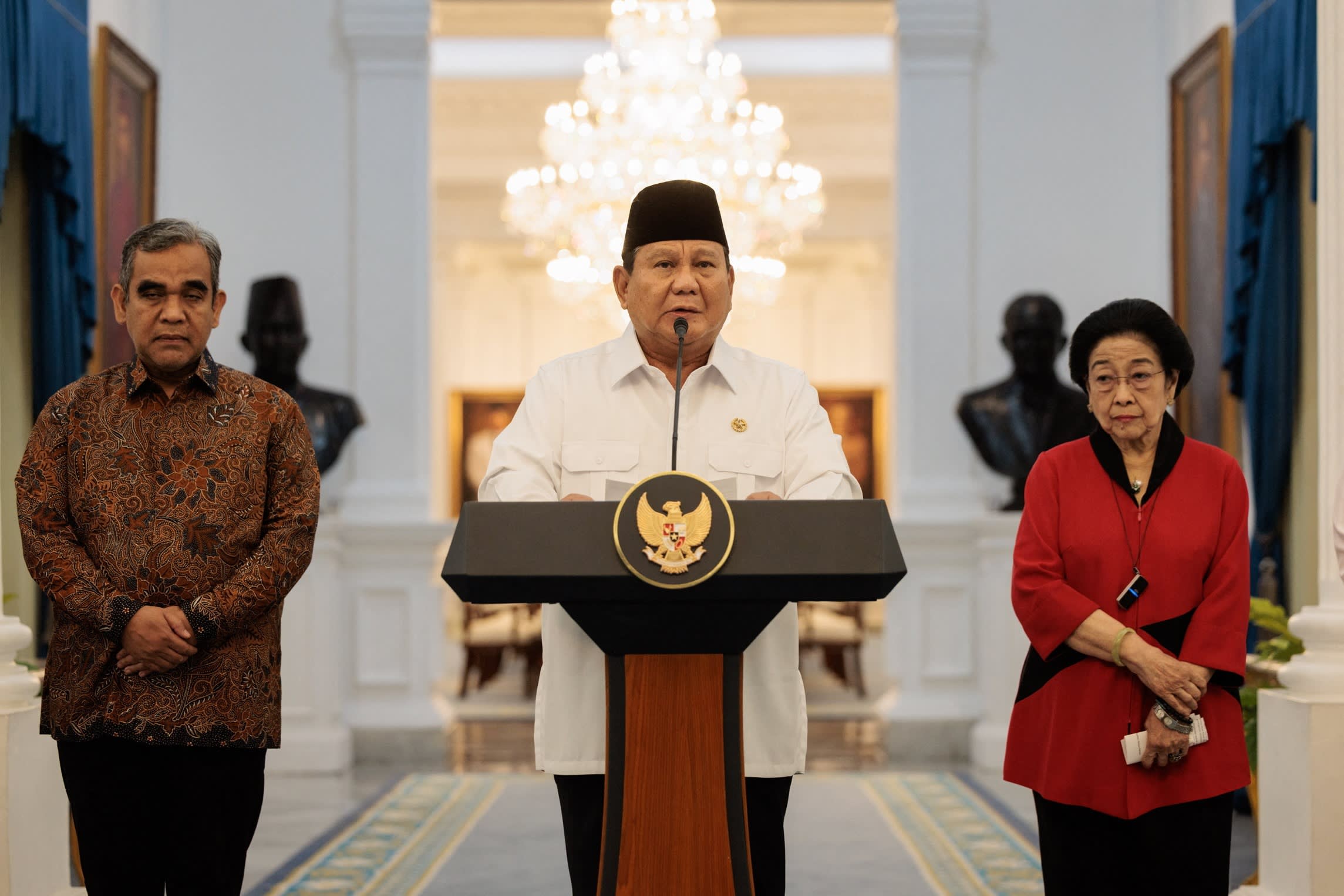
Meanwhile, there are also concerns that Prabowo could crack down on dissent. He has described some protesters’ behaviour as “treason and terrorism” and “anarchy”.
Prabowo was dismissed from the military in 1998 for his alleged involvement in the abduction of student activists protesting against Suharto. He has denied wrongdoing.
Saiful Wathoni, secretary-general of the Agrarian Reform Alliance, which has been participating in the protests, called the president’s comments “very dangerous”.
“Prabowo has issued orders to take firm action against all actions deemed anarchic,” he said. “This will likely increase repression going forward.”
Failing to address the protesters’ concerns could undermine Prabowo’s government, said Kennedy Muslim, a political analyst at Indikator Politik Indonesia, adding that the president had “misjudged” the extent of “simmering discontent”.
“This protest certainly has put a dent in his political capital,” he said.