“Other than sorting out plans to get the creditors’ approvals, there is not much they can do to boost sales, which is the key to restarting a normal business operation,” said Yan Yuejin, director of Shanghai-based E-house China Research and Development Institute.
04:30
The ‘two sessions’ – China’s most important political meetings of the year
“They are waiting for more relaxing measures and the national meeting could be a good chance to plead for that.”
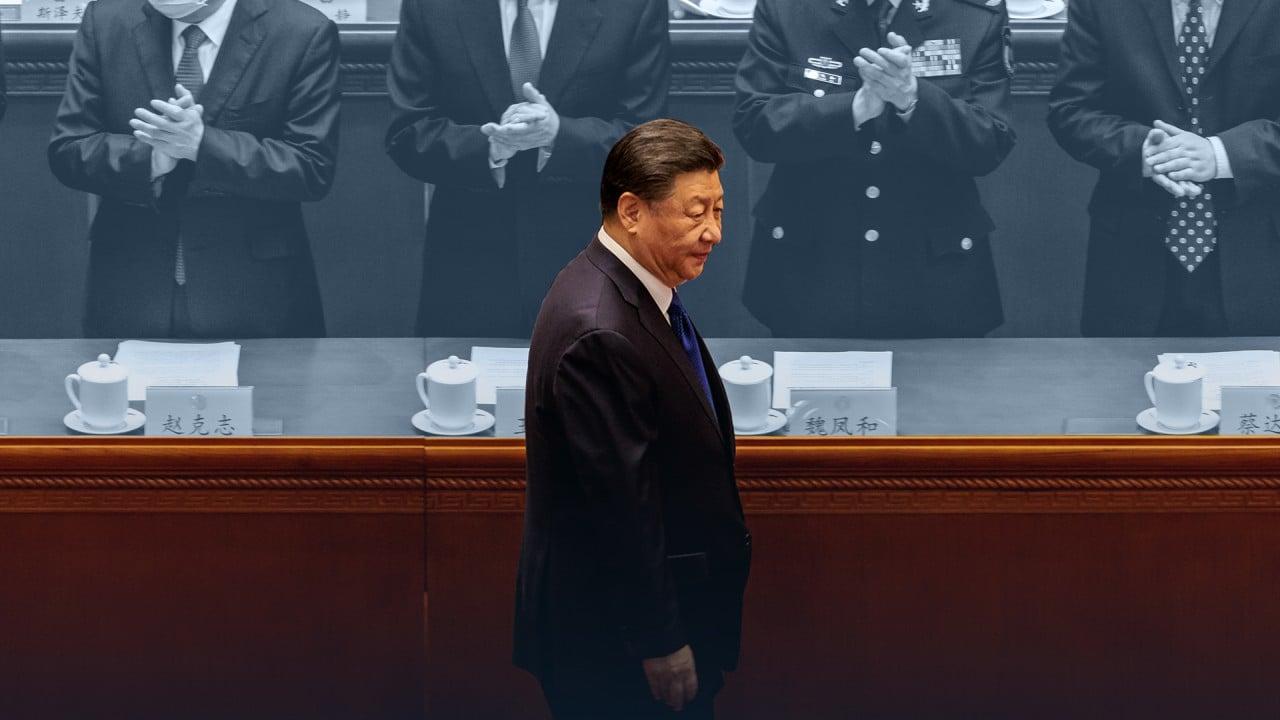
National People’s Congress (NPC) and Chinese People’s Political Consultative Conference (CPPCC) delegates at the two sessions can recommend policies that may eventually be enacted into legislation. Being at the centre of China’s legislative process also gives them front-row seats to see where government policies are headed.
The tycoon delegates will look for clues as to whether the central bank will maintain its tight cap on borrowings, and may even recommend policies that walk the tightrope between pleading for breathing space for their debt-fuelled industry and causing the loans to blow out.
It may be the last opportunity for some of them to attend the annual political meeting, given the precarious position of their companies.
The delinquencies of the defaulted real estate companies have reached some US$32 billion in publicly traded US-currency notes alone. That does not account for mounting unpaid private loans and onshore bonds.
The delegates, among them China Evergrande Group’s Hui Ka-yan, Shimao Group Holdings’ Hui Wing-mau and Zhenro Property’s Ou Zongrong, still have not reached any consensus with their creditors on their restructuring plans.
The only distressed builder that has completed a full debt restructuring, both onshore and offshore, is Guangzhou R&F Properties.
Unfortunately, its co-founder and co-chairman Zhang Li, a representative of the CPPCC’s economics section, is unlikely to make it to the national meeting as he is currently on bail and unable to leave his luxury mansion in London.
His fellow billionaires at the head of debt-ridden property companies will be in the legislature’s cross hairs. Delegates are expected to march to the government’s beat to maintain financial stability as the economy claws its way out of the pandemic-induced doldrums.
China’s home sales plunged for 19 months before they regained some ground in February after a slew of policies designed to revive the market were rolled out in recent months.
“We expect a gradual recovery of the market. In particular, an increase in visitors to sales centres in the primary market, faster decisions by homebuyers and an improvement in contracted sales in higher tier cities are potentially signs of recovery in the physical market,” said Vanessa Chan, head of Asian fixed income investment at Fidelity International.
The only two delegates who may get some breathing room this weekend are Yeung Kwok Keung, founder and former chairman of Country Garden Holdings who sits on a committee of specially invited individuals from Hong Kong at the CPPCC, and Radiance Group’s founder and chairman, Lin Dingqiang, who serves in the all-China Federation of Returned Overseas Chinese at the CPPCC.
Of the 12, theirs are the only companies not to have defaulted yet, so they are likely to be viewed more favourably.
But even they are facing a mountain of looming payments.
Country Garden, currently the biggest real estate firm in China by sales, has US$3 billion of debt maturing in 2023, while Beijing-headquartered Radiance needs to pay US$2.5 billion this year.
Goldman Sachs estimated that the default rate among Chinese high-yield issuers will ease slightly to 28 per cent this year from above 40 per cent in 2022.
“A meaningful market recovery and revival in demand remain key for distressed developers to turn around their business operations,” said Edward Chan, a director at S&P Global Ratings.
“These developers will also need to demonstrate their ability to deliver pre-sold homes, which should improve thanks to various policy initiatives from the government to improve funding access and ensure project completion.”


