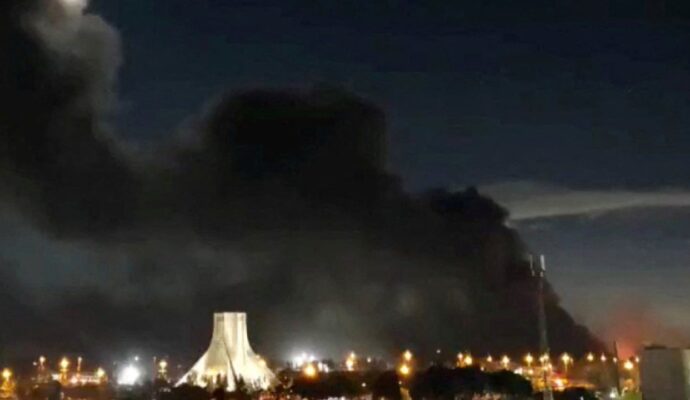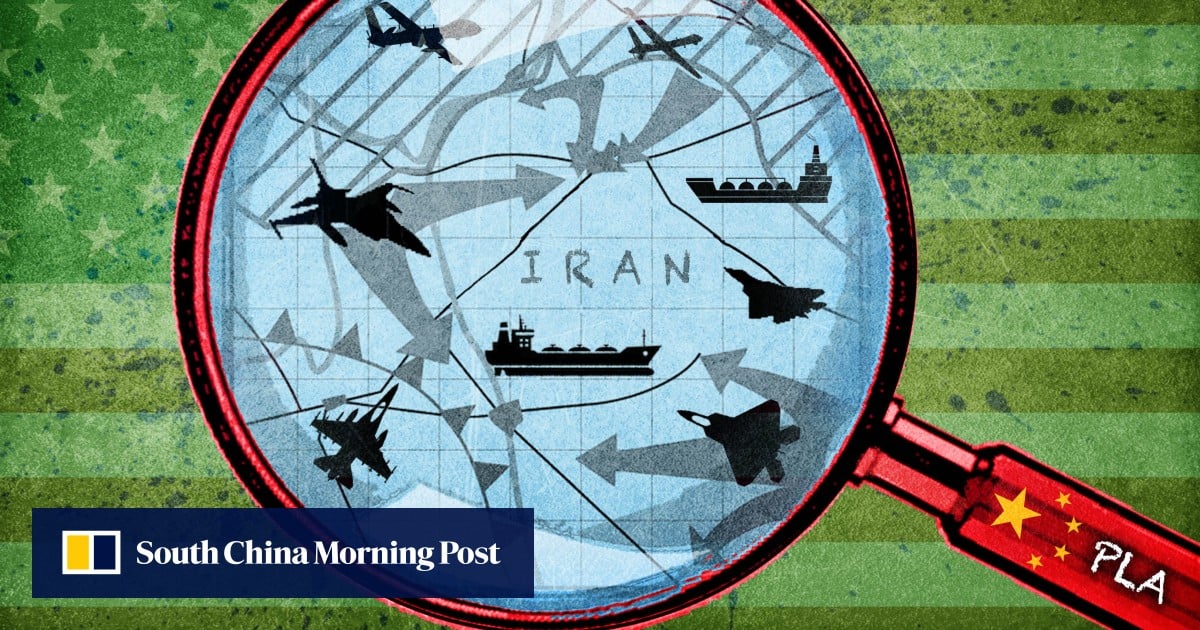
Whether it wraps up quickly or drags on, the repercussions of the US-Israeli war on Iran will echo for years, reshaping warfare, geopolitics, energy security and global perceptions of American tactical and strategic power. In the first of a three-part series, Mark Magnier looks at how the Iran war may alter Beijing’s approach to potential conflict over Taiwan, asymmetrical weaponry and the United States as an adversary.
The US military is formidable, well-disciplined, projects deadly force rapidly and is tactically impressive. However, its drone warfare has struggled – even as concerns over inflation and casualties reduce support for a protracted war potentially benefiting an authoritarian system not subject to electoral pressure.
These are among the lessons the People’s Liberation Army is likely to draw as it studies the Pentagon’s tactics and strategy in the Iran war, with an eye to any eventual Washington-Beijing conflict over Taiwan, according to analysts and former Pentagon and CIA officials.
Advertisement
“And we’re not at the conclusion of that story,” added Wilder, a senior fellow at Georgetown University.
Advertisement
But the war is a valuable opportunity to study US strengths and weaknesses, particularly given that the PLA has not “tasted blood” since its 1979 war with Vietnam.