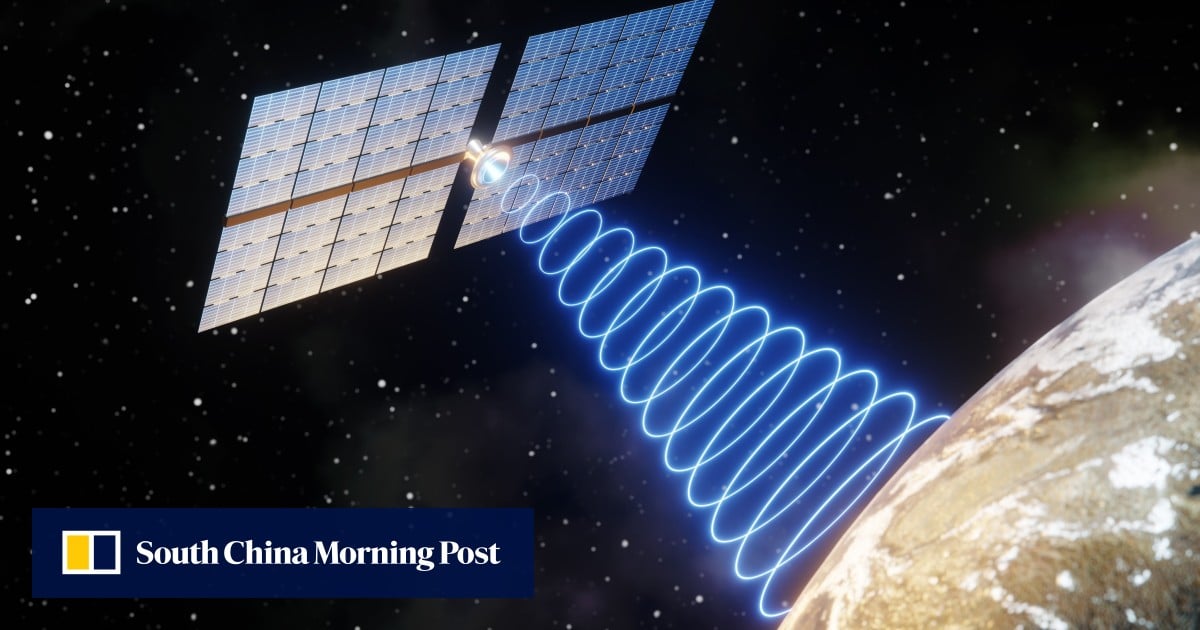
Duan Baoyan, a leading architect of China’s “Zhuri” space solar power initiative, wrote in a paper published in Scientia Sinica Informationis last month, that his team had revamped the design of the giant orbital infrastructure.
In addition to energy transmission, the new system was required to support a wide range of tasks “such as communication, navigation, reconnaissance, interference and remote control”, he said.
Advertisement
Duan, a professor of electromechanical engineering at Xidian University in Xian and an academician of the Chinese Academy of Engineering, also stressed the need for extremely narrow, precisely steerable microwave beams to deliver energy from space to the ground over long distances.
Advertisement
China is one of the world’s leading countries developing space-based solar power. Unlike solar panels on the ground, which are limited by weather, seasons and the day-night cycle, space-based systems can collect sunlight almost continuously.